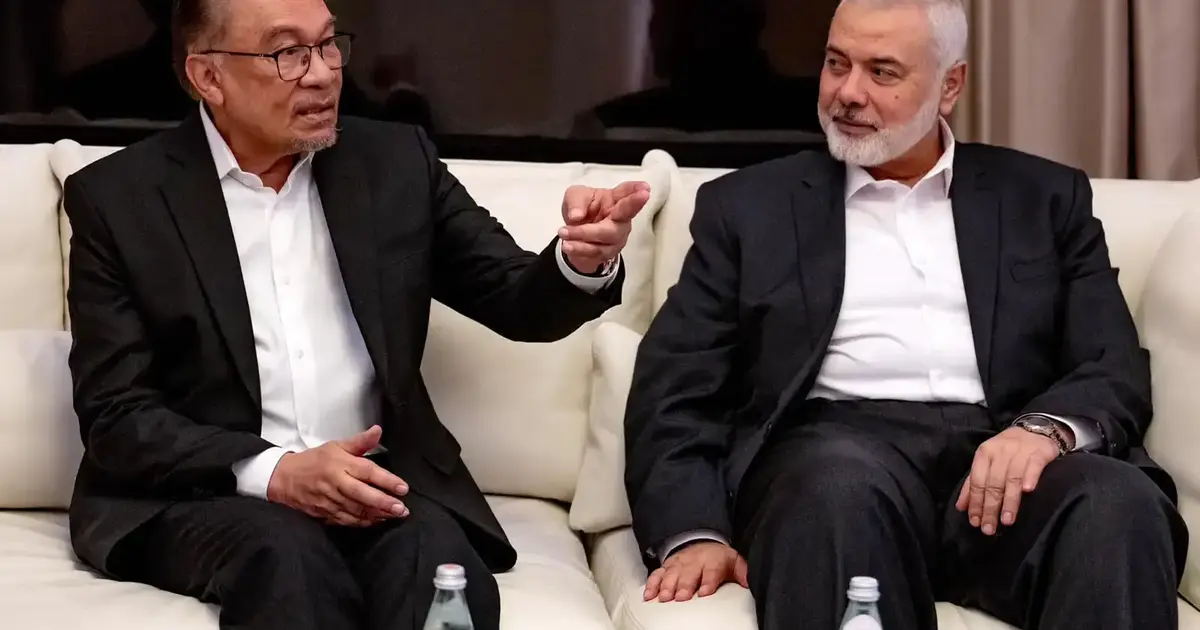
Prime Minister Anwar Ibrahim has emphatically dismissed allegations suggesting that members of Hamas, the Palestinian militant organisation, were trained on Malaysian territory, characterising such claims as entirely without foundation. The statement comes amid heightened scrutiny of Malaysia's diplomatic and security relationships in the Middle East, a region where Kuala Lumpur has traditionally maintained complex engagement strategies balancing humanitarian concerns with geopolitical considerations.
Anwar's forceful rejection of the allegations underscores the Malaysian government's sensitivity to accusations linking the country to militant activities or terror-related operations. Malaysia, as a Muslim-majority nation with significant Palestinian diaspora communities and historical sympathy for Palestinian causes, has long walked a delicate diplomatic tightrope, maintaining open channels with various Palestinian factions while simultaneously asserting its commitment to international counter-terrorism frameworks and stability in the region.
The prime minister revealed that he has undertaken direct engagement with the Trump administration on related matters, specifically noting that he informed US President Donald Trump about his previous interactions with Hamas leadership. This disclosure reflects the evolving dynamics between Malaysia and the United States under the Trump presidency, which has historically taken a more assertive stance on matters involving Palestinian organisations and Middle Eastern geopolitics compared to other administrations.
Anwar's proactive communication with Trump on this sensitive matter appears designed to address potential concerns from Washington regarding Malaysia's diplomatic activities in the region. The Trump administration, known for its strongly pro-Israel positions and aggressive rhetoric against organisations designated as terrorist entities by the United States, would naturally scrutinise any nation's engagement with Hamas representatives. By voluntarily sharing information about his meetings, Anwar seems to be positioning Malaysia as transparent and forthcoming in its dealings with major Western powers.
The allegations themselves raise important questions about source credibility and the mechanisms through which such claims enter public discourse. The baseless characterisation by Anwar suggests that these accusations may lack substantive evidence or may represent misinterpretations of Malaysia's legitimate diplomatic functions. In an era of rapid information dissemination and often unchecked social media narratives, distinguishing between credible intelligence reporting and spurious allegations has become increasingly challenging for governments and publics alike.
For Malaysian policymakers, the incident highlights the persistent challenges of maintaining principled engagement with all parties in regional disputes while simultaneously managing perceptions and concerns from major international powers. Malaysia's strategic location, economic importance, and influence within the Muslim world mean that its foreign policy choices attract considerable international attention and, sometimes, unfounded speculation.
The timing of these allegations and Anwar's response also occurs within a broader context of intensified Middle Eastern tensions and global divisions regarding the Israeli-Palestinian conflict. Different nations have adopted markedly different approaches to engagement with various Palestinian factions, reflecting their own strategic interests, domestic political considerations, and ideological commitments. Malaysia's approach has historically been characterised by moral solidarity with Palestinian self-determination while avoiding direct involvement in armed activities.
Anwar's emphasis on transparency with the Trump administration signals Malaysia's desire to maintain strong bilateral relations with the United States despite potential disagreements on Middle East policy. The relationship between Kuala Lumpur and Washington carries significance beyond bilateral concerns, affecting Malaysia's security architecture, trade relationships, and regional standing. Clear communication channels and mutual understanding become paramount when navigating sensitive geopolitical terrain.
The denial of these claims also reflects Malaysia's institutional commitment to upholding international agreements and frameworks related to counter-terrorism and security cooperation. As a nation that has experienced its own security challenges and maintains partnerships within global counter-terrorism initiatives, Malaysia has vested interests in demonstrating its bona fides regarding terrorism prevention and militant activity prevention on its soil.
Looking forward, this episode underscores the importance of accurate intelligence sharing, careful diplomatic communication, and the need for context-sensitive understanding of Malaysia's multifaceted regional role. For Malaysian audiences and regional observers, the prime minister's unequivocal statements should be understood within the framework of Malaysia's documented diplomatic practices and security protocols rather than speculation divorced from substantive evidence.
The incident also carries implications for how Malaysia navigates its relationships with diverse stakeholders, including the United States, various Middle Eastern actors, and its own diverse domestic constituencies with differing perspectives on Palestinian and regional issues. Effective governance in this space requires balancing principled positions with pragmatic diplomacy, a balancing act that continues to define Malaysian foreign policy in this complex era.

