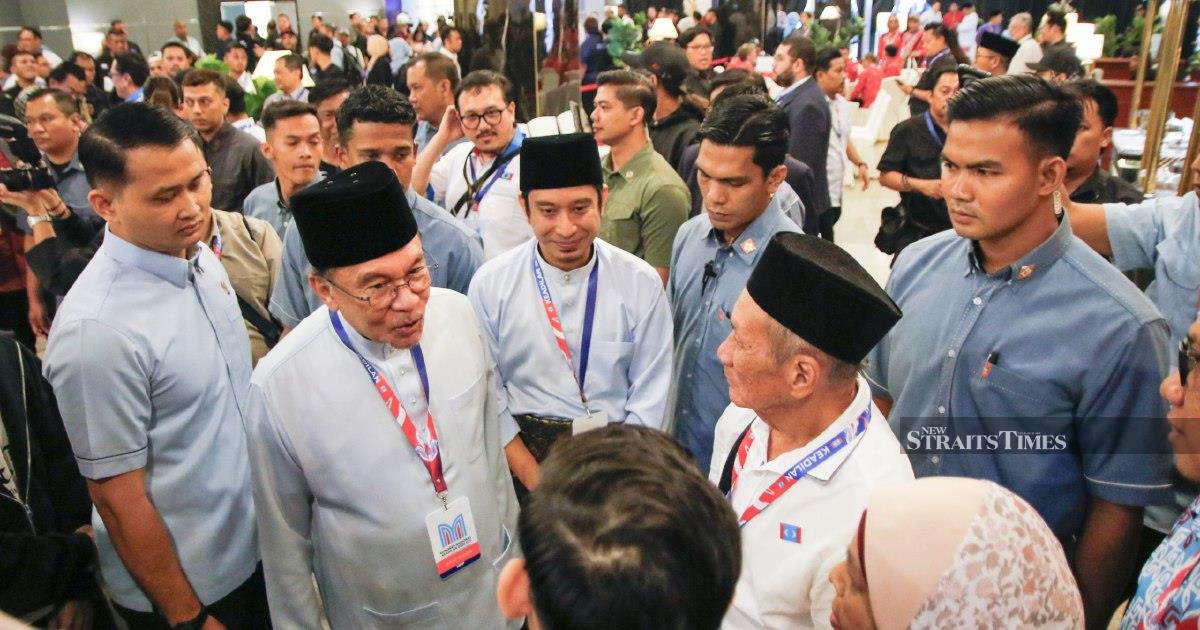
Prime Minister Datuk Seri Anwar Ibrahim has moved to publicly dismiss mounting speculation about a deteriorating relationship with Deputy Prime Minister Datuk Seri Dr Ahmad Zahid Hamidi, reaffirming during remarks in Ayer Keroh that their professional ties at the national level remain constructive. The statement appears timed to counter narrative building around the two leaders, a persistent undercurrent within Malaysian politics despite both holding top executive positions under the current government structure.
The timing of Anwar's denial at a public event underscores the sensitivity surrounding the premier-deputy premier dynamics within government corridors. In Malaysian politics, fractured relationships between number-one and number-two executives can create ripple effects across governance, policy implementation, and party coalition stability. Such tensions historically signal broader instability that extends beyond personal matters into how the cabinet functions and how ministerial interests are balanced.
Anwar's characterisation of ties as "good" appears calibrated to project unity while stopping short of elaborating on specifics. The measured language suggests acknowledgment that questions exist without substantively engaging with particular grievances or disagreements that may have surfaced. This diplomatic approach reflects standard practice when senior figures address relationship queries, particularly when media and political observers are actively parsing interactions for signs of fracture.
The broader context involves the coalition arrangement binding the government together. Malaysia's power-sharing arrangements inherently create structural pressures where different parties and personalities occupy competing positions within the same administration. These configurations demand careful navigation, as missteps in maintaining equilibrium can cascade through party structures and affect legislative support for government initiatives. The fact that Anwar felt compelled to address the speculation publicly suggests the narrative had gained sufficient traction to require intervention.
For Malaysian political observers, such denial statements serve multiple audiences simultaneously. Party members seeking reassurance receive explicit messaging about continuity. International partners monitoring Malaysia's governance stability gain clarity about executive stability. And opposition figures evaluating potential vulnerabilities learn that the government narrative emphasises cohesion. Understanding these layered communicative dimensions remains essential for interpreting what senior officials communicate during public appearances.
The deputy prime minister role carries particular significance within Malaysia's political framework. Beyond ceremonial functions, the position influences resource allocation, ministerial appointments, and agenda-setting within cabinet discussions. A genuine rift between occupants of the top two positions creates complications that can undermine policy coherence and slow decision-making across government. Anwar's explicit statement about maintaining good ties addresses concerns that such complications might already be emerging.
Historically, Malaysian politics has witnessed several instances where surface assertions of unity masked underlying tension that subsequently erupted into open conflict. The political landscape remains attuned to such possibilities, meaning that statements like Anwar's face inherent scepticism from constituencies accustomed to reading between official messaging. The prime minister's approach of direct denial rather than elaborate explanation follows convention, though such brevity sometimes invites questions about what specifically prompted the clarification.
The Ayer Keroh setting for these remarks carries its own symbolic weight within Malaysian political geography. The location and occasion reflect deliberate choices about where and when to address relationship questions. Public events provide official records and wider dissemination compared to closed-door discussions, signalling that the message was intended for broad consumption rather than restricted internal circulation.
For Malaysian business and international communities, executive stability matters tremendously for policy continuity and investment confidence. Governments perceived as internally fractious face challenges in implementing major initiatives and maintaining investor assurance about policy direction. Anwar's public affirmation of functional ties with his deputy accordingly addresses stakeholder concerns beyond purely political constituencies, encompassing economic actors who require stability forecasting.
The broader implications for Southeast Asia's largest economy relate to governance effectiveness during a period when Malaysia confronts significant economic and social policy challenges. Leadership focus consumed by internal relationship management diverts attention from substantive work on inflation management, economic diversification, and social cohesion. Anwar's denial, whether addressing real tensions or preempting speculation, aims to refocus narrative away from personality dynamics toward governance substance.
Looking forward, such public declarations typically establish baselines against which future developments are measured. Should subsequent events suggest deteriorating relations, observers will reference this statement as evidence of altered circumstances. Conversely, continued cooperation and public warmth between the two leaders would reinforce the message Anwar delivered in Ayer Keroh. The statement represents a momentary checkpoint in what remains an ongoing relationship navigating the inherent complexities of Malaysian political power-sharing arrangements.

