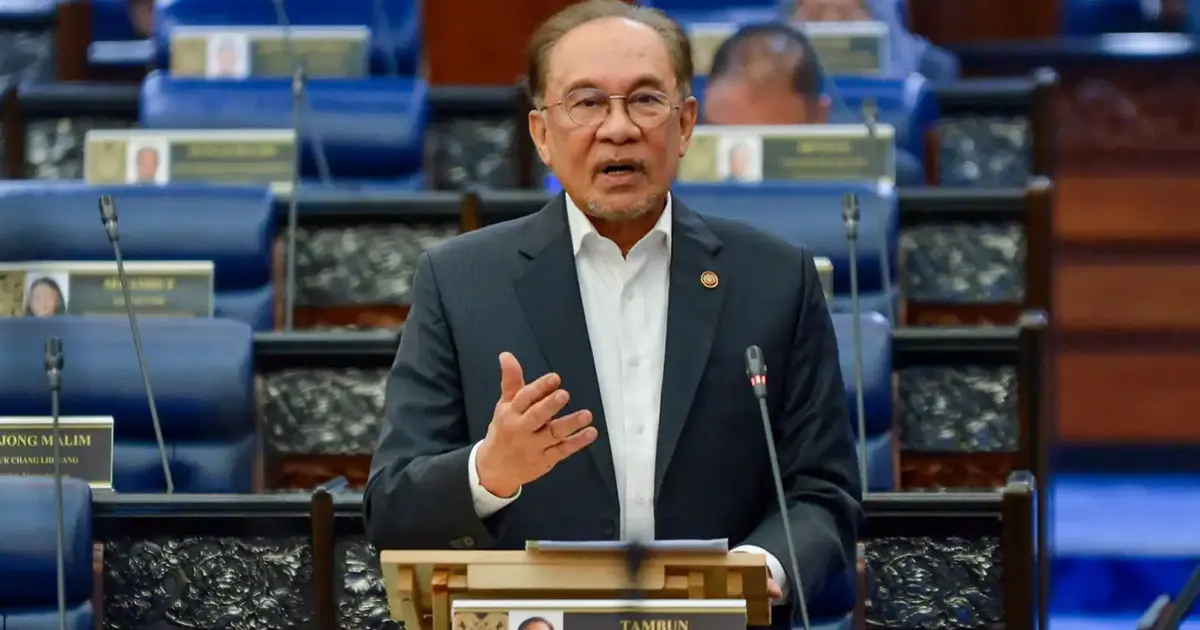
Prime Minister Anwar Ibrahim has once again firmly rejected overtures for an early dissolution of parliament, reiterating that Malaysian voters are far more interested in tangible economic progress and political stability than in enduring another exhausting electoral cycle. The statement represents the latest in a series of definitive responses from the premier to persistent speculation about the timing of the nation's next general election, particularly given the fluid composition of the current parliamentary majority.
Anwar's position reflects a strategic calculation that the government's credibility rests heavily on demonstrating measurable economic achievements rather than seeking a fresh mandate prematurely. The Prime Minister has consistently argued that frequent recourse to the ballot box drains national resources, disrupts policy continuity, and diverts political energy away from crucial developmental priorities. This messaging appears designed to stabilise expectations about the administration's tenure whilst simultaneously countering opposition narratives that frame the current administration as politically fragile or lacking popular support.
The timing of these comments carries significance within Malaysia's contemporary political context. The nation's economic recovery from the pandemic remains uneven across sectors and regions, with unemployment and inflation concerns continuing to weigh on household finances. Anwar seems to be signalling that his government's legitimacy need not rest on an early popular endorsement but rather on its capacity to deliver improved living standards, job creation, and fiscal discipline. This approach potentially reshapes the traditional debate around political mandate, suggesting that performance rather than frequency of elections determines democratic legitimacy.
From a constitutional standpoint, Malaysia's parliamentary system allows the Prime Minister considerable flexibility regarding the timing of elections, provided parliament's five-year term has not elapsed. This latitude has historically been wielded strategically by sitting administrations, which typically dissolve parliament when internal polling or external indicators suggest electoral advantage. Anwar's repeated assertions that elections are not imminent thus serve a dual purpose: they provide assurance to investors and international partners concerned about Malaysia's political stability, whilst simultaneously placing boundaries around internal coalition dynamics that might otherwise generate destabilising speculation.
The rejection of early election calls also intersects with the government's fiscal commitments and medium-term economic planning. Budget cycles, infrastructure projects, and structural reforms all require predictability and extended timeframes to yield measurable results. Anwar's insistence on governmental continuity implicitly acknowledges that incomplete initiatives or aborted programmes would undermine public confidence regardless of electoral outcomes. By framing stability as inherently pro-growth, the Prime Minister positions his administration's staying power as economically rational rather than merely self-interested.
Regional observers have noted that Anwar's approach contrasts with electoral patterns in some neighbouring countries, where governments have moved towards snap polls or early elections as mechanisms for political reset. Thailand, the Philippines, and Indonesia have each experienced recent instances where sitting leaders sought fresh mandates or attempted constitutional manoeuvres. Anwar's commitment to the existing electoral timeline suggests Malaysia's political leadership currently favours longer-term institutional credibility over short-term polling advantages, a posture that potentially stabilises bilateral relationships and investor confidence throughout Southeast Asia.
Within Malaysia's coalition arithmetic, the rejection of early elections carries implications for partner parties and potential coalition partners. The government's parliamentary majority depends partly on supply-and-confidence arrangements with smaller parties and independent legislators, relationships that require continual cultivation. Early elections would risk destabilising these arrangements and potentially fragmenting the coalition. By committing to the full parliamentary term, Anwar provides incentives for coalition partners to remain invested in the government's agenda rather than pursuing alternative alignments or preparations for imminent electoral contests.
The statement also addresses underlying public fatigue with political uncertainty. Malaysia has experienced multiple electoral cycles in recent years, and extended periods of coalition negotiation and political repositioning between elections. Anwar's messaging taps into documented voter preference for predictable governance and policy continuity, framing his administration as responsive to popular sentiment in eschewing unnecessary electoral contests. This rhetorical positioning attempts to cement public perception that the government prioritises citizen welfare over political positioning.
Economic indicators will ultimately determine whether Anwar's strategy succeeds. Should growth accelerate, unemployment decline, and infrastructure projects demonstrate visible progress before the next scheduled election, the Prime Minister's narrative of stability-driven development will gain credibility. Conversely, if economic conditions deteriorate significantly or if major scandals emerge, assertions about the government's mandate may appear increasingly hollow regardless of how recently elections were held. The Prime Minister's commitment to maintaining the current electoral timeline thus represents a high-stakes wager on his administration's capacity to deliver on core economic promises.
Looking forward, Anwar's repeated restatement of opposition to early elections suggests this will remain a defining characteristic of his leadership narrative. The repeated emphasis itself indicates that internal or external pressures for early polling persist, even if the Prime Minister publicly rebuffs them. This dynamic will likely continue shaping political discourse until either significant economic achievements emerge or coalition pressures become too acute to manage through rhetorical commitment to the existing timeline. For now, Malaysian governance rests on Anwar's insistence that voters want results, not ballots.

