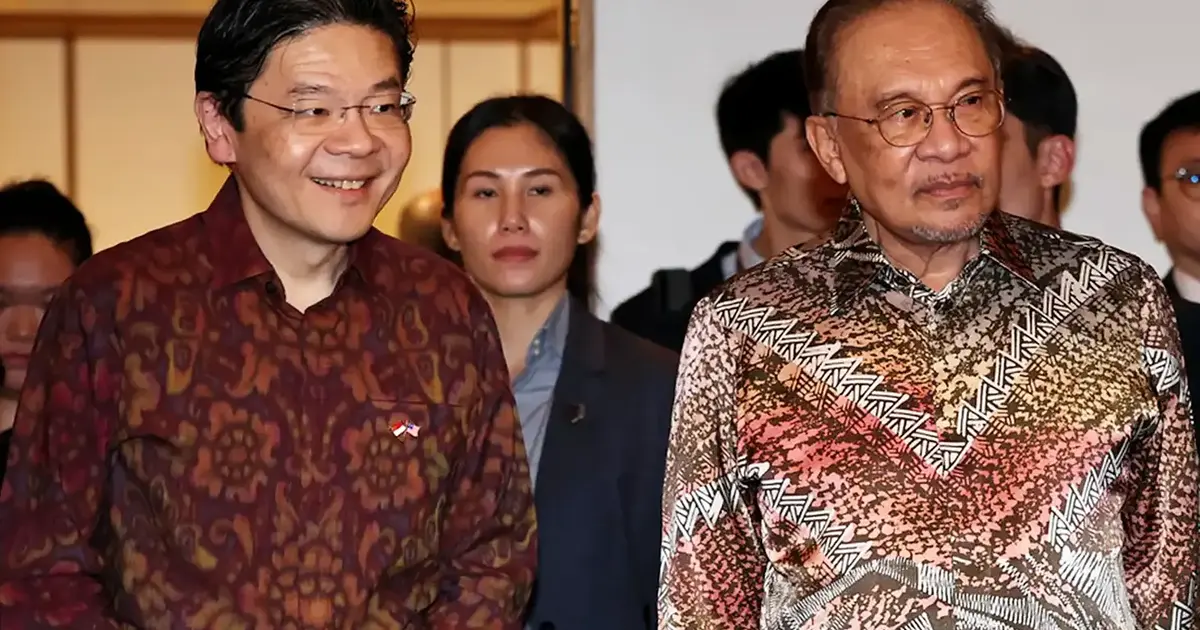
Prime Minister Anwar Ibrahim has moved to clarify the status of diplomatic communications with Singapore concerning the upcoming Johor state elections, explicitly stating that no formal request has been submitted to his Singaporean counterpart regarding the matter of Malaysian voters in the republic returning home to participate in the polls.
The clarification comes in response to public speculation about whether Malaysia's leadership might pursue an official channel with Singapore to facilitate the homecoming of eligible voters currently residing there. Given the geographical proximity of Johor to Singapore and the substantial number of Malaysians who work or reside across the causeway, the question of voter participation in state elections has periodically surfaced as a matter of political discussion within Malaysia's democratic processes.
Anwar's response reflects the practical complexities inherent in coordinating cross-border electoral participation. While Malaysia permits its citizens abroad to vote in general elections through postal arrangements and designated overseas voting centres, state elections operate under distinct administrative frameworks that typically require physical presence within the constituency or reliance on postal voting mechanisms administered by the Election Commission. The logistics of managing voter movement across international boundaries remain complicated, particularly given the volume of commuters and residents in the Malaysia-Singapore corridor.
The Johor state elections represent a significant political event within Malaysia's federal framework, as the state has historically served as a electoral bellwether and stronghold for major political coalitions. The composition of the Johor assembly carries implications not merely for state-level governance but for the broader political balance at the national level, given Johor's demographic weight and its role in coalition-building strategies among competing political blocs. Recent electoral cycles have demonstrated the state's capacity to shift political dynamics across the peninsula.
Singapore's relationship with Malaysia encompasses extensive economic, cultural, and social dimensions, with hundreds of thousands of citizens from both nations crossing the causeway daily for employment, commerce, and personal reasons. This interconnectedness creates ongoing considerations regarding shared concerns, though electoral processes remain fundamentally sovereign matters for each nation. Singapore has traditionally maintained a position of non-interference in Malaysia's internal political affairs, while Malaysia similarly respects Singapore's electoral independence.
The timing of Anwar's clarification suggests an effort to manage expectations around what diplomatic engagement might reasonably accomplish. Malaysian governments have periodically advocated for expanded voting opportunities for diaspora populations, particularly in general elections, resulting in incremental expansions of postal voting arrangements. However, state elections present additional variables, as the Election Commission must coordinate with individual state authorities and manage the security and integrity of ballots cast across jurisdictions.
From a practical standpoint, the existing postal voting system available to Malaysian citizens abroad provides a mechanism for electoral participation without requiring physical relocation. The Enhancement of the Postal Vote System, implemented in phases, has broadened access for overseas voters, though participation rates remain relatively modest compared to domestic voting. Administrative improvements continue to be explored by electoral authorities to streamline processes and encourage uptake among the diaspora.
The Johor electorate comprises multiple constituencies with varied socioeconomic profiles and political leanings. The state's urban centres, including Johor Bahru with its cross-border workforce, demonstrate unique demographic characteristics that influence electoral behaviour. Understanding these variations becomes important when considering questions about voter access and participation, as concentrated populations in border regions face particular circumstances that differentiate them from voters in other Malaysian states.
Anwar's statement implicitly acknowledges that while diplomatic channels remain open and functional between Malaysia and Singapore, elevating electoral logistics to that level of formal negotiation would represent an atypical approach to managing state election administration. The administrative structures within Malaysia itself, including the Election Commission and state-level electoral bodies, retain primary responsibility for determining voting procedures and eligibility frameworks. Such matters are ordinarily resolved through established electoral law and commission guidelines rather than inter-governmental diplomatic initiatives.
Looking forward, the clarification may serve to reset public understanding about the boundaries of what diplomatic engagement can address regarding electoral mechanics. It also reflects Anwar's pragmatic approach to governance, distinguishing between matters warranting official diplomatic correspondence and those properly handled through administrative and legal channels. As Malaysian political parties prepare strategies for the Johor elections, voter mobilisation efforts will likely continue relying on existing postal voting arrangements and conventional campaign methods targeting constituencies within the state.

