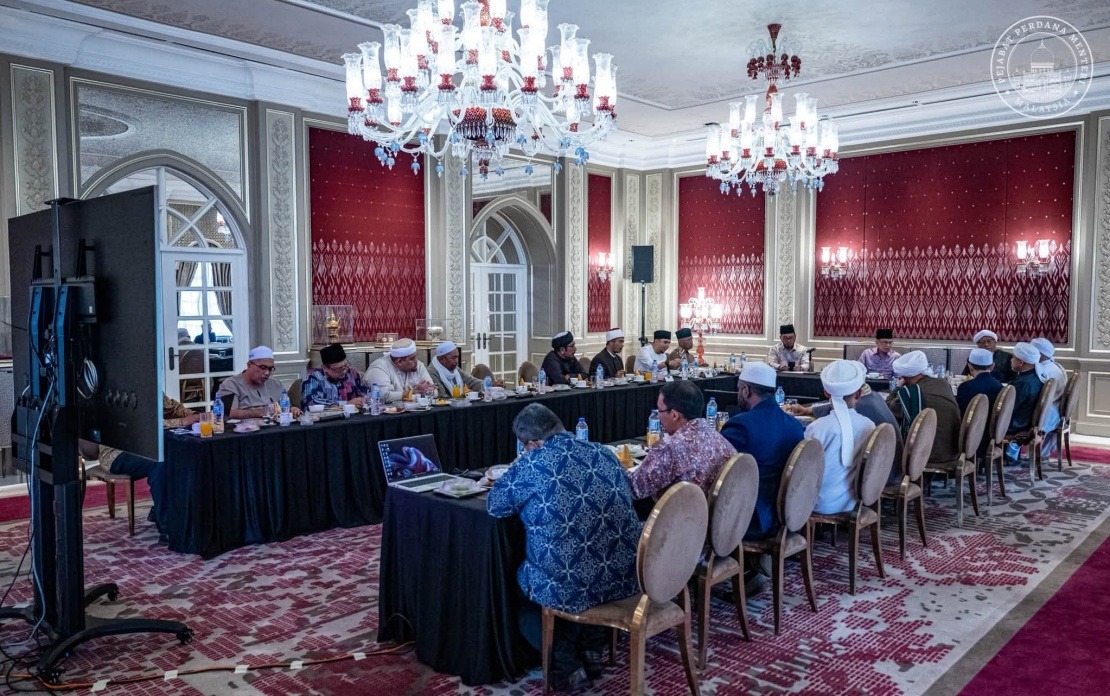
Prime Minister Datuk Seri Anwar Ibrahim has reaffirmed the government's commitment to integrating insights from Malaysia's religious scholarly community into its policymaking processes, viewing such engagement as essential to ensuring that administrative decisions remain aligned with both Islamic principles and contemporary national needs.
In remarks shared through social media, Anwar characterised his meetings with religious leaders as occasions for critical reflection rather than mere formalities. He stressed that meaningful consultation with knowledgeable figures in Islamic circles allows the government to refine its approach to governance, ensuring that initiatives affecting the Muslim population are substantiated by scholarship, enriched by expert counsel, and adapted to evolving societal expectations. This framing suggests a deliberate strategy to legitimise governmental actions through religious validation, a significant consideration in a Muslim-majority nation where the intersection of secular administration and Islamic authority remains complex.
Among those consulted was Sheikh Dr Muhyiddin Awwamah, representing Darul Hadis al-Awwamiyyah, during a series of muzakarah—traditional Islamic discussion forums—held in conjunction with Maulidur Rasul celebrations. The choice to engage specifically during this period is symbolically noteworthy, as it connects policy discussions to Islamic observance and demonstrates an alignment between government business and religious occasions. Such timing underscores the integration of religious and state calendars in Malaysia's governance framework.
The Prime Minister took particular note of Sheikh Dr Muhyiddin's lineage and scholarly heritage. His father, Al-'Allamah Sheikh Muhammad bin Awwamah, holds considerable standing within international Islamic academic circles, particularly for his expertise in hadith scholarship. By acknowledging this familial tradition of learning, Anwar positioned these consultations within a broader narrative of intellectual continuity and the preservation of Islamic scholarly traditions across generations—a theme that resonates strongly within Malaysia's Islamic institutional ecosystem.
Anwar's appreciation for the written works of Sheikh Muhammad bin Awwamah reveals an understanding that scholarly contributions transcend their immediate informational value. He framed these publications as custodians of intellectual heritage rather than mere reference materials, suggesting that engaging with such works represents a connection to established Islamic thought and a commitment to honouring the labours of previous scholars. This perspective reflects a philosophy in which government engagement with religious figures encompasses not only contemporary policy advice but also reverence for historical and intellectual foundations.
The series of dialogues appears designed to accomplish multiple objectives simultaneously. On one level, they function as consultation forums where government officials can access expert perspectives on issues of religious and social significance. On another, they serve as symbolic gestures affirming the government's respect for Islamic scholarship and its willingness to subordinate administrative processes to religious wisdom. For Malaysian Muslims, particularly those who view secular governance with some ambivalence, such visible consultation may enhance perceptions of governmental legitimacy.
The emphasis on listening to scholarly voices carries particular relevance in the Southeast Asian context, where several nations have grappled with tensions between modernising governance structures and maintaining religious authenticity. Malaysia's approach—inviting religious scholars into advisory roles—represents one model for managing this dynamic, positioning knowledge-holders as partners in governance rather than external critics or challengers to state authority.
For the religious scholarly community, such access represents an opportunity to influence policy directions on matters ranging from Islamic education to family law and religious affairs administration. The regular nature of these muzakarah suggests an institutionalised channel for scholarly input rather than ad-hoc consultation, potentially strengthening the advisory capacity of Malaysia's Islamic intellectual establishment within formal governmental processes.
Anwar's philosophical framing carries implicit messages about the conditions necessary for Islamic institutions to thrive within a modern nation-state. He suggests that the flourishing of Islam depends not merely on theological preservation but on the willingness of political leaders to genuinely attend to scholarly counsel. This proposition internalises religious vitality within the architecture of state decision-making, making governmental receptivity to scholarly guidance a prerequisite for religious flourishing.
The dialogue initiative also addresses broader questions about representation and legitimacy in Malaysian governance. By consulting recognised figures within Islamic scholarly hierarchies, the government demonstrates recognition of these individuals as legitimate voices for Muslim community interests—a positioning that carries weight in a context where religious credentials substantially influence social standing and moral authority.
Looking forward, the documented emphasis on these scholarly consultations suggests that the government intends to maintain or expand such engagement as a governance mechanism. For policymakers, religious scholars, and the general Muslim population, this institutionalisation of consultation represents a particular model of Islamic governance—one in which religious knowledge informs but does not determine state action, and where scholarly voices shape without controlling political outcomes.
The broader implication for Malaysia and the region involves the normative assertion that legitimate governance of Muslim-majority societies incorporates structured engagement with religious expertise. As other Southeast Asian nations navigate relationships between Islam and state authority, Malaysia's experience with scholarly consultation may offer instructive models for balancing religious values with administrative efficiency and contemporary governance demands.

