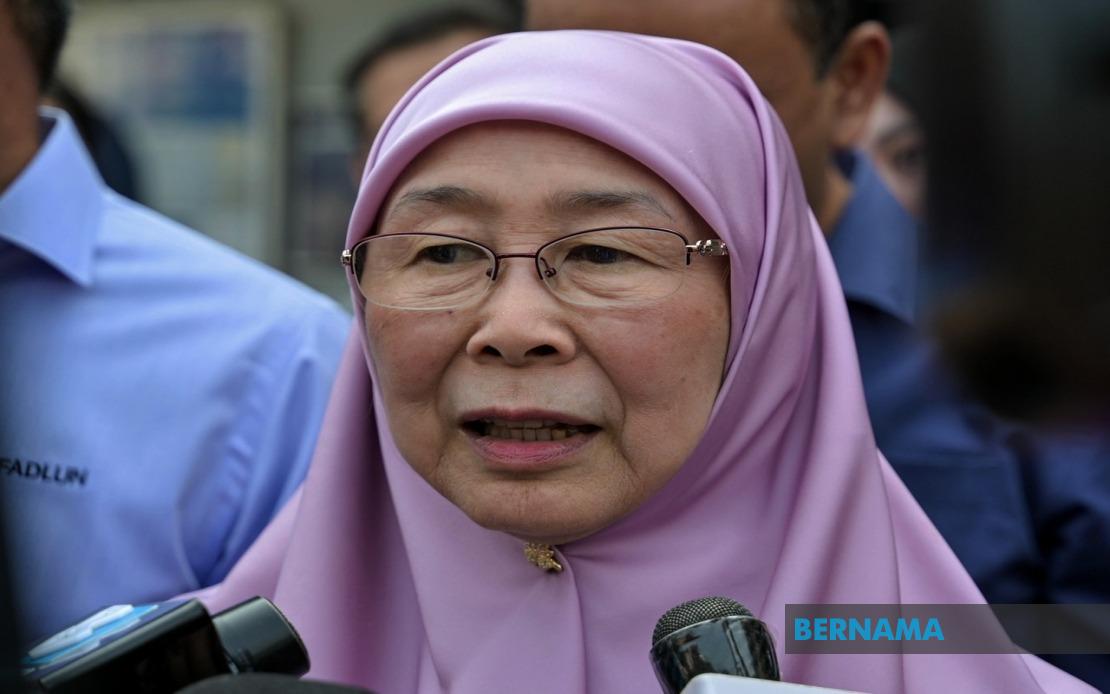
Prime Minister Datuk Seri Anwar Ibrahim is anticipated to leave hospital today after completing his medical treatment, marking the conclusion of a brief health episode that captured national attention. The announcement came from his wife, Datuk Seri Dr Wan Azizah Wan Ismail, who conveyed the positive development to members of the press while participating in official Independence Day commemorations.
The Prime Minister underwent an elective laparoscopic surgical intervention on Monday to address a para-umbilical hernia, a relatively common abdominal condition where tissue protrudes through a weakness in the muscle wall near the navel. The minimally invasive surgical approach employed by medical specialists represents a modern treatment methodology that typically permits quicker recovery periods compared to traditional open surgery, allowing patients to resume normal activities within a shorter timeframe.
Anwar expressed profound gratitude toward the numerous individuals who extended their support and prayers during his period of medical care, underscoring the personal and political significance attributed to his well-being across Malaysian society. Through his wife, the Prime Minister transmitted formal acknowledgments and thanks to those who demonstrated concern for his health restoration, reflecting the traditional Malaysian cultural emphasis on community solidarity during moments of personal adversity.
Dr Wan Azizah made the statement during her attendance at the Semarak Merdeka programme, a commemorative event organized in conjunction with the 2026 National Month celebrations held at the Bandar Tun Razak branch of the Kuala Lumpur City Hall. The timing of her public appearance and disclosure suggested an effort to reassure the nation of stable leadership continuity, particularly given Anwar's pivotal role in steering the country's political and economic agenda.
The disclosure carries particular significance for Malaysian governance structures and international relations. When national leaders undergo surgical procedures, questions inevitably arise regarding governmental operations, delegation of authority, and the capacity of institutional frameworks to maintain operational continuity. The swift communication regarding Anwar's expected discharge serves to minimize concerns about administrative disruption or power vacuums during the intervening period.
From a healthcare perspective, the successful execution of the laparoscopic procedure demonstrates the capabilities of Malaysia's medical infrastructure in managing conditions affecting the nation's leadership. Para-umbilical hernias, though generally not life-threatening, can cause considerable discomfort and complications if left unaddressed, making timely surgical intervention a prudent preventive measure. The elective nature of the procedure indicates that Anwar chose to address the condition proactively rather than allow it to potentially worsen or create operational constraints on his official duties.
The incident also reflects broader patterns within Malaysian political life, where public disclosure of leaders' health conditions has gradually evolved toward greater transparency compared to earlier decades. This shift aligns with contemporary expectations for governmental openness and accountability, particularly when leadership health intersects with national governance capacity. The straightforward manner of announcement through Dr Wan Azizah's statements demonstrates an apparent commitment to keeping the public appropriately informed without sensationalizing or minimizing the situation.
For the broader Southeast Asian context, Malaysia's demonstration of stable institutional functioning during a leader's brief medical absence carries implications for regional confidence in the nation's political stability. In an era where international investors and diplomatic partners scrutinize governmental continuity and institutional resilience, the calm management of this situation reinforces perceptions of administrative maturity and institutional strength.
Anwar's rapid recovery trajectory, reflected in the anticipated same-week discharge, suggests minimal complications from the surgical intervention and favorable post-operative progress. This positive outcome enables the Prime Minister to resume his extensive official schedule with minimal disruption, maintaining the momentum on his administration's policy initiatives and legislative priorities. For ministries and agencies requiring direct premier-level decision-making and guidance, the swift return represents a restoration of uninterrupted leadership engagement.
The personal dimension of public leadership also emerged through the episode, as the genuine concern expressed by citizens and the subsequent expressions of gratitude underscore the emotional connections between Malaysia's political leadership and its population. Such moments, while centered on individual health circumstances, provide opportunities for reflection on the shared investments in governmental stability and the collective appreciation for leaders navigating the demanding responsibilities of national office.

