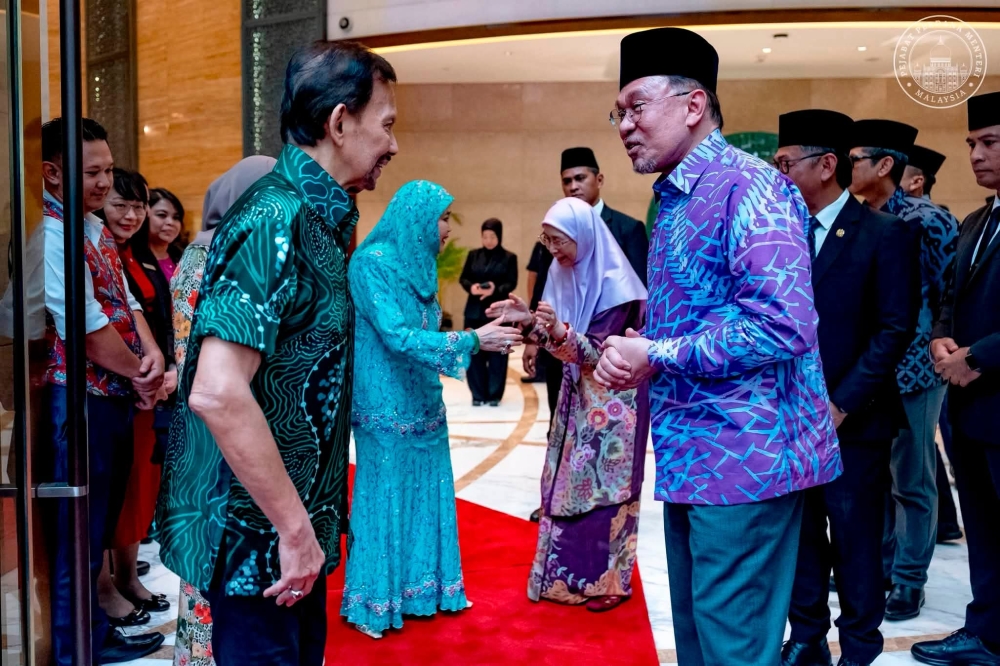
Prime Minister Datuk Seri Anwar Ibrahim has sent formal birthday greetings to Brunei Sultan Hassanal Bolkiah, using the occasion to underscore Malaysia's enduring commitment to strengthening the neighbouring nation's relationship and broader cooperation across the region. The gesture, though ceremonial in nature, reflects the ongoing diplomatic engagement between the two countries and signals continuity in Malaysia's bilateral approach to its smaller neighbour on the island of Borneo.
The exchange of courtesies between senior leaders serves as a barometer of state relations, particularly in Southeast Asia where protocol and personal connections between heads of government carry significant weight in determining the tenor of official interactions. Anwar's message arrives amid a period where Malaysia continues to manage a complex web of regional relationships, balancing economic partnerships, security considerations, and historical ties across the Association of Southeast Asian Nations (ASEAN) framework.
Malaysia and Brunei share geographical proximity, cultural heritage, and membership in ASEAN, creating multiple channels for cooperation. The two nations have long-standing agreements covering trade, maritime security, education, and people-to-people exchanges. Brunei, despite its small size and population of roughly 440,000, holds strategic importance to Malaysia not least because of their shared maritime boundaries and the implications for regional stability in the South China Sea.
Anwar's reaffirmation of Malaysia-Brunei ties carries practical significance beyond diplomatic pleasantries. The bilateral relationship encompasses substantial commercial interactions, with Malaysian companies investing in Brunei's downstream oil and gas sectors, while Brunei remains a significant energy supplier to regional markets. Educational cooperation has also flourished, with Bruneian students studying at Malaysian universities and vice versa, fostering generational connections that underpin long-term bilateral understanding.
At the broader ASEAN level, both nations work within frameworks aimed at maintaining regional peace and managing disputes through dialogue rather than confrontation. Malaysia, as a larger economy and population centre, often takes leadership roles in regional initiatives, while Brunei contributes specialist expertise in niche areas such as Islamic finance and moderate governance models. The maintenance of warm bilateral relations thus supports the collective effectiveness of ASEAN as a diplomatic entity.
The messaging from Kuala Lumpur also reflects an awareness of regional sensitivities. In recent years, ASEAN solidarity has been tested by geopolitical pressures, including great power competition and maritime disputes. By reinforcing its commitment to stable relations with all neighbours, Malaysia seeks to demonstrate that it remains focused on cooperative rather than confrontational approaches, a position that has generally earned it credibility within ASEAN circles.
Brunei under Sultan Hassanal Bolkiah's long reign—he has ruled since 1967—has pursued a careful foreign policy balancing its relations with larger powers while maintaining its status as an independent nation. Malaysia, conversely, navigates more complex regional dynamics as a middle-power with significant economic clout and a larger military footprint. The relationship between the two requires consistent nurturing to ensure that differences in scale and influence do not create friction over resource management, maritime boundaries, or economic partnerships.
For Malaysian readers and policymakers, the significance of such diplomatic overtures lies in understanding that regional stability depends on maintaining functional relationships across multiple levels. Smaller gestures like birthday greetings, when backed by consistent policy implementation, help prevent misunderstandings from escalating and create a foundation of goodwill upon which more substantive discussions can occur when needed.
Looking ahead, Malaysia faces the challenge of managing its ASEAN relationships while also addressing domestic priorities and engaging with larger global powers. Brunei, for its part, seeks recognition as a stable and prosperous nation punching above its weight in regional affairs. The continuity of cordial relations serves both nations' interests and contributes to the broader Southeast Asian environment in which Malaysia must operate strategically.
The exchange between Anwar and the Brunei Sultan also sends a signal to other ASEAN members and international observers that Malaysia remains invested in strengthening ties within the bloc, rather than pursuing divisive agendas. In a region where partnership and consensus-building remain valuable diplomatic currency, such reaffirmations matter. They demonstrate that despite competing interests and occasionally divergent priorities, the commitment to maintaining the ASEAN community as a coherent entity persists across member states.

