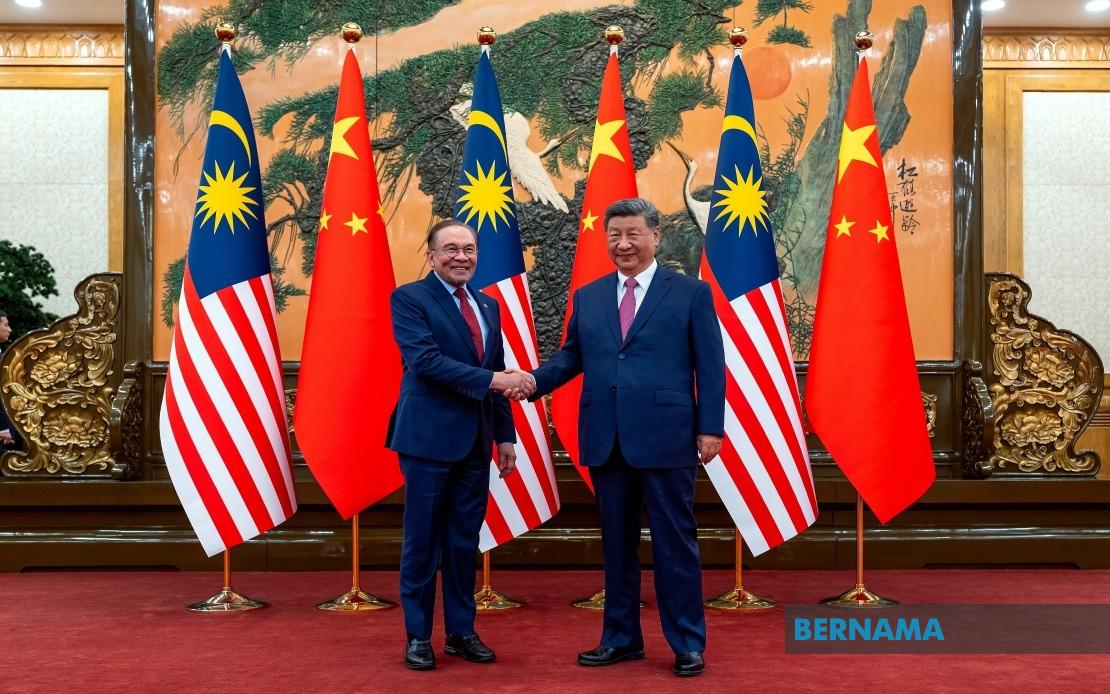
Prime Minister Datuk Seri Anwar Ibrahim marked the 105th anniversary of China's ruling party by dispatching a formal letter of congratulations to President Xi Jinping, expressing warm wishes from both the Malaysian government and its people. The gesture, communicated via a Facebook post on July 2, demonstrates the continued warmth in bilateral relations between Kuala Lumpur and Beijing, even as both nations navigate complex regional and global challenges.
In his message, Anwar acknowledged the significant historical role played by the Communist Party of China in steering the nation's trajectory over more than a century. He specifically praised how the party has leveraged China's deep civilisational heritage, accumulated wisdom from centuries of history, and enduring cultural values to propel the country towards unprecedented development and modernisation. This framing reflects Malaysia's diplomatic approach of honouring China's internal achievements while building on shared aspirations for regional advancement.
A cornerstone of Anwar's statement was Malaysia's landmark diplomatic decision made on May 31, 1974, when the country became the first non-socialist nation in Southeast Asia to formally recognise the People's Republic of China. This historic pivot, taken at a time of Cold War tensions, represented a bold exercise of independent foreign policy that prioritised pragmatism and regional stability over ideological alignment. The decision reflected Malaysia's recognition that engagement with Beijing would serve the nation's economic and strategic interests more effectively than isolation or confrontation.
More than five decades have elapsed since that momentous recognition, and Anwar characterised the intervening period as one of progressive strengthening of ties. The relationship has expanded far beyond initial diplomatic recognition to encompass trade, investment, cultural exchanges, and people-to-people connections. Malaysian businesses have benefited substantially from Chinese capital flows, while Chinese enterprises have found Malaysia an attractive gateway for regional operations. This deepening economic interdependence has created mutual incentives for stability and cooperation.
The Prime Minister's emphasis on Malaysia's commitment to continued strategic cooperation with China underscores several key priorities. First, it signals Malaysia's intention to maintain strong relations with Beijing regardless of broader geopolitical tensions or pressure from other powers. In an increasingly multipolar region where major powers compete for influence, this reaffirmation carries weight. Second, Anwar's framing around mutual respect, trust, and shared benefits reflects Malaysia's aspiration for partnerships based on equality rather than dependency, a delicate balance that many smaller nations in the region struggle to maintain.
The focus on regional peace, stability and prosperity suggests Malaysia views its China relationship as instrumental to broader Southeast Asian security architecture. Malaysia chairs important regional mechanisms and serves as a voice for ASEAN consensus-building. By reinforcing its partnership with China while maintaining relationships with other powers, Malaysia seeks to position itself as a stabilising force rather than a proxy in great power competition. This diplomatic balancing act has become increasingly challenging as tensions between major powers intensify.
Anwar's message arrives amid a period of recalibration in Malaysia-China relations. The Belt and Road Initiative has been both beneficial and controversial in Malaysia, with some major projects requiring renegotiation due to debt concerns and domestic political pressures. The Prime Minister's framing of future cooperation around shared benefits rather than simply accepting Chinese initiatives suggests Malaysia intends to engage from a position of greater negotiating strength. This represents a subtle but significant evolution from earlier administrations' approaches to Chinese partnership.
The diplomatic courtesy of sending formal congratulations to China's ruling party demonstrates Malaysia's sophisticated understanding of international relations protocol. Such gestures carry symbolic weight beyond their surface message, signalling continuity in foreign policy, respect for bilateral relations, and commitment to engagement. For Malaysian business interests operating in China and Chinese investors considering Malaysian projects, such high-level affirmations provide assurance of political stability and continued openness.
Looking forward, Malaysia's strategic relationship with China will likely remain central to its regional positioning. As ASEAN grapples with issues ranging from South China Sea disputes to trade arrangements with major powers, Malaysia's ability to maintain productive relations with Beijing while preserving ASEAN unity will be crucial. Anwar's message suggests Malaysia intends to pursue this balancing act through sustained dialogue, mutual benefit frameworks, and explicit commitment to peaceful regional coexistence, principles that have underpinned Malaysian foreign policy since its historic 1974 recognition decision.

