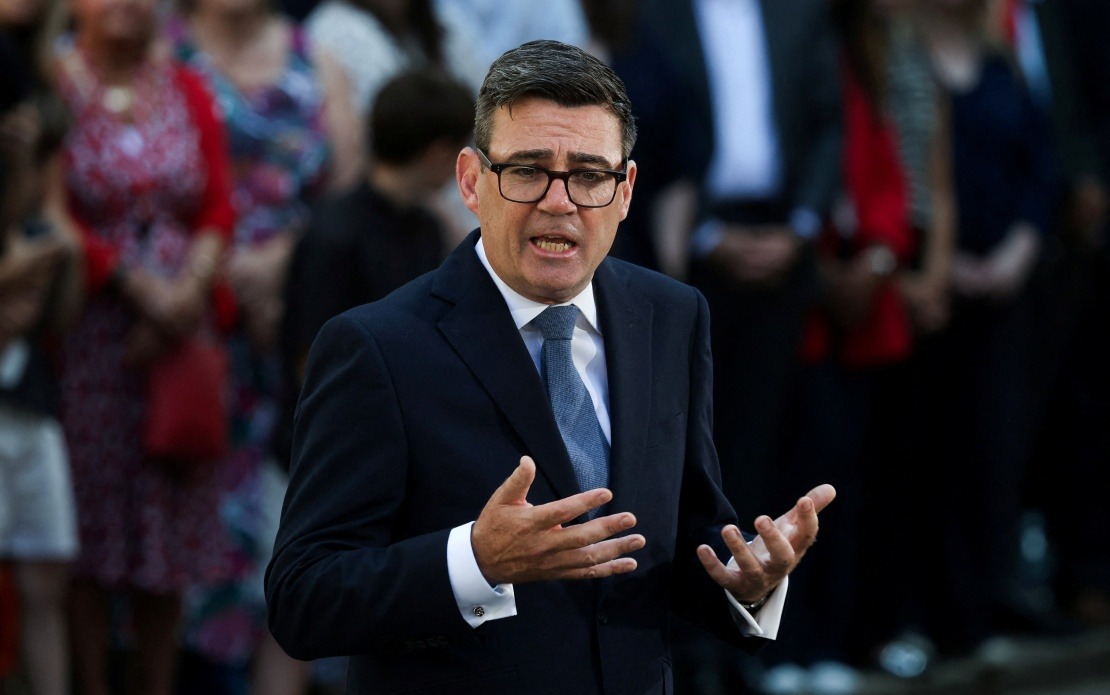
Prime Minister Datuk Seri Anwar Ibrahim has warmly welcomed Andy Burnham's ascension to the office of United Kingdom Prime Minister, seizing the moment to reaffirm Malaysia's determination to deepen its relationship with Britain across multiple strategic domains. In remarks shared on social media, Anwar outlined an ambitious agenda for bilateral cooperation that extends beyond traditional diplomatic courtesy into tangible economic and technological collaboration, signalling Kuala Lumpur's intent to position itself as a key partner for London in the Asia-Pacific region.
Burnham's assumption of the premiership on Monday marks the seventh change in British leadership within a decade, a period of considerable turbulence that has characterised UK governance. He succeeded Keir Starmer, who formally tendered his resignation at Buckingham Palace following Labour's internal recalibration. The rapid succession of prime ministers in Westminster reflects broader instability within the British political establishment, a context that makes Anwar's emphasis on continuity and enduring partnership particularly noteworthy. By highlighting the longevity of Malaysia-UK ties, Anwar appears to be offering Burnham a relationship grounded in stability and mutual respect, qualities potentially valuable to a newly installed government navigating immediate challenges.
Among the specific initiatives Anwar identified for acceleration is the finalisation of a Digital Trade Agreement between the two nations, a framework that would facilitate commerce in digital services and data-driven sectors where both economies possess complementary strengths. Malaysia's growing digital ecosystem and its position as a Southeast Asian technology hub align naturally with Britain's ambitions to expand its post-Brexit trading relationships, particularly in emerging markets. The pursuit of such an agreement reflects recognition that traditional trade patterns have shifted, and that future prosperity increasingly depends on facilitating cross-border digital transactions and intellectual property protections.
The Prime Minister also emphasised collaborative potential in artificial intelligence and digitalisation, sectors where Britain maintains significant research capabilities and Malaysia possesses growing expertise and application needs. As both nations grapple with the imperative to modernise their economies and maintain competitiveness in a rapidly evolving global landscape, structured cooperation in AI development, regulatory frameworks, and skills transfer could yield tangible benefits for both sides. Malaysia particularly stands to gain from exposure to British technological know-how whilst offering London valuable insights into Asian market dynamics and digital implementation challenges.
Clean energy cooperation and defence partnerships represent additional pillars Anwar identified for strengthening. The transition to renewable energy sources has become increasingly critical across Southeast Asia, where rising electricity demands must be reconciled with climate commitments. Britain's experience in offshore wind technology and renewable energy policy formulation could inform Malaysia's own energy transition strategy. On defence matters, deepening cooperation reflects broader geopolitical considerations regarding maritime security, regional stability, and counterterrorism efforts—areas where British military expertise and Malaysia's strategic geographic position create natural complementarities.
Remarkably, Anwar also commended Burnham for acknowledging that Britain's initial governmental response to the Gaza crisis had been insufficient, and for subsequently advocating for increased international pressure on the Israeli regime. This acknowledgment carries significant weight in a region where Palestine solidarity commands substantial public sympathy and where perceived Western double standards regarding international law generate considerable criticism. By praising Burnham's willingness to demonstrate what Anwar termed "moral clarity" on this contentious issue, the Malaysian Prime Minister signalled that London's approach to Middle Eastern affairs matters for the bilateral relationship and that consistency between stated values and foreign policy actions influences regional perceptions of British credibility.
The timing of Anwar's outreach is strategically significant, as 2025 will mark the seventieth anniversary of diplomatic relations between Malaysia and the United Kingdom, a relationship extending back to Malaysia's emergence as an independent nation. This milestone provides natural occasion for both governments to reflect upon seven decades of cooperation whilst simultaneously renewing commitments and establishing frameworks for the next chapter of engagement. By highlighting this anniversary in his congratulatory message, Anwar has effectively signposted an opportunity for the Burnham government to demonstrate its commitment to Asia-Pacific partnerships through concrete initiatives and high-level engagement during a celebratory year.
Anwar also extended gracious acknowledgment to outgoing Prime Minister Keir Starmer, expressing appreciation for his contributions toward strengthening Malaysia-UK relations throughout his tenure. This gesture reflects diplomatic protocol and also recognition that maintaining relationships across changes in leadership requires conscious effort and symbolic affirmation. By publicly thanking Starmer whilst simultaneously extending warm welcome to his successor, Anwar has positioned Malaysia as a reliable, consistent partner unperturbed by leadership transitions—an approach that underscores Malaysia's interest in stable, long-term engagement rather than relationships contingent upon particular individuals.
For Malaysia and the broader Southeast Asian region, the cultivation of robust partnerships with major Western democracies remains strategically prudent, particularly in an era characterised by geopolitical competition between major powers and shifting global alignments. Britain's post-Brexit repositioning toward Indo-Pacific engagement creates opportunities for Southeast Asian nations to deepen relationships with a G7 member committed to the region's prosperity and stability. Malaysia's proactive approach to welcoming Burnham and articulating a forward-looking agenda positions the nation favourably for accessing British expertise, investment, and political influence whilst offering London meaningful entry points into Southeast Asian markets and diplomatic networks.
The comprehensiveness of Anwar's outlined partnership agenda—spanning digital commerce, technology, energy, defence, and values-based foreign policy—demonstrates sophisticated understanding that contemporary international relationships must transcend ceremonial protocols and address substantive issues relevant to both populations' welfare and aspirations. By grounding bilateral relations in tangible cooperation frameworks rather than nostalgic invocations of historical ties, Malaysia has signalled its expectation that the partnership should generate measurable benefits and contribute meaningfully to national development objectives. This forward-oriented approach should resonate positively with the Burnham government as it charts its own course in international affairs.

