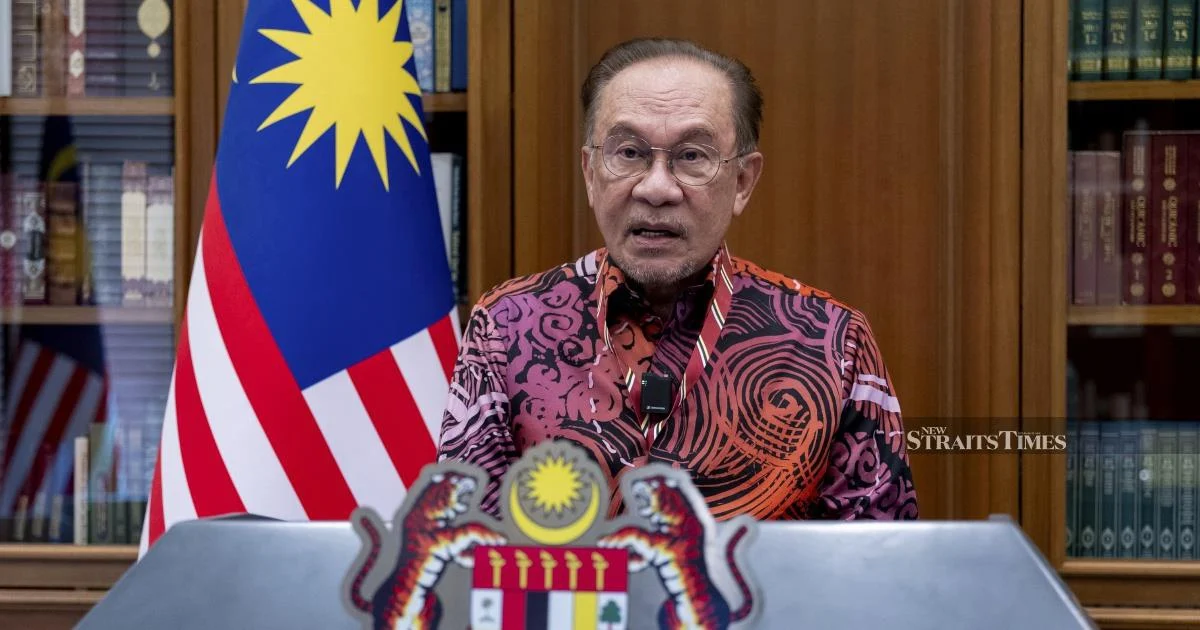
Prime Minister Datuk Seri Anwar Ibrahim has extended formal congratulations to China's government on reaching the 105th anniversary milestone of the Communist Party of China, underscoring the ceremonial dimensions of Malaysia's high-level diplomatic relations with Beijing.
The gesture represents the continuation of established protocol between Kuala Lumpur and the Chinese capital, where official acknowledgment of significant national anniversaries serves as a foundational element of bilateral relations. Anwar's message arrives amid an era of intensified economic and strategic cooperation between Malaysia and China, particularly through initiatives tied to infrastructure development, trade partnerships, and regional security dialogue.
China's Communist Party, founded on July 1, 1921, has shaped the world's second-largest economy and remains the dominant political force throughout the East and Southeast Asian regions. The anniversary carries symbolic weight in Chinese governance cycles, with leadership typically using such occasions to reaffirm developmental goals and ideological commitments to both domestic and international audiences. For Malaysia, which maintains formal diplomatic relations with Beijing, such commemorations function as natural checkpoints for assessing and refreshing engagement strategies.
The commemoration also reflects the significance China holds within Malaysia's broader geopolitical calculus. As the nation's primary trading partner and a major source of foreign direct investment, particularly in manufacturing, logistics, and technology sectors, China's trajectory directly influences Malaysian economic planning and regional positioning. Anwar's congratulatory message signals continuity in Kuala Lumpur's commitment to pragmatic engagement with Beijing across multiple domains, from commerce to cultural exchange.
Anwar's presidency since 2023 has emphasised balanced diplomacy within Southeast Asia's complex strategic environment, where navigating relationships with major powers remains essential for advancing Malaysian interests. His administration has actively promoted Malaysia as a credible bridge between Western economic systems and China's increasingly dominant regional presence, positioning Kuala Lumpur as both reliable partner to Beijing and responsible player in global governance frameworks.
The timing of such diplomatic gestures often carries additional significance within Malaysia's domestic political context. Public expressions of international engagement serve to demonstrate governmental competence in foreign relations, a particularly relevant consideration given ongoing debates within Malaysian society regarding optimal approaches to managing relationships with external powers. Anwar's gesture provides reassurance to business communities and constituencies invested in maintaining stability with Malaysia's largest neighbouring economic power.
Bilateral relations between Malaysia and China have expanded considerably over recent decades, encompassing infrastructure projects like the East Coast Rail Link and the Klang Valley Double-Track Project, joint initiatives in digital innovation, and increasing military-to-military cooperation through defence dialogues and training exchanges. These deepening connections render ceremonial diplomatic expressions like Anwar's anniversary greeting more than mere formality—they function as acknowledgments of shared interest in preserving and extending collaborative frameworks that benefit both nations.
Southeast Asian nations, including Malaysia, have become increasingly attuned to the importance of managing great power competition while extracting maximum benefit from their strategic positioning. Anwar's message exemplifies this calculated approach, offering respect to Beijing while maintaining Malaysia's longstanding diplomatic tradition of engaging equitably with multiple powers across the Indo-Pacific region. The congratulations underscore that Kuala Lumpur views China's continued stability and prosperity as broadly beneficial to regional peace and prosperity.
The anniversary itself occurs within a context of renewed strategic competition in the Indo-Pacific, where major powers reassert their regional priorities and influence. Malaysia's position as both Southeast Asian state and significant Indian Ocean stakeholder means that its management of China relations carries implications extending beyond bilateral concerns, affecting broader regional equilibrium and the sustainability of multilateral frameworks through which Southeast Asian nations traditionally amplify their collective voice in international affairs.
Anwar's acknowledgment also comes as China undergoes its own internal consolidation processes under current leadership, with particular emphasis on technological self-sufficiency, domestic innovation capacity, and expanded regional connectivity through mechanisms like the Belt and Road Initiative. Malaysia's participation in these Chinese-led frameworks remains substantial, making diplomatic courtesies toward Beijing reflective of genuine economic interdependence rather than ceremonial gesture alone.
Looking forward, Malaysia's engagement with China will likely continue balancing commercial opportunity against geopolitical prudence. Anwar's consistent emphasis on leveraging Malaysia's geographical position and economic potential suggests that such diplomatic overtures serve broader strategic objectives, including attracting investment, securing access to advanced technologies, and maintaining influence within regional organisations where both nations participate. The congratulatory message therefore functions simultaneously as ceremonial courtesy, strategic signal, and practical affirmation of Kuala Lumpur's commitment to deepening ties with its most consequential regional partner.

