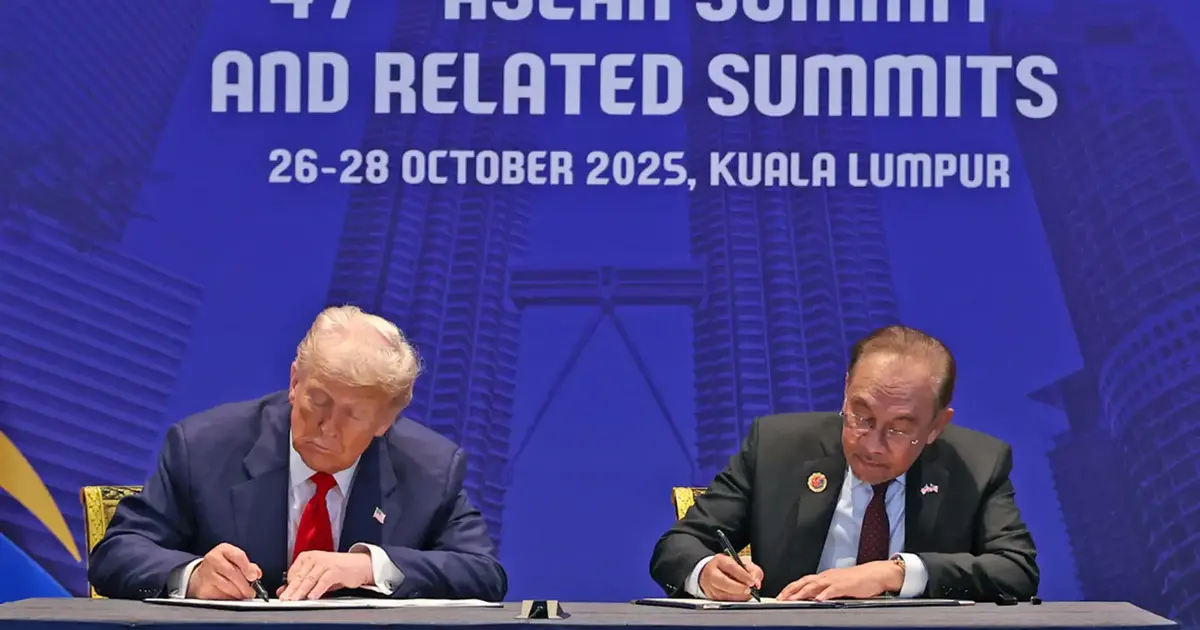
Prime Minister Anwar Ibrahim and his government have launched a formal motion to dismiss a legal challenge brought by opposition members of parliament against the reciprocal trade agreement with the United States. The filing represents an escalation in tensions between the ruling coalition and opposition benches over the bilateral commercial arrangement, which has proven contentious since its negotiation.
The government's application to strike out the suit signals its confidence in the legal standing of the trade agreement and its domestic implementation. By seeking dismissal at an early stage, the administration aims to prevent the litigation from proceeding to substantive hearings where the merits of the opposition's arguments would be examined in detail. This tactical approach is common in complex constitutional matters where governments seek to establish that cases lack legal foundation before trial.
Concurrently, the opposition MPs have submitted a separate application requesting that constitutional questions arising from the trade deal be referred directly to the Federal Court. This dual strategy by the opposition reflects the fundamental nature of their objections, suggesting they believe the agreement raises issues that transcend ordinary commercial law and touch upon Malaysia's constitutional framework. The request for Federal Court referral demonstrates their intent to elevate the dispute beyond standard commercial litigation into the realm of constitutional interpretation.
The Malaysia-US trade agreement has become a focal point for political contestation in recent months, with different stakeholders expressing concerns about its implications for Malaysian sovereignty, local industries, and trade policy autonomy. Opposition politicians have questioned whether proper parliamentary procedures were followed and whether the agreement's terms adequately protect Malaysian interests. These concerns reflect broader anxieties within Malaysian business and political circles about the balance of power in bilateral trade relationships with larger economies.
The reciprocal nature of the trade deal means it functions as a mutual commitment binding both nations to specific trade terms and dispute resolution mechanisms. Such agreements typically contain provisions that restrict each country's ability to unilaterally modify tariffs or regulatory standards without triggering responses from their trading partner. The opposition's focus on constitutional questions suggests they may be arguing that certain provisions exceed the government's constitutional authority or require parliamentary ratification beyond what was provided.
Anwar Ibrahim's administration has sought to portray the agreement as beneficial for Malaysia's economic integration and competitiveness in regional trade networks. Government officials have emphasised the deal's potential to enhance market access for Malaysian exporters and attract increased foreign investment. However, the opposition maintains that inadequate public consultation and parliamentary scrutiny preceded the deal's finalisation, raising questions about democratic legitimacy and procedural propriety in how major trade commitments are negotiated and approved.
The Federal Court referral request carries particular significance because it would permit Malaysia's highest constitutional authority to opine on whether existing legal frameworks adequately govern trade agreements. A successful referral would allow the court to clarify the constitutional boundaries of executive power in concluding international commercial arrangements and the extent to which parliament must be involved in such decisions. This could establish precedents affecting how future trade agreements are handled constitutionally.
The government's decision to apply for dismissal suggests confidence that the opposition's legal arguments lack sufficient constitutional foundation to warrant court examination. Officials may contend that trade agreements fall within established executive prerogatives and that parliament has already implicitly approved the arrangement through budget appropriations or other legislative mechanisms. The outcome of the dismissal application will therefore signal the courts' preliminary view of whether the constitutional questions raised possess merit requiring fuller consideration.
The timing of these legal manoeuvres coincides with Malaysia's broader policy debates regarding trade relationships with major powers. Regional observers note that tension between economic integration aspirations and sovereignty concerns have intensified across Southeast Asia, making Malaysia's experience instructive for other countries navigating similar trade agreements. The resolution of this dispute could influence how other regional nations approach parliamentary oversight of major bilateral trade commitments.
For Malaysian businesses, the legal uncertainty surrounding the agreement's enforceability creates planning challenges. Exporters and importers investing in infrastructure or supply chain adjustments based on the deal's provisions face potential disruption if courts subsequently invalidate key terms. This practical dimension adds economic weight to the constitutional and political dimensions of the dispute.
The opposition's multifaceted legal strategy, combining dismissal resistance with constitutional referral requests, reflects sophisticated litigation planning aimed at maximising the chances that substantive issues receive judicial examination. By simultaneously arguing that the case should proceed and that constitutional questions warrant Federal Court attention, the MPs maintain multiple pathways to potentially influencing the agreement's implementation or interpretation.
The courts' handling of these preliminary applications will establish the framework within which the Malaysia-US trade agreement controversy unfolds. Should the government's dismissal application succeed, the opposition would need to pursue alternative channels for challenging the deal, potentially through parliamentary motions or administrative law mechanisms. Conversely, if courts permit proceedings to advance or approve constitutional referrals, the government faces the prospect of judicial scrutiny over its implementation of the agreement.