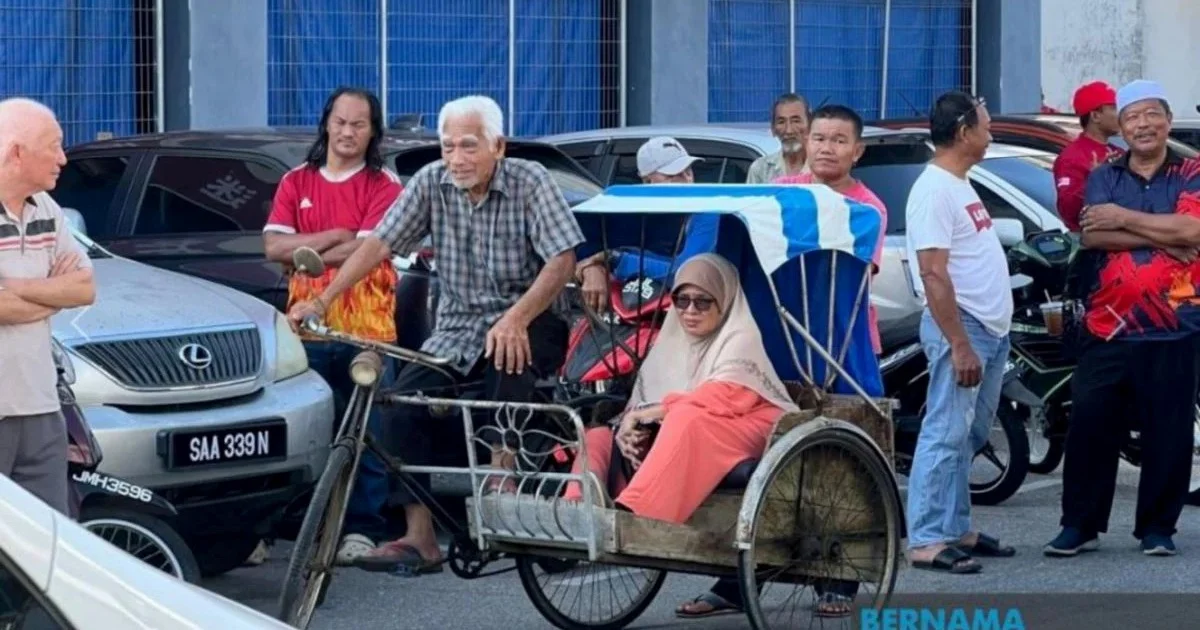
Prime Minister Datuk Seri Anwar Ibrahim has publicly acknowledged the remarkable determination of an 86-year-old trishaw rider in Kuala Lumpur, who recently pedalled his vehicle nearly a kilometre to realise his wife's long-held desire to meet the nation's leader in person. The gesture, rooted in simple affection and a husband's commitment to his spouse, caught the attention of the Prime Minister, who took time to express his appreciation for the elderly man's dedication.
The incident reflects a touching narrative that has resonated across Malaysian society—one that underscores the enduring role of traditional transportation in urban communities and the human stories that often go unnoticed in the hustle of city life. Trishaw riders, many of whom are elderly and have operated their vehicles for decades, represent a vanishing cultural institution in major Malaysian cities, where modern alternatives have gradually displaced their livelihoods. This elderly man's journey, therefore, carries significance beyond the simple act of meeting a political leader; it embodies persistence and the determination of Malaysia's older generation to remain engaged and active despite advancing age.
Anwar's public recognition of this incident demonstrates a broader political awareness of such grassroots encounters and their importance in maintaining connection between leadership and ordinary citizens. The Prime Minister's gratitude, expressed through media coverage and official acknowledgment, validates the effort undertaken by the elderly rider and his wife, transforming what might have been a private family moment into a symbol of civic engagement and human resilience. Such interactions, when amplified through official channels, reinforce narratives about accessibility and the approachability of national leadership.
The trishaw, once a ubiquitous sight throughout Malaysian cities, has diminished significantly as motorised transport became the norm. In Kuala Lumpur particularly, these colourful, manually-powered vehicles have been relegated to tourist attractions and heritage routes, with ageing operators struggling to maintain their trade against economic pressures and changing urban landscapes. The decision by an 86-year-old man to propel his trishaw nearly a kilometre speaks to both his physical resilience and his refusal to be sidelined by age or technological change. For his wife, the gesture represented far more than transportation; it was an embodiment of marital devotion and the fulfilment of a personal aspiration.
The broader context of elderly livelihoods in Malaysia deserves consideration here. Senior citizens who continue working, whether out of economic necessity or personal choice, often receive limited recognition for their contributions to the social fabric. Many elderly Malaysians remain economically active well into their eighties, whether through formal or informal employment, sustaining themselves and sometimes supporting family members. Public acknowledgment of such individuals, particularly by high-ranking officials, can shift perceptions and encourage greater societal respect for the contributions of older workers.
Anwar's response also highlights the role of symbolic gestures in political leadership. While the Prime Minister's appreciation may seem modest in scope, its public nature amplifies its significance. In an era where political leadership often appears distant from the daily realities of ordinary citizens, such moments of genuine human connection—regardless of how they originate—capture public imagination and reinforce the idea that leaders remain attuned to the experiences of ordinary Malaysians. The act of pausing to acknowledge an elderly man's effort transcends typical political protocol.
The narrative also touches upon the evolving relationship between Malaysians and their political leaders. The willingness of an elderly couple to undertake such a journey to see the Prime Minister suggests a level of civic engagement and curiosity that remains significant in Malaysian culture. Whether motivated by admiration, civic duty, or simple human curiosity, such acts reflect the ongoing relevance of national leadership figures in the consciousness of ordinary citizens, even in an age of digital connectivity and virtual access.
For the elderly trishaw rider, this recognition likely brought immense personal satisfaction. The validation of his effort by the nation's Prime Minister transforms his arduous journey from a private family affair into a moment of public acknowledgment. At an age when many individuals fade into invisibility within society, this recognition serves as a powerful affirmation of his continued relevance and worth. His wife's wish, fulfilled through her husband's determination, has become a small but memorable chapter in the contemporary narrative of Malaysia's civic life.
The incident also serves as a subtle reminder of the importance of honouring Malaysia's elderly population and the diverse ways they continue to participate in society. From informal economic activities to civic engagement, older Malaysians remain vital contributors to their communities. Stories such as this one deserve amplification not merely for their emotional appeal, but for what they reveal about societal values and the continued agency of elderly citizens in shaping their own narratives and aspirations.

