%22%2F%3E%3C%2Fpattern%3E%3C%2Fdefs%3E%3Crect%20width%3D%22100%25%22%20height%3D%22100%25%22%20fill%3D%22url(%23ph51uzfg)%22%2F%3E%3Crect%20width%3D%22100%25%22%20height%3D%22100%25%22%20fill%3D%22url(%23ph51uzfp)%22%2F%3E%3Ctext%20x%3D%2250%25%22%20y%3D%2250%25%22%20text-anchor%3D%22middle%22%20dominant-baseline%3D%22central%22%20fill%3D%22rgba(255%2C255%2C255%2C0.95)%22%20font-family%3D%22Georgia%2C%20'Times%20New%20Roman'%2C%20serif%22%20font-weight%3D%22700%22%20font-size%3D%22272%22%20letter-spacing%3D%22-0.02em%22%3EAnwar%3C%2Ftext%3E%3C%2Fsvg%3E)
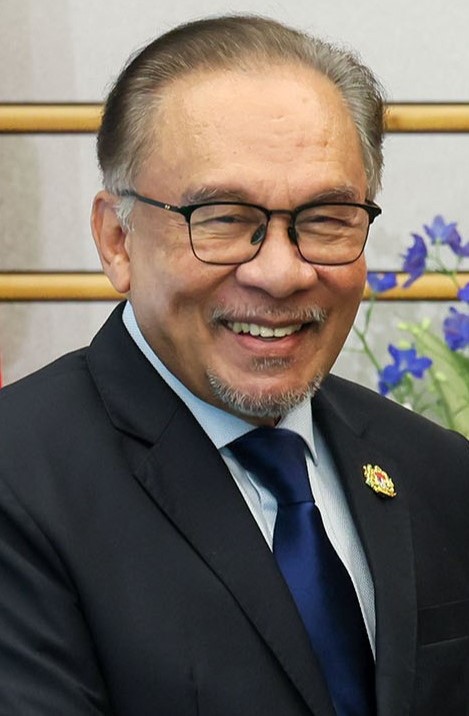
Prime Minister Datuk Seri Anwar Ibrahim extended a warm welcome to Bangladesh Prime Minister Tarique Rahman at a state luncheon held at Seri Perdana Complex in Putrajaya on June 22, underscoring Malaysia's commitment to strengthening diplomatic ties with the South Asian nation. The high-level engagement reflects growing bilateral cooperation between the two countries, with Tarique's visit representing a significant diplomatic milestone as his inaugural official bilateral journey since assuming the Bangladesh premiership in February 2026.
The ceremonial reception highlighted the cultural dimensions of Malaysia-Bangladesh relations, with students from five educational institutions across Selangor and Putrajaya—Sekolah Kebangsaan Presint 8(2) Putrajaya, Sekolah Menengah Kebangsaan Dengkil, SMK Agama Sungai Merab, Sekolah Menengah Sains Selangor, and Sekolah Menengah Agama Persekutuan Kajang—lining the pathway to greet the visiting delegation with warm welcoming chants. Performers from Istana Budaya presented a traditional dance performance, creating a culturally immersive welcome that demonstrated Malaysia's efforts to showcase its heritage and hospitality to the Bangladeshi leadership.
The menu itself carried symbolic significance, featuring tropical fruits at the intersection of both nations' agricultural traditions. Durian, Malaysia's celebrated "king of fruits," was paired with jackfruit specially imported from Bangladesh, a culinary gesture that bridged the two countries' agricultural sectors and reinforced the growing economic interdependence between them. The choice of menu items underscored how trade and cultural exchange operate hand in hand in regional diplomacy, with food serving as a tangible representation of bilateral commerce and shared prosperity.
The luncheon gathered Malaysia's senior ministerial leadership, reflecting the importance placed on this engagement within the government hierarchy. Accompanying Prime Minister Anwar were his wife Datuk Seri Dr Wan Azizah Wan Ismail and Bangladesh PM Tarique's spouse Dr Zubaida Rahman. The ministerial contingent included Foreign Minister Datuk Seri Mohamad Hasan, Home Affairs Minister Datuk Seri Saifuddin Nasution Ismail, Investment, Trade and Industry Minister Datuk Seri Johari Abdul Ghani, Human Resources Minister Datuk Seri R. Ramanan, Minister in the Prime Minister's Department (Religious Affairs) Dr Zulkifli Hasan, and Chief Secretary to the Government Tan Sri Shamsul Azri Abu Bakar. This assembly indicated that the bilateral relationship spans multiple strategic pillars beyond traditional foreign affairs, encompassing economic cooperation, security coordination, and religious and humanitarian collaboration.
Prior to the luncheon, Tarique received a formal state welcome at the Perdana Putra Complex, where he engaged in bilateral discussions with Anwar that explored avenues for deepened cooperation. According to a statement from Wisma Putra, the Malaysian foreign ministry, the visit is designed to fortify the already close bilateral relationship between the two nations and expand collaborative frameworks in areas of strategic mutual interest. These discussions likely addressed regional security challenges, maritime cooperation in the Indian Ocean region, and potential joint ventures in emerging sectors such as renewable energy and digital infrastructure.
The economic dimension of Malaysia-Bangladesh relations has expanded substantially, with 2025 trade figures demonstrating the scale of commercial integration. Total bilateral trade reached RM12.18 billion, equivalent to approximately US$2.84 billion, positioning Bangladesh as Malaysia's 28th largest trading partner globally. For the broader South Asian region, Bangladesh ranks as Malaysia's second-largest partner in all critical metrics—total trade volume, export destination, and import source—yielding only to India in relative importance. This positioning underscores Southeast Asia's growing integration with South Asian markets and the pivotal role Malaysia plays as a commercial intermediary.
Malaysia's export profile to Bangladesh reveals the advanced industrial capabilities of the Malaysian economy. Total exports reached RM10.08 billion (US$2.35 billion) in 2025, with petroleum products dominating as the principal export category. This dependency on energy exports reflects Bangladesh's rapidly expanding industrial base, which requires substantial hydrocarbon inputs to fuel manufacturing growth and power generation. As Bangladesh accelerates its industrialization trajectory and urbanization pace, Malaysia has positioned itself as a critical energy supplier, a relationship that is likely to deepen in coming years as the Bangladeshi economy continues its upward growth curve.
Imports flowing from Bangladesh to Malaysia totaled RM2.10 billion (US$500 million) in 2025, predominantly comprising textiles, apparel, and footwear products. This import composition reveals Bangladesh's comparative advantage in labor-intensive manufacturing, where the country has developed sophisticated supply chains and manufacturing ecosystems over several decades. For Malaysian retailers, consumers, and fashion enterprises, Bangladesh represents a cost-competitive sourcing destination that feeds into regional and global value chains. The relatively balanced nature of the trade relationship—with Malaysia exporting higher-value energy and industrial inputs while importing finished consumer goods—suggests a complementary economic relationship that benefits enterprises and consumers across both countries.
The timing of Tarique's visit carries significant strategic implications for Southeast Asian geopolitics and regional stability. Bangladesh, with its 170 million-strong population and growing economic weight, has become increasingly central to regional discussions on maritime security, climate resilience, and South-Southeast Asian cooperation frameworks. Malaysia's engagement with Bangladesh reflects broader efforts to strengthen ties across the Indian Ocean region and consolidate ASEAN's partnerships with important South Asian stakeholders. The bilateral relationship also carries implications for Malaysia's role as a bridge between Southeast and South Asian regional architecture, particularly given Malaysia's membership in forums like ASEAN and its observer status in the South Asian Association for Regional Cooperation (SAARC) framework.
Looking forward, the visit establishes groundwork for expanded collaboration across multiple sectors. Areas for potential deepening include workforce mobility agreements that could facilitate Bangladeshi skilled workers entering Malaysia's manufacturing and services sectors, joint ventures in renewable energy as both nations pursue decarbonization objectives, and enhanced people-to-people exchanges through cultural and educational partnerships. The government-to-government engagement signals commitment to translating trade statistics into tangible improvements in bilateral institutional capacity, regulatory harmonization, and long-term strategic alignment. For Malaysian businesses, particularly those in petrochemicals, engineering, and infrastructure development, Bangladesh represents an expanding market with significant infrastructure needs and growing purchasing power.