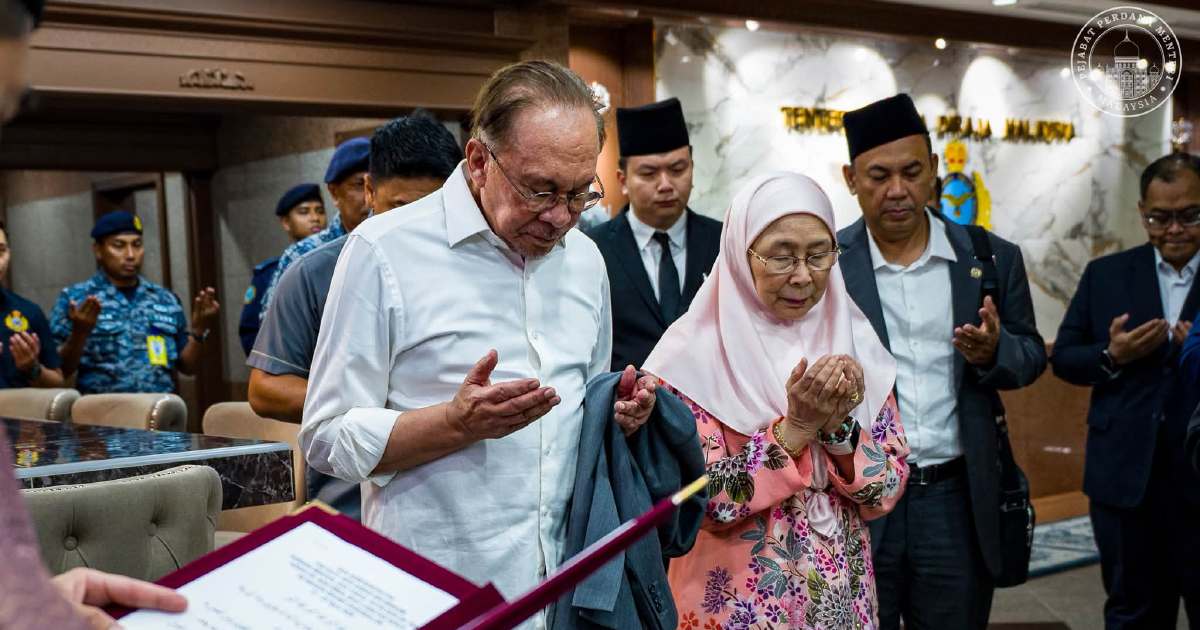
Prime Minister Datuk Seri Anwar Ibrahim has arrived in Brunei today to participate in high-level consultations with his Bruneian counterpart, marking the 27th iteration of the Annual Leaders' Consultation mechanism that underpins the relationship between the two neighbouring nations. The two-day working visit underscores the continued commitment both countries maintain towards strengthening their bilateral partnership through structured dialogue at the highest political levels.
The Annual Leaders' Consultation represents one of the most significant institutional frameworks for Malaysia-Brunei engagement, providing a formal platform for the prime ministers of both nations to discuss matters of mutual concern and chart the course of their bilateral relationship. These consultations have evolved over nearly three decades into a comprehensive forum where political, economic, and security issues can be addressed comprehensively rather than through ad-hoc meetings or reactive diplomacy.
Malaysia and Brunei share deeply intertwined histories, geography, and cultural bonds that make their relationship strategically significant for the broader Southeast Asian region. The two nations are neighbours sharing maritime boundaries and common interests in maritime security, trade facilitation, and regional stability. Beyond their immediate bilateral relationship, both countries are integral members of the Association of Southeast Asian Nations and collaborate extensively on regional initiatives that affect the wider Indo-Pacific region.
The timing of this visit reflects the importance both governments place on maintaining momentum in their diplomatic engagement despite the busy schedules typical of national leaderships. Such high-level visits require considerable preparation and coordination, suggesting that both capitals view this consultation as an opportune moment to address contemporary challenges and opportunities facing their bilateral relationship.
Bilateral economic ties between Malaysia and Brunei have expanded significantly in recent years, encompassing sectors ranging from manufacturing and energy to financial services and tourism. The consultation forum provides an appropriate venue to review trade statistics, discuss tariff arrangements, and explore new areas for commercial cooperation. Malaysian businesses have substantial investments in Brunei, while Bruneian enterprises maintain a presence in Malaysian markets, creating interdependencies that benefit from regular high-level policy coordination.
Security cooperation constitutes another critical dimension of the Malaysia-Brunei partnership. Both nations share responsibility for maritime domains that require coordinated approaches to challenges including piracy, human trafficking, and resource management. The South China Sea remains an area where their interests converge, and bilateral consultations provide opportunities to coordinate positions on regional security matters and uphold principles of freedom of navigation and international law.
Within the ASEAN context, Malaysia and Brunei often coordinate their positions on regional issues, ranging from the ASEAN Regional Forum to the East Asia Summit. The consultation framework allows both prime ministers to align their perspectives on emerging regional challenges before they are addressed in broader multilateral forums, strengthening ASEAN's collective decision-making processes. This coordination capacity has proven valuable when the bloc seeks to maintain consensus on issues affecting regional peace and prosperity.
The visit also carries significance for demonstrating Malaysia's commitment to maintaining strong ties with all ASEAN neighbours, particularly its immediate regional partners. In an era where major powers compete for influence in Southeast Asia, bilateral meetings between ASEAN leaders reinforce the centrality of intra-regional relationships and the principle of ASEAN solidarity. Malaysia's engagement with Brunei exemplifies the principle that regional countries prioritise their own institutional frameworks and mutual understanding over external alignments.
Cultural and people-to-people exchanges form an increasingly important component of Malaysia-Brunei relations, with educational exchanges, tourism flows, and professional networks strengthening social bonds between the two societies. The consultation process, while primarily focused on governmental matters, creates opportunities to review progress in these people-centred initiatives and identify new avenues for fostering closer community connections.
Looking ahead, contemporary challenges such as climate change, pandemic preparedness, and digital transformation are likely to feature prominently in discussions between the two leaders. Both nations recognise that certain categories of challenges transcend borders and require coordinated regional responses. The consultation mechanism proves invaluable for identifying shared vulnerabilities and developing collaborative solutions that benefit both populations.
The 27th iteration of this institutional dialogue also provides context for understanding the maturity and stability that has characterised Malaysia-Brunei relations. Unlike some regional partnerships that experience periodic tensions, the Malaysia-Brunei relationship demonstrates consistent engagement and collaborative problem-solving. This stability creates a foundation upon which both nations can build increasingly sophisticated cooperation in areas of mutual benefit.
Prime Minister Anwar Ibrahim's presence in Bandar Seri Begawan signals Malaysia's leadership commitment to maintaining robust regional relationships and upholding the diplomatic traditions that have served the nation well. The visit reinforces that despite competing priorities and the demands of domestic governance, Malaysia continues to invest substantially in its bilateral relationships with fellow ASEAN members, demonstrating the regional orientation that remains central to Malaysian foreign policy.

