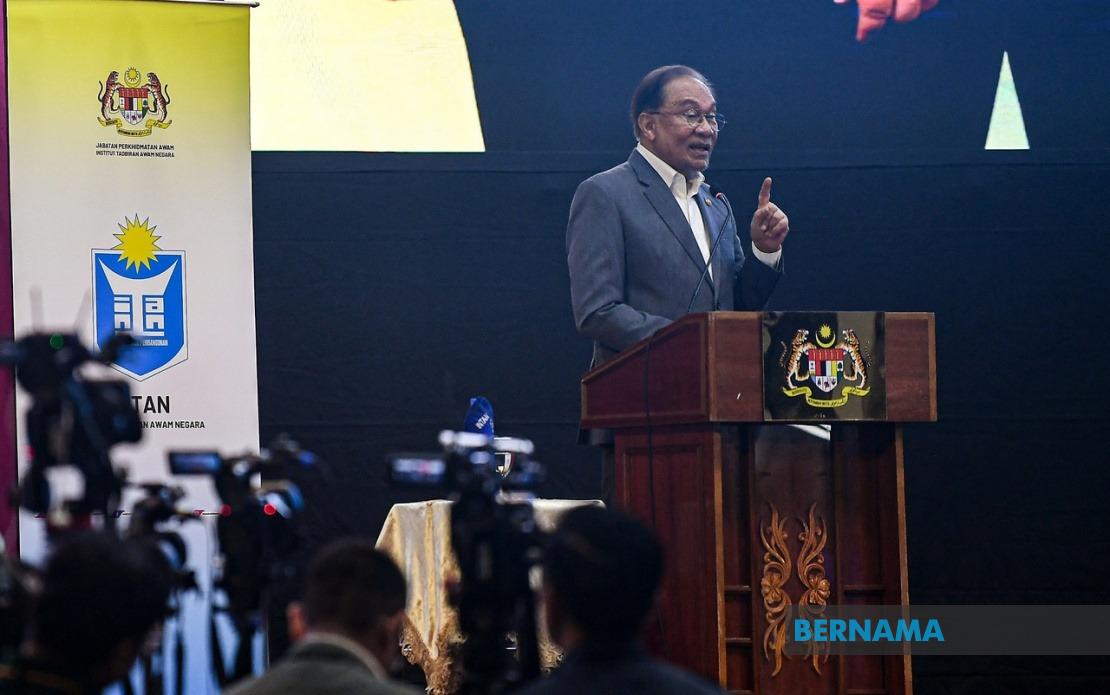
Prime Minister Datuk Seri Anwar Ibrahim addressed mounting observations about his communication style on July 20, acknowledging that his forthright manner when speaking to civil servants may have come across as unnecessarily stern to some observers. The apology emerged through a video statement posted on Facebook following his engagement with Central Zone civil servants at Universiti Islam Selangor, where he was accompanied by Chief Secretary to the Government Tan Sri Shamsul Azri Abu Bakar.
Anwar framed his remarks as a response to feedback from various quarters who have counselled him on the expectations surrounding prime ministerial decorum. According to those advisors, a leader occupying the nation's highest office should maintain composure, speak with measured tones, and engage audiences through thoughtful dialogue rather than raising his voice. The Prime Minister indicated he is making conscious efforts to align his communication approach with these expectations, though he stopped short of declaring complete success in modifying his natural inclination towards passionate expression.
The crux of Anwar's position centres on the distinction between style and substance. While he expressed willingness to accommodate concerns about his tone, he simultaneously defended the intensity underlying his messages to the civil service. He emphasised that when governmental matters and national concerns stir his emotions deeply, he feels compelled to articulate those feelings forcefully rather than dilute them through overly diplomatic language. This tension between form and content underscores a broader challenge facing any newly appointed leader navigating between authentic self-expression and institutional expectations.
For the Malaysian public sector, Anwar's remarks carry particular significance. The civil service represents the backbone of policy implementation across all federal agencies and programmes. When the Prime Minister directs stern language toward civil servants, the message communicated is not mere personal preference but rather a statement about governmental priorities. Anwar's firmness appears deliberately calibrated to signal that implementation excellence and accountability matter profoundly in his administration's agenda.
The context surrounding this clarification reveals interesting dynamics within Malaysia's political landscape. Civil servants, traditionally accustomed to hierarchical respect and formal protocols, may have found the Prime Minister's unfiltered passion jarring or even intimidating. However, Anwar's explanation suggests he views the bureaucracy as part of his team—his machinery—rather than a distant entity requiring diplomatic handling. This perspective potentially signals a governance philosophy that prioritises results and commitment over procedural niceties.
Anwar's self-reflection also touches on the evolution of leadership expectations in contemporary Malaysia. Social media and instant communication have democratised critique of political figures, making visibility of a leader's demeanour virtually unavoidable. Every public address, tone inflection, and facial expression becomes subject to public interpretation and judgment. For Anwar, whose political career has been marked by passionate rhetoric and emotional engagement with audiences, this scrutiny may feel particularly acute.
The question implicitly raised by Anwar's apology concerns the appropriate balance between presidential reserve and authentic leadership presence. Some observers might argue that calculated distance and formal courtesy convey stability and professionalism. Others contend that genuine passion about national matters demonstrates sincere commitment rather than performative leadership. Anwar's comments suggest he is negotiating this spectrum rather than firmly committing to either extreme.
For civil servants receiving mixed signals about whether their Prime Minister's intensity reflects personal temperament or institutional priority, clarity matters operationally. If firmness signals genuine expectation of accelerated delivery, the message translates into concrete pressure on departmental targets and timelines. If it reflects merely personal communication style, its operational implications become ambiguous. Anwar's framing—that he speaks from genuine conviction about civil service importance—attempts to align personal style with institutional meaning.
The broader Southeast Asian context provides perspective here. Regional leadership styles vary considerably across countries, with some Prime Ministers and Presidents maintaining carefully managed public personas while others embrace more combative or passionate public engagement. Malaysia's constitutional monarchy and Westminster-influenced parliamentary traditions have historically emphasised measured, formal executive communication. Anwar's approach, while not unprecedented among Malaysian leaders, does represent a departure from recent prime ministerial norms.
Moving forward, how Anwar calibrates this communication challenge will likely influence public perception of his administration's tone and priorities. Civil servants require clear signals about whether performance expectations are rising, whether accountability will increase, and whether their Prime Minister views policy implementation as a matter warranting genuine passion. Anwar's explanation, while apologetic in form, actually reinforces that the substance of his message—the centrality of civil service excellence to national advancement—remains unchanged regardless of how that message is delivered.
The video apology itself represents a sophisticated political move, acknowledging legitimate concerns about leadership decorum while reaffirming the validity of his underlying message. For Malaysian audiences and the regional observers monitoring Malaysia's governance trajectory, this episode illustrates the delicate negotiation between personal authenticity and institutional role that every political leader must navigate.

