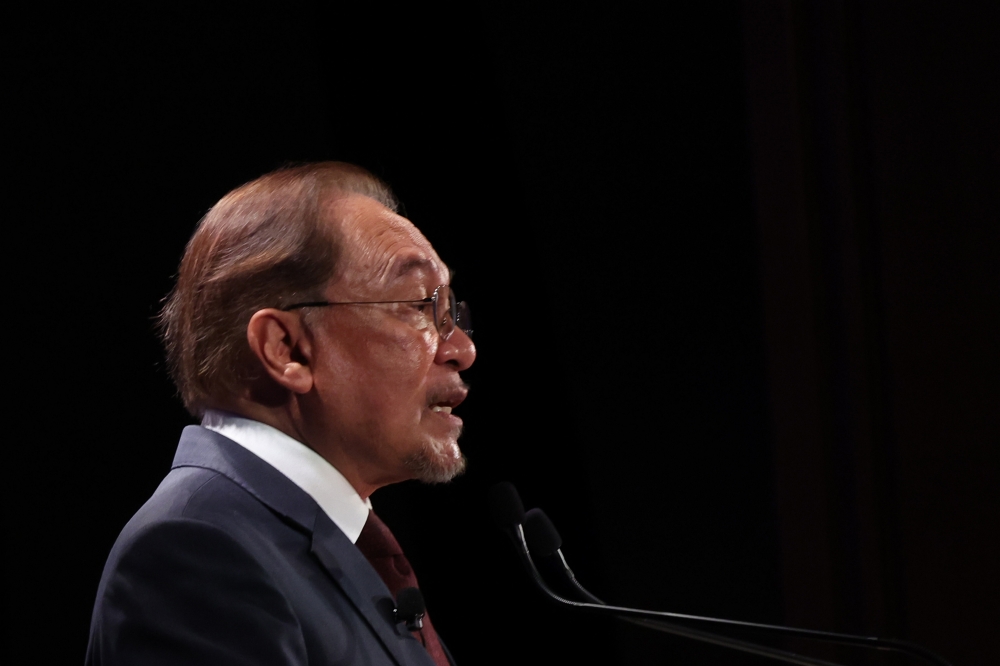
Prime Minister Datuk Seri Anwar Ibrahim has escalated political tensions by launching a defamation lawsuit against PAS deputy president Tuan Ibrahim Samad, marking a notable shift toward legal intervention in Malaysia's increasingly contentious political discourse. The action underscores deepening divisions within the Malaysian political establishment and signals Anwar's willingness to pursue judicial remedies against adversaries within the Dewan Rakyat, regardless of their parliamentary standing.
The suit, filed through Anwar's legal representatives, alleges that Tuan Ibrahim Samad made statements calculated to damage the Prime Minister's reputation and character. While specific remarks have not been detailed publicly, the legal action reflects mounting friction between the ruling coalition and PAS, the Islamic opposition party that has strengthened its parliamentary presence in recent election cycles. The tension highlights how Malaysia's political landscape has become increasingly fragmented, with personal attacks and inflammatory rhetoric becoming routine features of public discourse.
Anwar's decision to pursue legal action rather than rely solely on parliamentary responses or public denials signals a tactical recalibration. Defamation suits serve multiple functions in the Malaysian political context: they place legal pressure on opponents, generate extensive media coverage favorable to the plaintiff's narrative, and establish a documented record of alleged misconduct. For Anwar, whose political career has been marked by numerous legal controversies spanning decades, the move represents a reversal of historical patterns where he typically found himself in the defendant's position.
Tuan Ibrahim Samad has emerged as a prominent voice within PAS's parliamentary faction and has been vocally critical of the current government's policies and leadership. As deputy president of the party, he commands significant influence within PAS's organizational structure and serves as a key strategist during parliamentary sessions. His positioning as deputy suggests he may be groomed for higher leadership roles, making the legal action against him particularly significant in terms of factional dynamics within the opposition bloc.
The lawsuit arrives amid broader tensions between Anwar's coalition government and PAS, which has positioned itself as a principled opposition force offering an Islamic-oriented alternative to the current administration. PAS's electoral performance in recent elections, particularly in certain states and among specific voter demographics, has emboldened the party to adopt more aggressive parliamentary tactics and public criticism of government policies. These dynamics have created an environment where political conflict increasingly spills beyond parliamentary boundaries into legal and regulatory domains.
From a Malaysian legal perspective, defamation cases involving public figures operate under specific constraints. Courts must balance free speech protections, particularly regarding matters of public interest, against individuals' rights to defend their reputations. Public figures, including politicians, typically face higher thresholds in proving defamation, as they are considered to have voluntarily entered the public arena and must tolerate greater scrutiny. Nevertheless, statements that cross the line from legitimate political criticism to demonstrable falsehoods presented as fact may still constitute actionable defamation.
The timing of the suit carries political implications beyond the immediate legal dispute. Anwar's government continues to navigate complex coalition dynamics with multiple partners holding divergent ideological positions, while simultaneously facing opposition from PAS and other political forces. Legal action against prominent opposition figures may be perceived by supporters as demonstrating strength and resolve, but it could equally provide ammunition for critics who argue the government is weaponizing the judicial system against political opponents—a recurring allegation in Malaysian politics.
For the broader Southeast Asian context, Malaysia's experience reflects patterns seen across the region where political actors increasingly resort to legal mechanisms, including defamation suits and contempt charges, as tools for managing political conflict. Thailand, the Philippines, and Indonesia have all witnessed similar escalations, raising questions about whether judicial systems are becoming instruments of political competition rather than neutral arbiters. This trend potentially compromises institutional credibility and public confidence in legal systems designed to adjudicate genuine disputes impartially.
PAS's response to the legal action will likely shape the trajectory of the dispute. The party may choose to mount a vigorous defense, gathering evidence to support Tuan Ibrahim's statements and demonstrating their truth or substantial truth as a legal defense. Alternatively, PAS leadership might seek to negotiate a settlement, calculate the political benefits of continued confrontation, or position the lawsuit as evidence of government intolerance toward legitimate opposition. Each approach carries distinct implications for PAS's standing within its voter base and among other opposition parties.
The defamation suit also touches on broader questions about parliamentary privilege and the boundaries of protected speech. While Malaysian parliamentary law provides certain protections for statements made within the Dewan Rakyat, remarks made outside parliament lack such protections. The location and context of Tuan Ibrahim's alleged statements will therefore prove crucial in determining the suit's viability and strength. Courts will scrutinize whether the remarks constituted protected political commentary or crossed into territory that exposes speakers to legal liability.
Looking forward, this legal action may establish precedents affecting how Malaysian politicians engage in public discourse. If Anwar prevails, other political figures may grow more cautious about criticism, potentially chilling legitimate political speech. Conversely, if courts rule against the Prime Minister, the outcome could embolden opposition voices and demonstrate judicial independence from executive pressure. The case thus carries implications extending far beyond the specific parties involved, touching fundamental questions about free expression, accountability, and the proper role of courts in political disputes.

