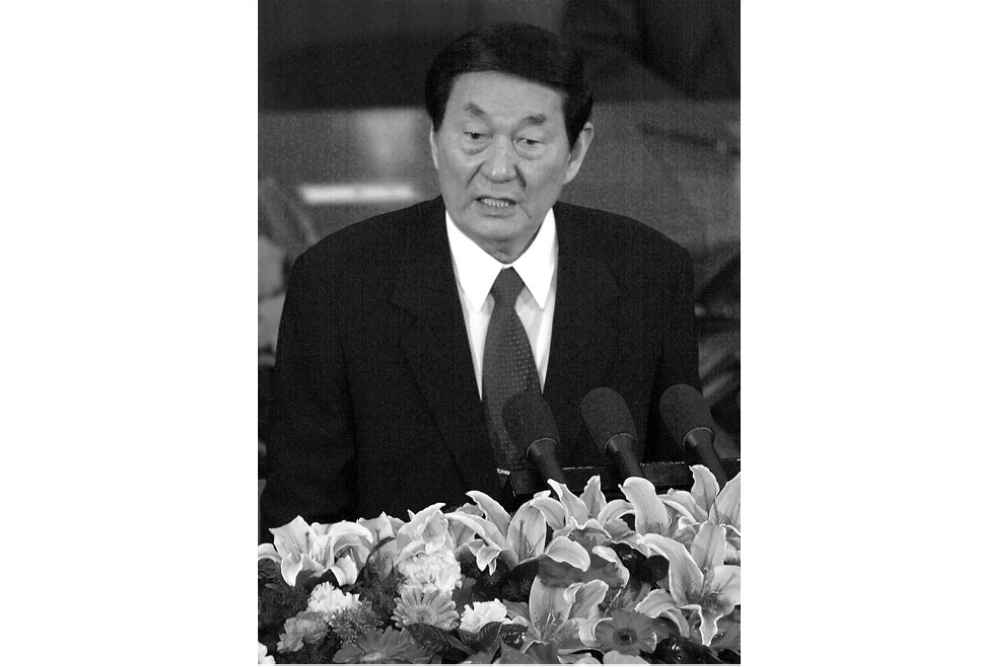
Prime Minister Datuk Seri Anwar Ibrahim has extended his condolences to the family and government of China following the death of former Premier Zhu Rongji, describing the late statesman as a pivotal figure whose personal commitment transformed the trajectory of Malaysia-China relations during a critical period of regional development.
Zhu Rongji's tenure as Premier of China, spanning from 1998 to 2003, coincided with a transformative era in Southeast Asian geopolitics and economics. During this window, Malaysia was itself navigating significant shifts in its international positioning, and Anwar's characterization of the departed leader as a "good friend" underscores the personal rapport that often undergirds state-level diplomatic achievements. Such bonds between political leaders frequently transcend formal protocols, enabling candid dialogue on contentious issues and fostering mutual understanding that shapes policy for years beyond their respective tenures.
The former Premier's influence on Malaysia-China ties extended across multiple dimensions beyond ceremonial exchanges. During the 1990s and early 2000s, China was undertaking its own economic liberalization and opening to the world, and Zhu Rongji's market-oriented reforms created new opportunities for bilateral trade and investment partnerships. Malaysia, as a leading Southeast Asian economy and an early adopter of engagement with Beijing, benefited substantially from these windows of opportunity, establishing frameworks that persist in contemporary bilateral relations.
Zhu Rongji's stewardship came at a moment when China's integration into global institutions was accelerating, particularly following its 1996 entry into the World Trade Organization. Malaysia's business community and government officials found in him a pragmatic interlocutor willing to navigate the complexities of deepening economic interdependence while respecting each nation's sovereignty and distinct development priorities. This constructive engagement laid groundwork for subsequent trade agreements and sectoral collaborations that continue to define the relationship.
Beyond economics, Zhu Rongji's premiership encompassed significant diplomatic initiatives that elevated China's profile as a responsible regional power. His engagement with Southeast Asian nations, including Malaysia, demonstrated Beijing's commitment to building partnerships based on mutual respect rather than coercion. These overtures were especially consequential for Malaysia, a Muslim-majority nation navigating complex relationships with both the Western world and the Islamic sphere while seeking balanced ties with major powers. The late Premier's approach facilitated productive coexistence of these multiple identities within Malaysia's foreign policy framework.
Anwar Ibrahim's personal connection to Zhu Rongji likely stems from direct interactions during his tenure as Finance Minister and subsequently as Prime Minister. High-level diplomatic engagements between Malaysia's leadership and China's Premier would have included substantive discussions on economic cooperation, infrastructure development, and strategic partnership. The warmth reflected in Anwar's tribute suggests these interactions transcended formal protocol, establishing genuine personal respect that both leaders carried into their respective policy decisions.
The current geopolitical environment lends particular significance to Anwar's acknowledgment of Zhu Rongji's legacy. Contemporary Malaysia-China relations operate within an increasingly complex landscape marked by great power competition, regional tensions, and economic interdependence. Zhu Rongji's emphasis on pragmatic engagement and institutional building created foundations that have enabled Malaysia to maintain its own strategic autonomy even as external pressures intensify. His legacy thus remains immediately relevant to Malaysia's ongoing navigation of its international relationships.
Zhu Rongji's broader contributions to China's development trajectory merit consideration within this context. His promotion of market mechanisms within China's partially state-directed economy, coupled with his emphasis on fiscal discipline and anti-corruption efforts, influenced the character of Chinese capitalism that subsequently engaged Malaysia and other trading partners. These structural features of the Chinese economy directly shaped the nature of investment flows, technology transfer patterns, and business practices that Malaysian firms encountered and adapted to in their dealings with Chinese counterparts.
The passing of Zhu Rongji represents the closure of a distinct chapter in Asia-Pacific history. His generation of Chinese leaders, shaped by experiences of economic deprivation and revolutionary politics, brought distinctive perspectives to modernization that differed subtly from their successors. Anwar's tribute implicitly recognizes that such transitions in leadership within major powers carry implications for smaller nations like Malaysia, which must continuously recalibrate their approaches to great power engagement. The warm characterization of their relationship serves as a gentle reminder that personal relationships and institutional memory matter in international affairs, even as structural forces shape the broader contours of statecraft.
Looking forward, Malaysia's leadership under Anwar Ibrahim will likely continue to draw upon the institutional frameworks and diplomatic precedents established during Zhu Rongji's era. The pragmatic engagement model that the former Chinese Premier exemplified remains particularly relevant as Malaysia pursues balanced relations with multiple great powers while protecting its own developmental interests. Anwar's public mourning reflects not merely personal loss but acknowledgment of a formative period in modern Malaysia-China relations that continues to inform contemporary policy choices and mutual expectations.

