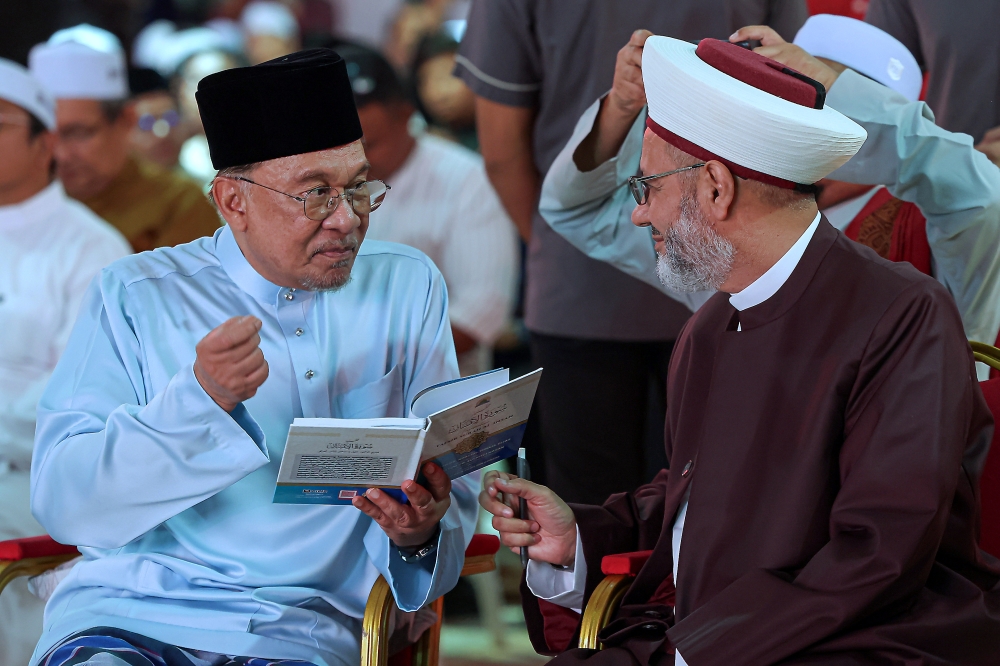
Prime Minister Datuk Seri Anwar Ibrahim has expressed deep admiration for Ahmed Al-Tayyeb, the Grand Imam of Al-Azhar, positioning him as a paramount advocate for moderation in Islam and a driving force behind interfaith cooperation on the international stage. The Malaysian premier's public endorsement underscores the significance that Kuala Lumpur places on scholarly leadership that promotes theological pluralism and peaceful coexistence between diverse religious communities.
Al-Azhar, one of Islam's most ancient and influential institutions based in Cairo, has historically served as a seat of Islamic jurisprudence and theological authority for nearly a millennium. Under Al-Tayyeb's leadership since 2010, the institution has increasingly positioned itself as a platform for dialogue between Muslims and other faiths, addressing contemporary challenges that extend far beyond Egypt's borders. This institutional evolution reflects broader trends within global Islam toward reconciling traditional scholarship with modern realities of religious pluralism.
Anwar's commendation is particularly significant given Malaysia's own trajectory as a Muslim-majority nation that has institutionalised moderate Islamic governance through various constitutional and statutory mechanisms. The Prime Minister's remarks suggest alignment between Kuala Lumpur's approach to Islam and Al-Azhar's evolving role as an intermediary in global religious discourse. By highlighting Al-Tayyeb's contributions, Anwar appears to be reinforcing Malaysia's international positioning as a champion of enlightened Islamic practice.
The Grand Imam's work extends across multiple dimensions of religious engagement. Al-Azhar has been instrumental in organising high-profile meetings between Muslim and Christian leaders, facilitating discussions on shared values and mutual respect. These initiatives carry practical implications for conflict resolution in regions experiencing religious tensions, offering theological frameworks that prioritise commonality over sectarian division. For Malaysia, such frameworks resonate with the country's constitutional guarantee of religious freedom and its decades-long experience managing religious diversity.
Anwar's appreciation also reflects Malaysia's diplomatic strategy in the Islamic world, where the nation seeks to balance its role as a respected Muslim voice with its commitment to pluralism and democratic values. By acknowledging Al-Tayyeb's prominence, the Prime Minister reinforces Malaysia's standing among moderately-inclined Islamic scholars and institutions, potentially enhancing Kuala Lumpur's soft power within both Muslim and interfaith communities. This diplomatic calculus is especially relevant given Malaysia's historical role in hosting interfaith dialogues and promoting Islamic-Western understanding.
Al-Tayyeb's theological positions on substantive issues—from the interpretation of classical Islamic jurisprudence to contemporary questions about women's rights and minority protections—have occasionally provoked debate within both conservative and progressive Islamic circles. Yet his emphasis on reason and contextual interpretation of religious texts places him within a tradition of Islamic scholarship that Malaysia itself has promoted through its judicial system and fatwa councils. The Grand Imam represents a school of thought that views Islamic law as a living framework capable of addressing modern challenges without abandoning foundational principles.
The international dimension of Al-Tayyeb's work extends to his engagement with Western governments and secular institutions, roles that have elevated Al-Azhar's profile beyond its traditional scholarly constituency. His participation in global forums on religious freedom and interfaith cooperation has made him a recognizable figure in international diplomacy. For a Prime Minister like Anwar, who has himself engaged extensively with international audiences on matters of governance and religious tolerance, such alignment carries symbolic weight in positioning Malaysia within a global community of moderate Islamic leadership.
Malaysia's own experience with Islamic moderation provides context for understanding why Anwar would highlight Al-Tayyeb's contributions. The country's constitutional framework guarantees freedom of religion whilst maintaining Islam's special position, a delicate balance that has largely been sustained through pragmatic jurisprudence and institutional cooperation. Religious scholars in Malaysia have historically played crucial roles in maintaining this equilibrium, and their counterparts internationally—such as Al-Tayyeb—offer both validation and comparative insights into managing religious pluralism within Muslim-majority democracies.
The broader implications of Anwar's statement extend to Southeast Asia, where multiple nations are grappling with questions about Islam's role in contemporary governance and society. Countries like Indonesia, the world's largest Muslim democracy, have similarly sought to promote moderate Islamic interpretations through institutional mechanisms. By publicly endorsing figures like Al-Tayyeb, Malaysian leadership arguably encourages parallel efforts across the region to strengthen scholarly voices advocating for enlightened Islamic practice. This regional dimension transforms what might initially appear as a bilateral compliment into a statement about the character of Islamic leadership that Southeast Asian nations collectively aspire to nurture and support.
Looking forward, Anwar's recognition of Al-Tayyeb may signal Malaysia's intention to deepen institutional connections between its own Islamic scholars and international centres of learning like Al-Azhar. Such engagement could facilitate knowledge exchange on theological jurisprudence, contemporary Islamic ethics, and approaches to religious plurality. For Malaysia, which has invested significantly in Islamic education and scholarship, such connections enhance the intellectual infrastructure supporting its model of moderate Islam. Furthermore, as global attention to Islamic governance and interfaith relations intensifies, Malaysia's alignment with internationally respected figures of moderation strengthens its voice in these crucial conversations.

