%22%2F%3E%3C%2Fpattern%3E%3C%2Fdefs%3E%3Crect%20width%3D%22100%25%22%20height%3D%22100%25%22%20fill%3D%22url(%23pha0v4g)%22%2F%3E%3Crect%20width%3D%22100%25%22%20height%3D%22100%25%22%20fill%3D%22url(%23pha0v4p)%22%2F%3E%3Ctext%20x%3D%2250%25%22%20y%3D%2250%25%22%20text-anchor%3D%22middle%22%20dominant-baseline%3D%22central%22%20fill%3D%22rgba(255%2C255%2C255%2C0.95)%22%20font-family%3D%22Georgia%2C%20'Times%20New%20Roman'%2C%20serif%22%20font-weight%3D%22700%22%20font-size%3D%22272%22%20letter-spacing%3D%22-0.02em%22%3EAnwar%3C%2Ftext%3E%3C%2Fsvg%3E)
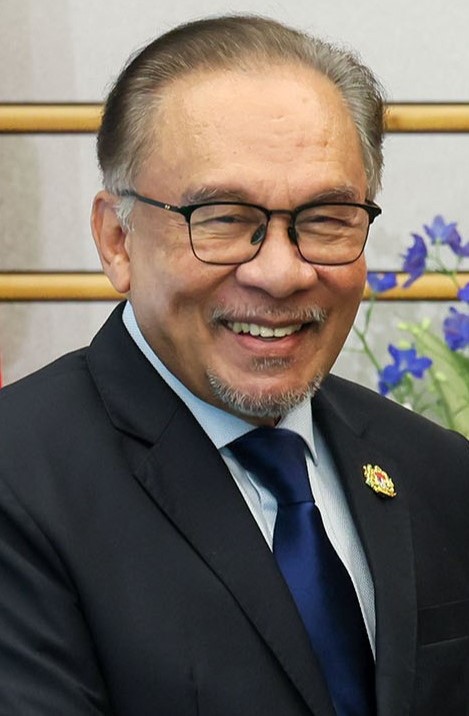
Prime Minister Anwar Ibrahim took centre stage at Pakatan Harapan's candidate announcement for Johor's forthcoming 16th State Election, projecting the coalition's vision for the state as one anchored in principled governance and substantive service delivery. The gathering on 22 June 2026 at Padang Bukit Gambir Extreme Park, branded as a 'Night of Hope', represented a pivotal moment in the campaign cycle, signalling the broad slate of candidates PH intends to field across all state constituencies in Malaysia's southernmost peninsula state.
The event underscored Pakatan Harapan's strategic positioning heading into the election, with messaging that deliberately moved beyond partisan tribalism toward values-centred leadership. Anwar's remarks crystallized this approach, framing political engagement not as an end in itself but as a mechanism for tangible improvements in citizens' lives. According to the Prime Minister, effective governance must orient itself toward serving populations, fortifying community bonds, cultivating economic prospects for younger demographics, sustaining entrepreneurial ventures, and lifting living standards comprehensively across all households in Johor. This rhetorical framework aims to distinguish PH's campaign from purely transactional or patronage-driven political messaging that has historically dominated Malaysian electoral contests.
The thematic architecture of the announcement—unity, integrity, compassion, and progress—deliberately echoes the broader Malaysia Madani vision that has become the ruling coalition's signature policy narrative. Malaysia Madani, conceptualized as a development framework centring human dignity and shared prosperity, functions as the ideological scaffolding through which PH seeks to justify its governance record and future ambitions. By tethering the Johor campaign to this overarching vision, the coalition presents voters with a coherent narrative linking local state-level elections to national development priorities and long-term societal transformation. This strategic coherence matters particularly in Johor, a state historically characterized by competitive electoral dynamics and diverse voting constituencies spanning urban centres, industrial zones, and rural agricultural regions.
Johor's political significance within Malaysia's federal system cannot be understated. As the nation's second-most populous state and a major economic engine driving manufacturing, petrochemicals, and logistics sectors, electoral outcomes in Johor reverberate throughout national politics. The state has experienced considerable political turbulence in recent years, with shifting alliances and constituency-level volatility creating uncertainty about voter preferences and coalition viability. PH's comprehensive candidate slate announcement signals organizational readiness and confidence in contesting all available seats, a posture that contrasts with earlier periods when the coalition faced resource constraints or internal disagreements regarding seat allocation and nomination processes.
The choice of Padang Bukit Gambir Extreme Park as the venue carried symbolic weight, selecting a location that evokes youth, dynamism, and forward momentum rather than traditional indoor convention centres. This site selection reflects broader campaign strategy to position PH as a force oriented toward renewal and generational change, particularly resonant given Anwar's repeated emphasis on creating opportunities for younger Malaysians. The venue's recreational character also suggests an attempt to frame political engagement as an accessible, community-oriented activity rather than an elite-confined enterprise, potentially broadening the coalition's appeal beyond its traditional support bases.
For observers tracking Malaysian politics and regional democratic dynamics, PH's Johor campaign represents a critical test of whether values-based political messaging can gain electoral traction against competing narratives emphasizing racial, religious, or economic grievance. The coalition's approach in Johor will likely inform strategic calculations for future federal elections and other state contests. Southeast Asian democracies increasingly display polarization and identity-based voting patterns, making PH's experiment in principle-centred electioneering noteworthy from a comparative governance perspective.
The announcement of candidates across all state seats demonstrates logistical organization and internal consensus-building within the coalition's constituent parties—the Democratic Action Party, Amanah, and the People's Justice Party. Successfully fielding comprehensive slates requires negotiating competing territorial claims, managing intra-party rivalries, and balancing representation across demographic and geographic lines. The fact that PH moved forward with a complete candidate portfolio suggests these negotiations reached productive conclusions, though implementation challenges undoubtedly persist in campaign execution across diverse constituencies.
Anwar's specific articulation of political purpose—serving populations, strengthening communities, creating youth opportunities, supporting businesses, ensuring improved quality of life—maps onto concrete policy domains where state governments exercise significant authority and discretion. Education, social welfare, small and medium enterprise support, infrastructure development, and environmental management fall substantially within state purview, making these campaign pledges testable against actual administrative performance. For Johor voters evaluating PH's credibility, such specificity potentially carries greater weight than abstract appeals to national transformation or historical redress.
The timing of the candidate announcement, roughly five months before the projected election date suggested in the 2026 campaign calendar, allows the coalition adequate runway for grassroots mobilization, candidate visibility-building, and targeted messaging development. This temporal positioning also permits adjustments based on early campaign feedback and polling data, granting PH strategic flexibility as electoral conditions evolve. The extended campaign period creates space for substantive policy debate, though Malaysian electoral contests historically privilege personality-driven narratives and patronage networks over detailed policy substance.
For foreign investors, business communities, and neighbouring jurisdictions monitoring Malaysian political stability, PH's organized Johor campaign strategy generally signals institutional competence and reduced uncertainty, factors that typically support economic confidence and cross-border investment flows. The coalition's emphasis on integrity and principled governance carries particular relevance given ongoing concerns about governance quality and institutional trustworthiness that have shaped Malaysian politics over the preceding decade.