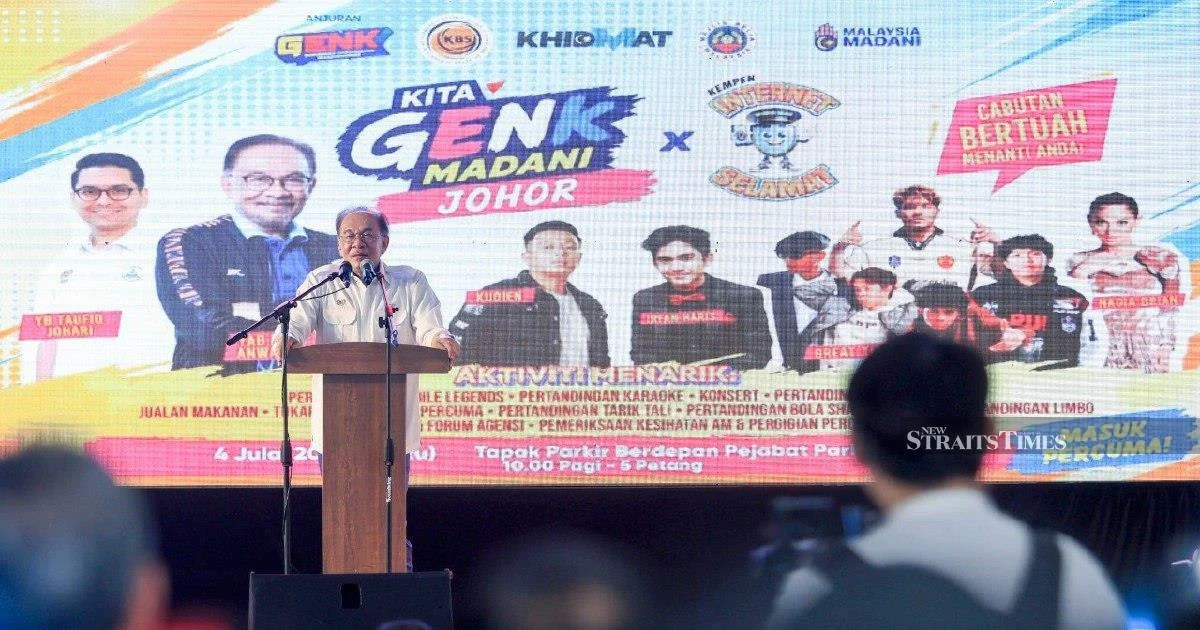
Datuk Seri Anwar Ibrahim, the chairman of Pakatan Harapan, disclosed in Kulai that he has turned to Tibetan ginseng as a natural remedy to help him navigate the physically and mentally demanding schedule of his election campaign throughout Johor. The revelation offers a window into the considerable personal toll that high-intensity political campaigns exact on Malaysian political leaders, who are expected to maintain a relentless pace of public appearances, speeches, constituency visits, and grassroots engagement across multiple constituencies and districts.
Tibetan ginseng, scientifically known as Rhodiola rosea, has long held a place in traditional Asian medicine systems, particularly in Himalayan regions and Tibetan practices. The plant is valued for its purported adaptogenic properties—compounds believed to help the body manage physical and mental stress while sustaining energy without the crash associated with caffeine or stimulants. Within the context of Malaysian political culture, where campaign seasons demand extensive travel across diverse terrain and climates, the choice of such botanical supplements reflects both practical health management and a subtle cultural preference for natural remedies over synthetic alternatives.
Anwar's public acknowledgment of his reliance on Tibetan ginseng is significant beyond mere personal health disclosure. Malaysian political observers note that transparency regarding campaign challenges, including the physical demands placed on senior party officials, remains relatively uncommon in domestic politics. By discussing his approach to maintaining stamina, Anwar has inadvertently highlighted the grueling nature of electoral mobilization in Malaysia, where candidates and party leadership frequently traverse vast distances across multiple states and municipalities to build electoral momentum.
The Johor campaign represents a particularly intensive undertaking given the state's size and its strategic importance within Malaysia's political landscape. Johor comprises multiple parliamentary constituencies and numerous state assembly seats spread across an expansive geographical area. Covering these constituencies comprehensively requires navigating both urban centers and rural communities, often involving unpredictable travel conditions and extended hours of public engagement without substantial rest periods. Senior party officials like Anwar typically maintain schedules that exceed 12 to 14 hours of active campaigning daily during peak election periods.
From a health perspective, the use of adaptogenic supplements during campaign season underscores broader concerns about the wellness of Malaysia's political leadership. Election cycles, particularly during heated contest periods, create conditions of prolonged stress, irregular meal schedules, minimal sleep, and constant travel. These circumstances can compromise immune function and leave individuals susceptible to illness precisely when their presence and performance are most critical to their party's electoral prospects. The adoption of supplement regimens by campaign leaders thus represents a pragmatic, if occasionally controversial, approach to maintaining functionality under extreme conditions.
Tibetan ginseng's rising popularity among health-conscious professionals and leaders across Southeast Asia reflects increasing interest in traditional medicine systems and botanical wellness solutions. The supplement has gained particular traction among individuals seeking natural energy enhancement without reliance on pharmaceutical stimulants. Within Malaysian wellness markets, products featuring Himalayan and Tibetan botanicals have experienced growing consumer interest, driven partly by cultural familiarity with traditional Chinese medicine frameworks and partly by skepticism toward heavy reliance on modern pharmaceuticals.
Anwar's openness about his wellness practices may also resonate with Malaysian voters who increasingly prioritize health and leadership integrity. Discussions of campaign-related physical strain humanize political figures and create opportunities for voters to evaluate not only policy positions but also the demonstrated resilience and self-care practices of their potential leaders. In this context, Anwar's disclosure functions as an implicit assertion of his continued capacity to undertake the considerable physical and mental demands of national office.
The campaign itself, positioned within Johor's historical significance as a traditional stronghold for various political coalitions, carries stakes extending beyond regional representation. Johor's electoral performance often signals broader trends affecting national political dynamics and coalition stability. The intensity of campaign activities therefore reflects the high-stakes nature of contesting these constituencies, where every vote contributes to determining parliamentary representation and coalition composition at both state and federal levels.
Within the broader context of Southeast Asian politics, Malaysian election campaigns remain notably physically demanding compared to many developed democracies, where greater use of digital campaigning and media-based outreach reduces the need for extensive personal travel. Malaysian electoral tradition emphasizes direct candidate engagement with voters, face-to-face community interactions, and on-the-ground presence as essential campaign components. This model necessarily generates the intense physical demands that senior leaders like Anwar must endure during election periods.
The substance of Anwar's wellness strategy also invites discussion about institutional support structures available to campaign leaders. Most Malaysian political parties lack formal health and wellness protocols to systematically manage the physical toll on senior officials during election campaigns. The reliance on personal wellness solutions, whether supplement-based or otherwise, thus reflects individual initiative rather than coordinated institutional planning. This gap suggests potential opportunities for political parties to develop more comprehensive approaches to leader health management during high-demand campaign periods.

