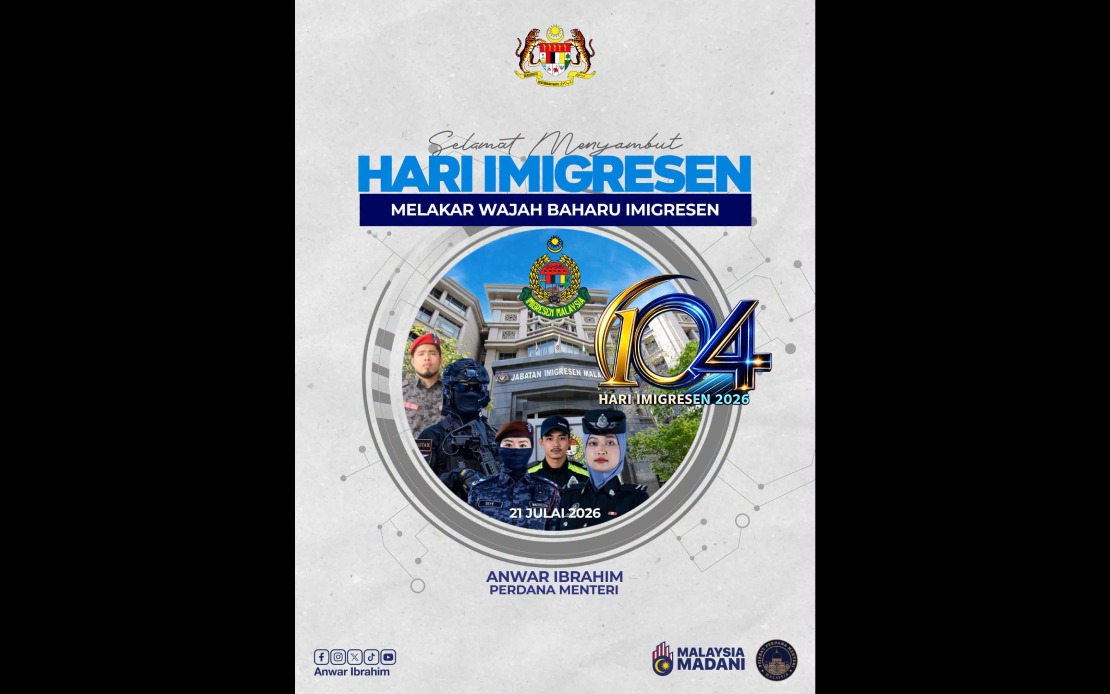
Prime Minister Datuk Seri Anwar Ibrahim has issued a direct appeal to the entire Immigration Department workforce, urging them to execute their mandates with uncompromising integrity while firmly resisting corruption in all its manifestations. The call, delivered during celebrations marking Immigration Day, reflects ongoing concerns within Malaysia's civil service about maintaining ethical standards and public trust in frontline government agencies.
In a public message shared via Facebook, Anwar emphasized that beyond technical competence, immigration officials must cultivate an institutional culture that actively rejects irregularities and corrupt conduct. This pronouncement carries particular significance given the Immigration Department's position as a primary interface between Malaysian citizens and government administration, where discretionary decisions can profoundly affect individuals' lives and shape public perception of state institutions.
The Prime Minister articulated a comprehensive vision for departmental excellence that extends beyond mere corruption prevention. He stressed that personnel should combine their commitment to integrity with a genuine compassion for those they serve, creating an environment where efficiency, courtesy, and professionalism become hallmarks of the Immigration Department's engagement with the public. This holistic approach recognizes that institutional integrity encompasses not only financial probity and rule adherence but also the quality and humanity of service delivery.
Anwar explicitly linked the Immigration Department's performance to Malaysia's broader national interests and international standing. In his message, he expressed confidence that JIM personnel would persist in their efforts to safeguard national sovereignty while simultaneously building the nation's reputation globally. This framing underscores how frontline civil servants contribute to Malaysia's soft power and regional credibility through their daily interactions and professional conduct.
The 2026 Immigration Day celebration itself carries thematic significance, operating under the banner "Charting a New Face for Immigration." This designation suggests institutional recognition that the department requires substantive transformation and modernization. The theme's forward-looking character implies acknowledgment of past challenges and commitment to implementing systemic improvements that would enhance operational effectiveness and public confidence.
Immigration departments across the region have long grappled with corruption vulnerabilities, given the high-value services they deliver—from visa processing to travel documentation—and the potential for misuse of discretionary authority. Malaysia's situation reflects comparable challenges faced by immigration agencies throughout Southeast Asia, where border management intersects with tourism, business mobility, and security concerns. Anwar's intervention suggests governmental determination to strengthen oversight mechanisms and institutional culture.
The emphasis on integrity holds particular resonance within Malaysia's contemporary political context, where public discourse increasingly focuses on accountability and ethical governance. Immigration personnel work at the intersection of security and service delivery, making their conduct subject to both security imperatives and public expectations of fair treatment. By publicly celebrating Immigration Day while calling for ethical renewal, the Prime Minister signals that reform remains a governmental priority while acknowledging the department's essential contributions to national functioning.
The appeal to embrace compassion alongside integrity represents a nuanced understanding of modern public administration. Rather than portraying anti-corruption efforts as purely punitive or rule-based, Anwar's framing suggests that professional excellence and ethical conduct naturally accompany genuine concern for citizen welfare. This philosophy encourages Immigration Department personnel to view integrity not as bureaucratic constraint but as foundational to delivering genuinely excellent service.
For Southeast Asian observers, Malaysia's focus on reinforcing immigration sector integrity reflects broader regional patterns. Countries across the region have increasingly recognized that maintaining professional standards in border agencies directly impacts tourism revenue, business confidence, and regional economic cooperation. When citizens and businesses encounter corruption or unprofessional conduct, it compromises economic opportunities and erodes confidence in state institutions more broadly.
The timing of this public statement during an official departmental celebration demonstrates high-level commitment to embedding ethical values within immigration administration. By personalizing his message and directly addressing departmental personnel, Anwar elevated the conversation beyond abstract principles, making clear that integrity expectations emanate from the highest political level. This approach potentially strengthens institutional leadership's ability to enforce standards throughout the organization's hierarchy.
Moving forward, the effectiveness of Anwar's appeal will depend on whether rhetorical commitment translates into concrete institutional mechanisms—enhanced training, strengthened internal audit procedures, clearer whistleblower protections, and meaningful consequences for misconduct. Immigration departments require both cultural transformation and structural reinforcement to sustain integrity improvements over extended periods.

