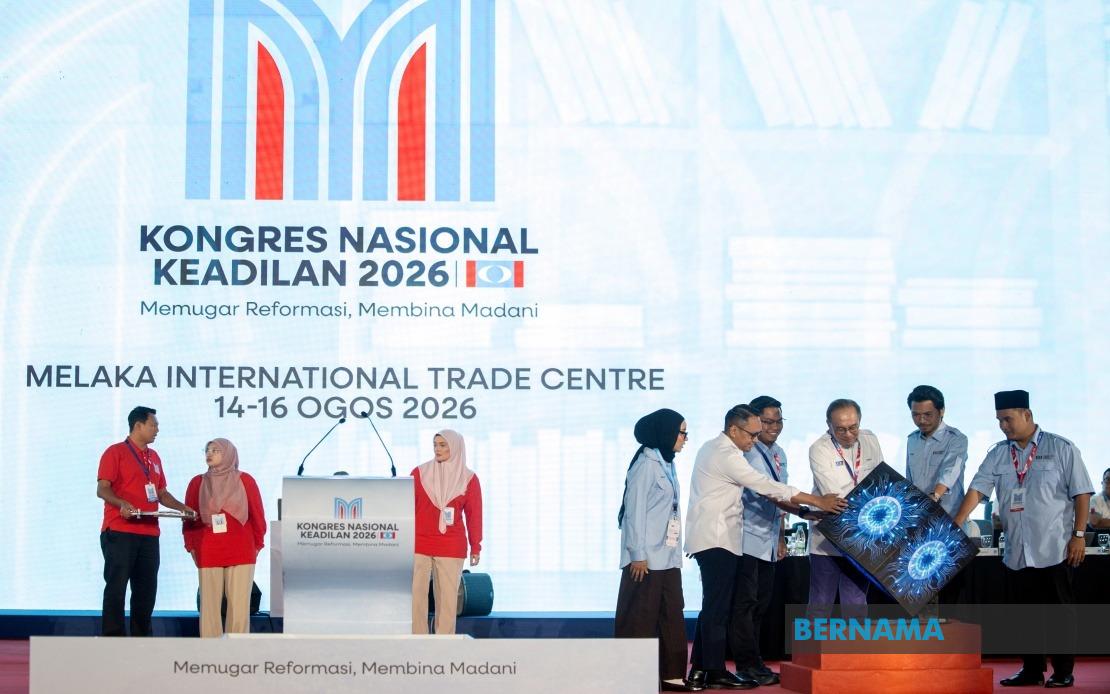
Prime Minister and Parti Keadilan Rakyat (PKR) president Datuk Seri Anwar Ibrahim launched a significant ideological publication in Melaka on Friday, signalling the party's renewed emphasis on principled governance and youth engagement as it consolidates power under the current administration. The 113-page document, co-authored by AMK chief Muhammad Kamil Ahmad Munim and executive committee member Ashraf Ahmad Hadi, represents an attempt to ground PKR's political movement in substantive doctrine rather than electoral calculation, addressing what party leadership perceives as a deficit in contemporary Malaysian politics.
The timing of the publication's release carries particular significance within the context of PKR's evolution from opposition movement to governing party. Anwar framed the initiative as neither merely technical governance rhetoric nor transient campaign messaging, but rather as a comprehensive framework for what he termed "civilisational renewal." This language reflects a philosophical positioning that goes beyond conventional party platform documents, suggesting PKR's ambition to reshape how Malaysians conceptualise national development and the relationship between state institutions and citizen welfare.
At its core, the publication functions as a cadre-building resource intended to cultivate a generation of party members grounded in PKR's foundational principles and historical struggles. The document encourages members to engage deeply with the party's intellectual heritage, understand the theoretical underpinnings of its Reformasi movement, and internalise the values that have defined its political trajectory. For Malaysia's political landscape, this represents a deliberate counter-move to what party strategists likely view as the shallowing of political discourse and the prioritisation of transactional politics over substantive ideological engagement.
Anwar's address to AMK members carried an implicit critique of how young people in positions of influence sometimes abuse their authority. He reminded youth members that the power entrusted to them constitutes both substantial responsibility and a moral test rather than an opportunity for self-aggrandisement or superficial celebration of institutional success. This message operates on multiple levels: it serves as internal party discipline for younger cadres, but also reflects broader concerns within Malaysian political circles about accountability and the instrumental use of public office.
The Prime Minister's invocation of spiritual resilience and intellectual courage as necessary qualities for national renewal speaks to PKR's attempt to occupy a particular ideological space within Malaysian politics. Rather than appealing solely to economic grievances or narrow sectional interests, the framing emphasises moral and intellectual dimensions of political engagement. This approach may resonate particularly among educated urban voters and younger professionals who have historically formed significant portions of PKR's support base, yet remain concerned about whether political change translates into institutional integrity.
Rebuild efforts that must address historical injustices and systemic leakages represent the implicit context for this publication. Malaysia's political economy has been marked by decades of governance challenges, corruption allegations, and institutional weaknesses that successive administrations have struggled to remediate. Anwar's emphasis on the need for "extraordinary creativity" in addressing these problems suggests acknowledgement that conventional approaches have proven inadequate. The publication appears designed to provide ideological scaffolding for proposed reforms, offering party members intellectual frameworks through which to understand and defend policy initiatives.
For Southeast Asian observers monitoring Malaysia's political trajectory, the AMK publication reflects broader regional patterns in how governing parties attempt to embed themselves beyond mere electoral victory. Countries across the region have witnessed the challenge of maintaining political momentum and ideological coherence once movements transition from opposition to government. PKR's investment in youth cadre development and ideological grounding suggests strategic thinking about long-term political sustainability rather than short-term governance convenience.
The document's emphasis on "re-humanising" national development deserves particular attention given Malaysia's economic focus on high-growth trajectories and technological advancement. The language suggests PKR's positioning of itself as counterweight to perceived depersonalisation of governance, where citizens become statistical abstractions rather than stakeholders deserving of dignity and participation. This rhetorical stance may prove significant in future policy debates around urban development, industrial policy, and social provision.
Within PKR's coalition governance context, the publication also serves a function of internal party consolidation. By articulating core principles and historical narratives, the document helps maintain party identity and member engagement at a time when coalition pressures and governance compromises might otherwise dilute distinctive party messaging. The emphasis on understanding party history and internalising Reformasi principles suggests leadership concern that newer members recruited in the wake of electoral success might lack deep connection to foundational party values.
The cadre-building dimension carries particular relevance for Malaysian politics more broadly, where institutional capacity and personnel quality remain ongoing challenges. By investing in systematic ideological training for young party members, PKR appears to be addressing a recognised gap in Malaysian political development—the shortage of well-trained, principled administrators and officials capable of implementing complex governance reforms. This approach implicitly critiques the professionalism standards of other political parties while positioning PKR as a more serious governing force.
Looking forward, the actual implementation of principles outlined in the AMK publication will constitute the real test of PKR's commitment to "civilisational renewal." The gap between ideological pronouncement and administrative practice remains a persistent challenge in Malaysian politics. Whether the party's governing officials and appointed administrators actually embody the moral integrity and intellectual courage Anwar emphasised will largely determine whether this publication represents genuine institutional transformation or sophisticated political marketing.

