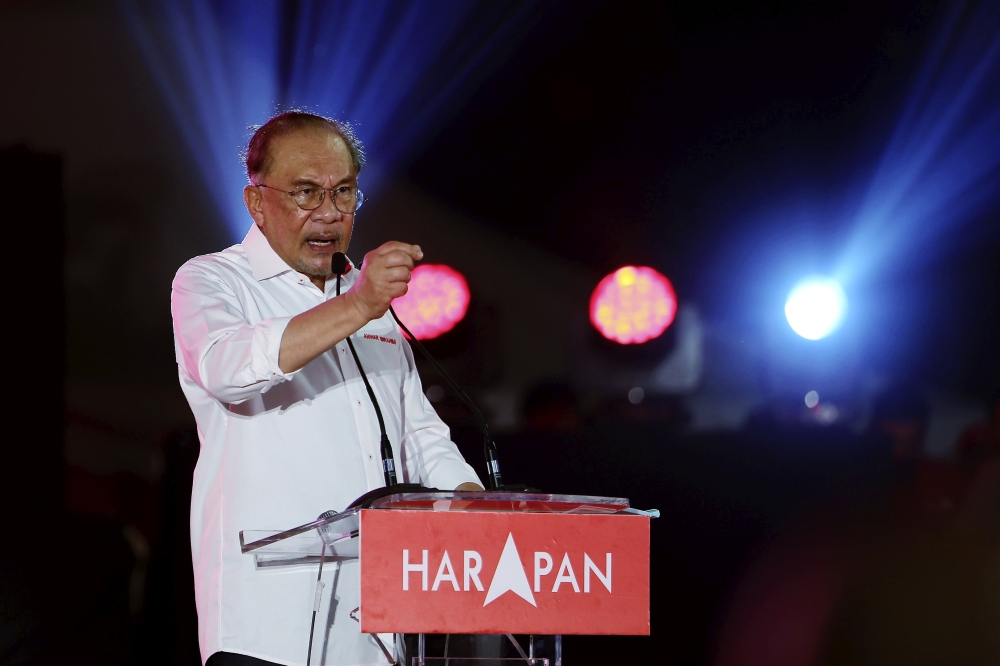
Prime Minister Datuk Seri Anwar Ibrahim is launching an intensive campaign presence across Negeri Sembilan with a four-stop tour, marking his first coordinated electoral engagement across the state. The multi-venue itinerary represents a significant escalation in the federal government's grassroots outreach strategy in a state that has emerged as increasingly competitive during recent political cycles.
The decision to deploy the Prime Minister for such an extensive ground-level campaign signals the administration's recognition that Negeri Sembilan remains a crucial battleground in Malaysia's evolving political landscape. As a state that sits strategically between Kuala Lumpur and the southern economic corridor, Negeri Sembilan's electoral performance carries disproportionate weight in shaping both regional governance and parliamentary mathematics at the federal level.
Anwar's hands-on campaigning approach contrasts with the more top-down political management of previous administrations. By personally traversing multiple constituencies within a single day, the Prime Minister seeks to demonstrate accessibility and commitment to voters beyond the capital, a tactic that polling data suggests resonates particularly well with swing voters in semi-urban areas who feel overlooked by federal policymakers.
The Negeri Sembilan tour comes at a juncture when the Pakatan Harapan coalition faces mounting pressure to maintain its electoral coalition against renewed challenge from Barisan Nasional and the persistent appeal of Perikatan Nasional in certain demographic segments. The state's voting patterns have become increasingly unpredictable, with seat-switching and coalition realignments occurring more frequently than in previous electoral cycles.
Geographically, Negeri Sembilan presents unique challenges for political organisers. The state's terrain encompasses densely populated urban centres around Seremban, industrial zones, rural agricultural communities, and increasingly affluent residential developments that attract in-migration from neighbouring states. Each geographic pocket presents distinct voter concerns ranging from economic opportunity and infrastructure to education and healthcare access, requiring tailored messaging rather than one-size-fits-all campaign rhetoric.
The four-event structure allows the Prime Minister to address different audience segments and demographics within the state. Urban professional audiences, small-business owners, agricultural stakeholders, and grassroots party activists each encounter different policy emphasis and communication style, maximising campaign efficiency while allowing for localized issue prioritization.
Anwar's personal involvement in state-level campaigning also sends a symbolic message about the perceived importance of Negeri Sembilan to the government's broader political strategy. When federal leadership directly engages in regional campaigning, it typically indicates either significant vulnerability in a previously secure area or ambitious targeting of opposition-held constituencies. The intensity of effort devoted to Negeri Sembilan suggests the government views the state as pivotal to its electoral prospects.
The tour's timing reflects broader campaign calendars and political momentum-building preceding any electoral contests. Early-stage, high-profile campaign activity establishes media narrative control and shapes voter perception of political momentum and viability. By initiating his Negeri Sembilan engagement with such visible activity, Anwar effectively signals confidence and forward momentum to both supporters and potential converts.
For Malaysian politics more broadly, the Negeri Sembilan campaign represents a microcosm of contemporary electoral competition. Coalition management, personality-driven campaigning, demographic shifts, and economic messaging all converge in state politics, making regional contests laboratories for testing national-level political strategies and messaging that eventually permeate federal campaigns.
The four-event format also enables the Prime Minister to engage with multiple tiers of party machinery simultaneously. Party grassroots organisations, parliamentary representatives, state assemblymen, and local government officials all benefit from direct engagement with federal leadership, strengthening internal coalition cohesion and providing subordinate leaders with motivational boost and renewed strategic direction from the centre.
Negeri Sembilan's economic profile—encompassing manufacturing, agriculture, tourism, and increasingly knowledge-intensive sectors—provides the Prime Minister with concrete examples to illustrate government economic policy impact. Ground-level campaign events allow discussion of specific industrial projects, infrastructure developments, or economic initiatives affecting local communities in ways that national-level announcements cannot achieve.
The campaign tour's success will likely be measured not merely by attendance figures or media coverage, but by its effectiveness in shifting voter perceptions, energizing party activists, and establishing political narratives that define competition in the state. Early campaign tours establish baseline expectations against which subsequent campaign activity is measured, making this Negeri Sembilan engagement strategically significant beyond its immediate tactical objectives.

