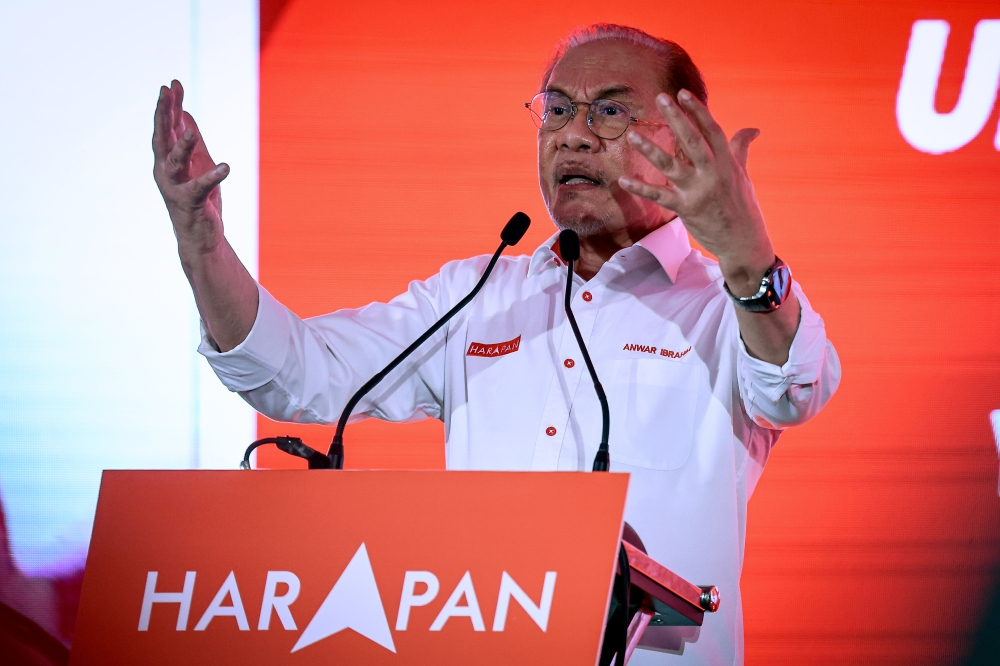
Prime Minister Datuk Seri Anwar Ibrahim is taking his campaign directly to voters in Negeri Sembilan, marking a significant moment in Pakatan Rakyat's broader push to mobilise support ahead of upcoming elections. The timing of his appearance in the state capital reflects the coalition's strategic focus on regions where marginal gains could prove decisive in determining which bloc controls state assemblies. Negeri Sembilan has traditionally been competitive territory, and Anwar's personal engagement signals how seriously the federal leadership views the electoral terrain ahead.
The Prime Minister's decision to campaign in Negeri Sembilan highlights the increasingly personalised nature of Malaysian politics, where senior leaders now regularly venture into the field rather than relying solely on ground machinery. This direct approach allows Anwar to connect with local constituencies on issues affecting their daily lives—from cost of living concerns to infrastructure development—while simultaneously reinforcing Pakatan's narrative about competent federal governance. His presence effectively amplifies the coalition's message beyond what state-level candidates alone could achieve, leveraging the authority and visibility that comes with holding the highest political office.
Negeri Sembilan's political significance cannot be overstated. The state has experienced shifting political fortunes over recent election cycles, and its position as a swing state means every percentage point matters in determining overall parliamentary and state assembly outcomes. For Pakatan, securing strong performance here is crucial not merely for symbolic reasons but because state governments increasingly influence voter perceptions about coalition effectiveness. A strong showing would validate the coalition's claim that voters across diverse regions trust their stewardship, while any setback would invite questions about the depth of their electoral coalition.
The campaign debut in this particular state also reveals Pakatan's strategic sequencing. By concentrating leadership firepower early in Negeri Sembilan, the coalition is attempting to establish momentum that spreads to other battlegrounds. Election campaigns in Malaysia operate with considerable interdependence—victories or convincing showings in early phases generate confidence and volunteer enthusiasm that translates into more effective canvassing elsewhere. Conversely, perceived weakness in one state can dampen spirits in marginal areas nationwide. Anwar's presence attempts to ensure Negeri Sembilan sets a positive tone for subsequent phases of the campaign.
The broader context matters significantly for understanding this campaign initiative. Since taking office, Anwar's administration has faced criticism over various policy matters, with opposition parties consistently arguing that federal governance failures justify electoral punishment. By campaigning actively, Anwar is presenting himself as a leader invested in electoral outcomes rather than someone content to govern from the capital. This direct engagement can reshape voter narratives—transforming him from a distant administrator into an accessible leader who recognises individual state concerns warrant his personal attention.
For Pakatan's coalition partners, Anwar's campaign presence carries mixed implications. While it provides electoral lift and demonstrates federal-level commitment, state parties must ensure they remain the primary face of local governance and state-level aspirations. The balance between leveraging a popular Prime Minister's profile and maintaining state leadership credibility represents a perennial tension in Malaysian coalition politics. Negeri Sembilan's campaign will likely reveal how successfully Anwar and state leaders have calibrated this relationship.
The electoral implications extend beyond immediate state outcomes. Negeri Sembilan results will be scrutinised nationally as an early indicator of voter sentiment regarding Pakatan's overall performance. Political analysts, business communities, and international observers will assess these results as a bellwether for subsequent electoral phases. A decisive Pakatan victory would suggest the coalition commands sustainable support despite criticism, while ambiguous results could embolden opposition parties and complicate coalition unity narratives heading into subsequent contests.
Regionally, Malaysia's electoral dynamics increasingly influence Southeast Asian politics more broadly. A strong Pakatan performance reinforces perceptions of stable, competitive democracy in the region, while internal coalition instability or electoral reversals invite scrutiny about political sustainability. For investors, policymakers, and regional governments watching Malaysian politics, the Negeri Sembilan campaign and its outcome provide important signals about the durability of the current federal arrangement and policy continuity.
Anwar's campaign engagement also reflects lessons learned from previous electoral cycles. The prime ministerial office increasingly recognises that remote governance and reliance on ground machinery alone prove insufficient in Malaysia's evolving electoral landscape, where voter sentiment remains volatile and swing voters require direct persuasion. By appearing in person, Anwar demonstrates respect for local voters and commitment to specific community concerns, potentially shifting perceptions among undecided voters who might otherwise default to opposition messaging.
The Negeri Sembilan campaign represents more than a routine political exercise. It encapsulates Pakatan's broader electoral strategy, demonstrates how federal and state leadership coordinate, and provides early indicators of whether current political configurations retain voter confidence. For Malaysian voters, the campaign offers an opportunity to assess leadership commitment to their state's development priorities. For the coalition, success here establishes momentum essential for converting parliamentary advantage into consolidated electoral dominance across state boundaries.

