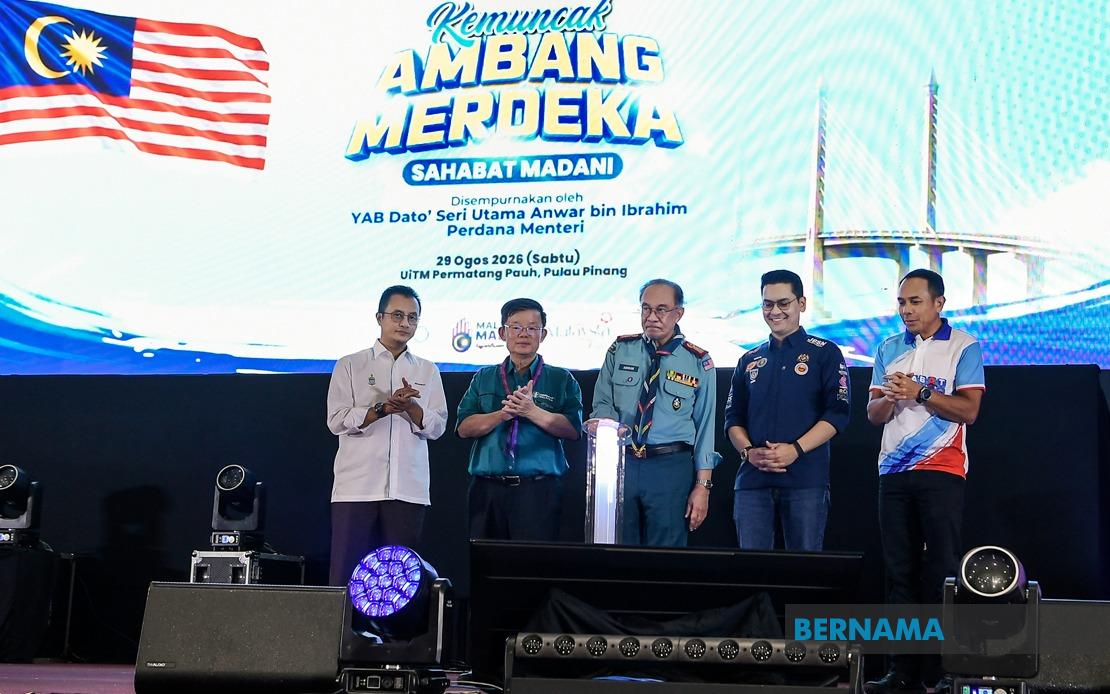
Prime Minister Datuk Seri Anwar Ibrahim has formally inaugurated Sahabat MADANI, a nationwide volunteer movement that brings together citizens committed to community-driven development and social cohesion. The launch took place at Universiti Teknologi MARA (UiTM) Permatang Pauh in Bukit Mertajam during the Ambang Merdeka Sahabat MADANI 2026 highlight programme, which coincided with Malaysia's National Day commemorations. The initiative has already mobilised an impressive 11,060 volunteers across the country, demonstrating substantial grassroots enthusiasm for the programme's objectives of mutual respect, community strengthening and cross-cultural collaboration.
The Sahabat MADANI initiative represents a strategic pivot towards volunteer-driven social intervention, operating under the broader "Malaysia MADANI: Kesejahteraan Dinikmati" (Shared Wellbeing) aspiration. According to the Implementation Coordination Unit of the Prime Minister's Department (ICU JPM), the movement establishes a structured network that deliberately bridges government institutions, organised volunteer cohorts and grassroots communities. This tripartite structure is designed to ensure that social interventions remain responsive to authentic community needs rather than following top-down prescriptive models. The coordination framework emphasises transparency, measurable outcomes and direct accountability to beneficiaries, positioning volunteer activity as a mechanism for validating government effectiveness at the community level.
The programme's scope encompasses several targeted social welfare functions that address Malaysia's persistent developmental challenges. Sahabat MADANI volunteers will concentrate efforts on supporting economically vulnerable populations, intervening in youth educational outcomes through initiatives that prevent school dropout, generating employment and entrepreneurial opportunities for young Malaysians, and mobilising rapid assistance during natural disasters and humanitarian crises. This diversified approach suggests an understanding that community development cannot rely on single-issue interventions; rather, it requires integrated strategies that simultaneously address poverty alleviation, human capital formation, economic inclusion and disaster resilience. For Malaysian policymakers concerned with equity outcomes, the emphasis on vulnerable group support marks a departure from efficiency-focused approaches that have sometimes marginalised populations with complex social needs.
A significant dimension of Sahabat MADANI lies in its explicit emphasis on cross-communal participation and interethnic collaboration. The initiative deliberately recruits volunteers from diverse ethnic, religious and socioeconomic backgrounds, framing volunteer service as a mechanism for building interpersonal bridges across Malaysia's plural society. This approach reflects recognition that social trust—essential for implementing community programmes effectively—requires regular positive interactions among citizens from different backgrounds. By structuring volunteer work as collaborative endeavour rather than charity dispensed by privileged groups to marginalised populations, Sahabat MADANI potentially reframes social responsibility as a shared civic obligation rather than sectarian obligation. For a nation managing significant communal sensitivities, this framing carries particular relevance as it positions development work as nation-building activity rather than ethnic-specific beneficence.
The timing of the initiative's launch carries symbolic weight beyond administrative convenience. Coinciding with National Day celebrations, Sahabat MADANI positions volunteer service as an expression of national independence and collective sovereignty. The ICU JPM's statement explicitly connects independent nationhood—marked by the hoisting of the Jalur Gemilang—with citizens' willingness to serve one another, maintain integrity and assist those experiencing hardship. This rhetorical connection transforms volunteer activity from philanthropic choice into patriotic responsibility, potentially motivating participation by appealing to national identity rather than purely altruistic impulses. For younger generations navigating complex questions about national belonging in an increasingly polarised political environment, volunteering through Sahabat MADANI offers a concrete mechanism for practising inclusive nationalism.
The initiative's architecture reflects particular lessons about effective volunteer coordination in Malaysian context. Rather than creating entirely new organisational infrastructure, Sahabat MADANI operates as a coordinating umbrella that channels existing community energy through government-aligned frameworks. The 11,060 initial registrations suggest that substantial volunteer capacity already exists but may lack systematic coordination mechanisms that connect individual service impulses to scalable community impact. By formalising these networks and providing transparent protocols for identifying community needs and deploying volunteer resources accordingly, the programme potentially multiplies the effectiveness of existing goodwill. This structural approach avoids the pitfalls of top-heavy bureaucracy whilst maintaining government oversight of standards and outcomes.
The programme's implications for Malaysian youth deserve particular consideration, given explicit messaging encouraging young people to reject divisive sentiments and contribute their skills to national development. Youth unemployment and underemployment remain persistent policy challenges, whilst youth participation in community service remains relatively underdeveloped compared to peer nations. Sahabat MADANI's emphasis on creating career and business opportunities for young volunteers potentially serves dual objectives: channelling youthful energy toward constructive community contributions whilst simultaneously providing professional experience and networks that enhance labour market outcomes. For young Malaysians from disadvantaged backgrounds with limited professional networks, volunteer service through government-endorsed programmes can function as alternative pathway to economic opportunity.
The anti-corruption and social justice messaging embedded in Sahabat MADANI's framework represents an additional strategic dimension. The ICU JPM's statement explicitly identifies poverty, hardship, corruption and injustice as collective challenges that volunteer networks can help address. This framing positions corruption not merely as administrative failing but as fundamental obstacle to equitable development, thus embedding anti-corruption consciousness within volunteer culture. By training thousands of citizens in identifying misallocated resources, documenting community needs transparently and demanding accountability from public officials, Sahabat MADANI potentially cultivates constituency for institutional reform. Citizens who participate in volunteer-identified service gaps develop empirical knowledge about government performance gaps, potentially generating informed demand for administrative improvement.
Implementation challenges remain considerable despite impressive registration numbers. Converting 11,060 nominal registrations into active, sustained volunteer participation requires ongoing engagement, capacity building and recognition mechanisms. Malaysian experience with volunteer initiatives demonstrates that initial enthusiasm often declines as participants confront time constraints, unclear expectations and insufficient organisational support. Sahabat MADANI's success will depend substantially on whether government provides adequate coordination resources, training support and feedback mechanisms that keep volunteers engaged beyond initial enthusiasm phases. Additionally, ensuring that volunteer activities genuinely reflect community-identified priorities rather than government-predetermined service models requires deliberate institutional choices about resource allocation authority and volunteer discretion.
The relationship between Sahabat MADANI and existing community organisations warrants careful attention. Malaysia possesses established networks of religious organisations, civil society groups, professional associations and informal community structures that have historically delivered social services. Sahabat MADANI's coordination architecture must clarify how government-aligned volunteer networks complement rather than compete with these existing structures. Effective integration could leverage established community trust and institutional capacity; conversely, perceived competition for volunteer participation or government resources could generate institutional friction. The programme's success will depend substantially on whether it operates as genuinely inclusive coordination platform or as government-preferred volunteer pipeline that marginalises alternative community service structures.
Regionally, Sahabat MADANI offers a model that other Southeast Asian governments contemplating volunteer mobilisation strategies might study. Many regional nations grapple with similar challenges of building social cohesion across diverse populations whilst addressing persistent poverty and underdevelopment. Malaysia's approach—formalising volunteer networks within government frameworks whilst maintaining emphasis on transparency and community responsiveness—represents pragmatic middle path between purely state-directed welfare delivery and purely decentralised civil society approaches. As ASEAN nations increasingly recognise that sustainable development requires active citizenship participation, initiatives like Sahabat MADANI may inform policy experimentation across the region.
The broader policy significance of Sahabat MADANI extends to questions about legitimacy and social contract. By creating structured mechanisms through which ordinary citizens can directly participate in governance and development implementation, the programme responds to broader demands for more inclusive, participatory decision-making. Rather than restricting civic engagement to electoral participation and periodic consultation, Sahabat MADANI offers ongoing opportunities for citizens to shape community priorities and monitor government performance. This potential expansion of participatory governance represents significant institutional innovation within Malaysian political system, potentially establishing expectations for citizen involvement across policy domains. Whether government sustains this volunteer-empowering approach as Sahabat MADANI matures will signal important messages about its commitment to substantive democratic participation beyond electoral cycles.

