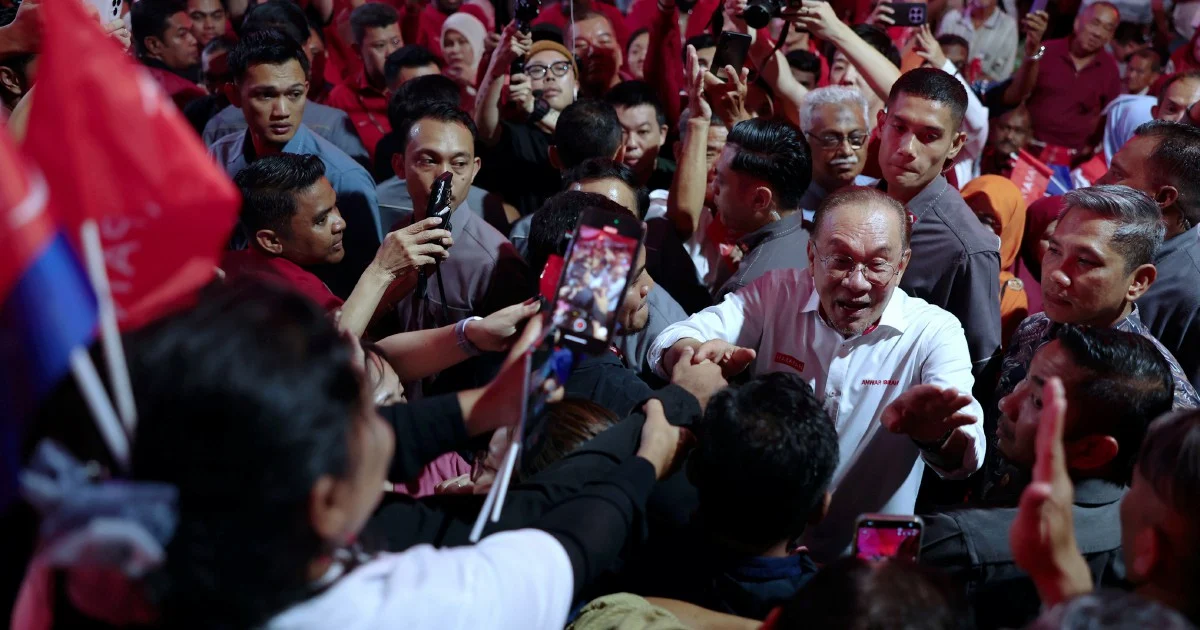
Pakatan Harapan's chairman Datuk Seri Anwar Ibrahim unveiled the coalition's comprehensive roster of 56 candidates for the Johor state election scheduled for July 11 at an event in Tangkak, demonstrating PH's serious intent to challenge decades of dominance by Barisan Nasional in one of Malaysia's most economically significant states. The announcement represents a pivotal moment in the run-up to the polls, as the opposition coalition seeks to expand its political influence beyond the states it currently controls and make inroads into BN's traditional strongholds.
Johor holds particular strategic importance in Malaysian politics and economics, serving as the nation's second-largest industrial hub and home to critical port facilities and petrochemical industries. The state's electoral outcome carries implications that extend well beyond its borders, potentially reshaping the broader political landscape if PH manages to dent BN's traditionally commanding support base. The fielding of a full slate of candidates across all contested seats indicates that PH has invested significantly in organisational groundwork and candidate recruitment, suggesting the coalition is competing seriously rather than making a token effort.
The decision to present all candidates simultaneously rather than in phases allows PH to control its messaging and present a unified front to voters. This strategic approach also demonstrates internal consensus within the coalition about seat allocation, a persistent source of tension in multi-party alliances. The unveiling event itself served multiple purposes beyond the simple announcement of names, functioning as a platform for Anwar to articulate the coalition's vision for Johor and outline specific policy commitments aimed at resonating with the state's diverse electorate of industrial workers, small business owners, and agricultural communities.
Johor's voting patterns have historically reflected stability favouring establishment parties, with BN maintaining dominant control through multiple electoral cycles. The state's demographics include significant Malay-Muslim and Chinese communities, along with a substantial Indian minority, requiring political coalitions to develop nuanced strategies capable of addressing the distinct concerns of these groups. PH's ability to appeal across these demographic lines will prove crucial to its competitiveness, particularly given BN's historical advantage in rural areas and among Malay voters concerned about communal interests.
The candidate slate reveals important insights into PH's strategic priorities and internal dynamics. The selection process invariably involves difficult negotiations between component parties within the coalition, each seeking to secure winnable seats for their own candidates. The composition of the final list—including the balance between veteran politicians, fresh faces, women candidates, and younger activists—communicates PH's positioning to specific voter segments and reflects lessons learned from previous electoral contests.
Anwar's personal involvement in the announcement underscores the coalition's emphasis on leadership and vision as distinguishing factors. As Prime Minister, Anwar carries significant weight in national politics, and his direct engagement in state-level politics signals that PH regards Johor's election as consequential to its broader political trajectory. His presence lends credibility to PH's campaign and suggests that the coalition views success in Johor as essential to consolidating its political gains and preparing for future national electoral contests.
The timing of the candidate announcement falls within standard electoral practice, providing sufficient campaign runway for candidates to build constituency connections and articulate their personal platforms while maintaining momentum through the final campaign period. The compressed nature of modern election cycles means that candidate quality, name recognition, and organisational capacity become decisive factors in determining electoral outcomes, particularly in marginal constituencies where victory margins often prove narrow.
Johor's significance extends beyond electoral mathematics to encompass economic and social policy considerations. The state generates substantial revenue through industrial activity, tourism, and port operations, with development priorities potentially diverging from those in other Malaysian states. PH's candidate selection likely considered candidates' capacity to address Johor-specific concerns including manufacturing sector competitiveness, infrastructure development, and living costs affecting both urban and rural constituencies.
The unveiling of candidates triggers the next phase of the campaign, characterised by intensified grassroots engagement, media scrutiny of individual candidates' backgrounds and qualifications, and voter evaluation of competing visions for state governance. Media coverage, social media discussions, and community forums will increasingly focus on candidate credentials, personal scandals or controversies, and policy positions on localised issues affecting daily life in Johor constituencies.
BN's response to PH's candidate announcement will shape the subsequent campaign trajectory, with potential counterannouncements, criticisms of PH candidates, and reaffirmations of BN's development record and popular base. The political contest will unfold against the backdrop of broader national political developments, economic conditions affecting voter sentiment, and specific incidents or policy announcements that capture public attention during the campaign period.
For Malaysian observers and regional political analysts, the Johor election serves as a significant barometer of shifting political preferences and the effectiveness of PH's coalition strategies in competitive environments. Success or failure in challenging BN's traditional stronghold will have ramifications for the opposition coalition's confidence, resource allocation, and strategic approach heading toward future electoral contests. The state election ultimately constitutes a crucial test of whether opposition politics in Malaysia can effectively penetrate BN's core support base and whether coalition politics remains viable as a framework for challenging incumbent dominance in specific states.
Voters in Johor will ultimately decide whether PH's candidate slate and political vision prove compelling enough to shift electoral outcomes, potentially transforming the state's political complexion and broader implications for Malaysian democracy's competitive nature and the apparent stability of electoral patterns that have historically favored the governing coalition.