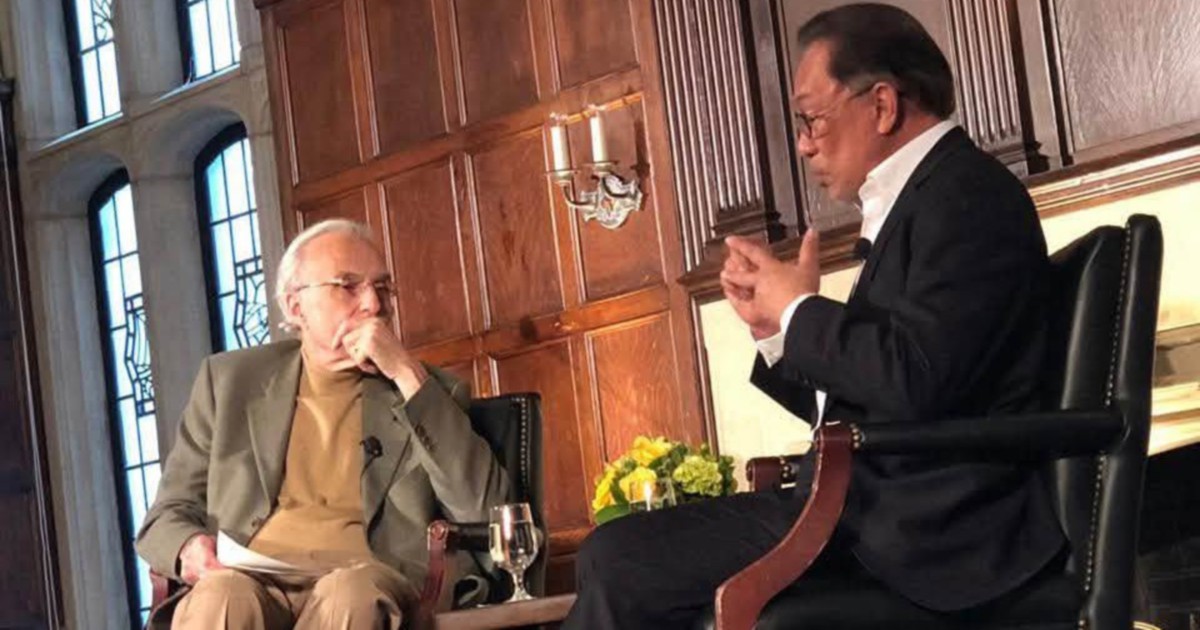
Prime Minister Datuk Seri Anwar Ibrahim has expressed his deepest condolences following the death of Professor John L. Esposito, one of the world's most internationally recognised scholars of Islam. The prominent academic's passing represents a significant loss to global Islamic scholarship and dialogue between faiths, areas to which Esposito dedicated decades of rigorous study and intellectual contribution.
Esposito's scholarly work has profoundly shaped how millions of people across the globe understand Islam and Muslims. Throughout his lengthy career spanning several decades, he authored and edited numerous influential works that have become standard references in universities and institutions worldwide. His research transcended the typical boundaries of academic discourse, reaching policymakers, journalists, and the general public through accessible yet intellectually rigorous analysis. For Malaysia—a nation with a significant Muslim population and a commitment to religious pluralism—Esposito's contributions to nuanced Islamic scholarship held particular resonance.
The professor's influence extended considerably across Southeast Asia, where his frameworks for understanding contemporary Islamic movements have informed both academic study and public policy discussions. His work examined Islam not as a monolithic force but as a complex, diverse phenomenon shaped by history, culture, and individual agency. This scholarly approach provided crucial counterweight to sensationalised narratives that often dominate international media coverage of Islamic affairs and Muslim societies. For regional governments and institutions grappling with contemporary challenges, Esposito's balanced analysis offered intellectual grounding.
Esposito's career encompassed groundbreaking research on Islam's place in the modern world, including his influential studies of Islamic movements, political Islam, and Muslim-Western relations. He established himself as a bridge-builder between Western and Islamic intellectual traditions, consistently advocating for deeper mutual understanding and dialogue. His willingness to engage seriously with Islamic thought on its own terms, rather than through purely Western-centric analytical lenses, earned him respect across disparate scholarly communities. This approach became increasingly vital during periods of heightened global tensions and religious misunderstanding.
The scholar's institutional affiliations and networks further amplified his impact. His positions at major universities and think tanks provided platforms for his research and enabled him to mentor generations of scholars who would themselves advance the field of Islamic studies. His graduate students and collaborators have disseminated his intellectual legacy across academic departments, government agencies, and civil society organisations globally. In this respect, Esposito's influence extends far beyond his own published work—it lives through the scholarship and practice of those he trained.
For Malaysia specifically, Esposito's scholarly framework proved useful for navigating complex questions about Islam and governance, Islamic education, and religious plurality. His nuanced treatment of Islamism—distinguishing between diverse movements and avoiding sweeping generalisations—provided analytical tools that policymakers and observers could apply to Southeast Asian contexts. His work demonstrated that serious intellectual engagement with Islamic thought need not diminish commitment to secular governance or religious coexistence. This message held particular importance for a nation simultaneously multicultural and Muslim-majority.
Esposito's passing occurs at a moment when such balanced, intellectually serious scholarship on Islam faces considerable challenges. The information environment, dominated by social media algorithms and sensationalism, often privileges polarised viewpoints over measured analysis. His consistent insistence on historical context, diversity within Islam, and the complexity of Muslim societies offered an alternative to reductive narratives. The loss of such a prominent voice strengthens the necessity for other scholars to continue this tradition of rigorous, empathetic Islamic studies.
Beyond academia, Esposito contributed substantially to public intellectualism and interfaith dialogue initiatives. He participated actively in forums promoting greater understanding between Muslims and non-Muslims, operating on the conviction that knowledge and communication could reduce misunderstanding and build bridges across religious divides. His engagement with diverse audiences—from university students to government officials—reflected his belief that scholarship should ultimately serve the human need for understanding rather than remaining confined to academic circles.
The Prime Minister's tribute acknowledges Esposito's outsized contribution to global Islamic scholarship and suggests Malaysia's recognition of his influence on how Muslims and Islam are understood internationally. Such recognition from a leading Muslim statesman underscores the universal respect Esposito accumulated across different cultures and worldviews. His legacy as a scholar who advanced knowledge while promoting compassionate understanding represents an intellectual heritage that extends beyond any single nation or religious community.
As the scholarly community and the broader public reflect on Esposito's contributions, his body of work remains accessible and relevant. Students, researchers, and policymakers will continue consulting his books and articles as authoritative resources on Islamic movements, Muslim societies, and interfaith relations. The challenge ahead for the field involves building upon his foundations while addressing contemporary questions about technology, migration, and evolving definitions of religious identity that continued beyond his lifetime. His death marks the end of an era in Islamic scholarship, yet his intellectual influence will undoubtedly persist across generations of scholars and practitioners engaged with the complex realities of Islam and Muslim societies worldwide.

