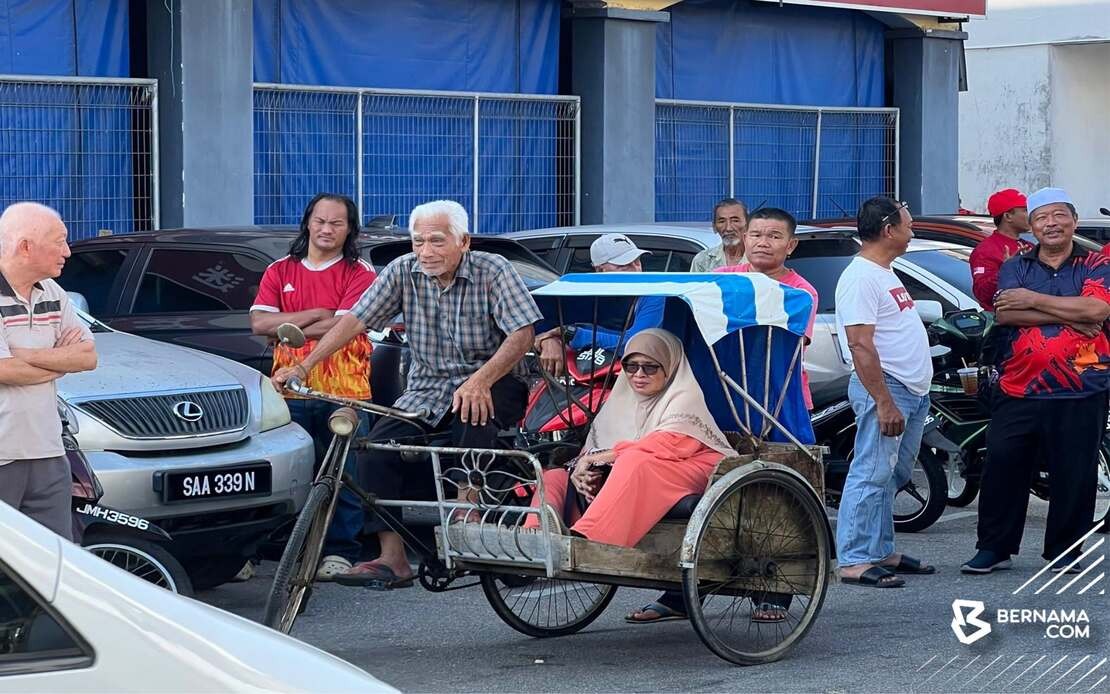
Prime Minister Datuk Seri Anwar Ibrahim has conveyed his heartfelt appreciation to an elderly trishaw operator who made a remarkable personal effort to fulfil a meaningful wish during the premier's recent campaign visit to Johor. The touching encounter, which unfolded in the small town of Senggarang in the Batu Pahat district, highlights the enduring human connections that emerge during political engagements across Malaysia's rural communities.
The gesture came from Abdul Razak Pelangga, 86, who decided to transport his wife, Jamilah Samsudin, 64, by trishaw from their home in Kampung Parit Bugis after learning that Anwar would be stopping at Kedai Kopi Hailam Sri Medan for breakfast. Rather than rely on motorised transport despite having access to a car or motorcycle, Abdul Razak chose to pedal the nearly one-kilometre journey himself, a decision rooted in practical considerations about parking availability in the busy locality.
Anwar acknowledged the couple's efforts through a Facebook post, expressing sincere regret that scheduling constraints prevented him from meeting them face-to-face during his breakfast stop. The Premier assured them of a future opportunity to connect, offering a prayer for their continued good health and wellbeing. His public acknowledgment of their sacrifice transformed what might have been a missed encounter into a meaningful moment of recognition that resonated beyond the immediate family.
Abdul Razak's determination to support the Prime Minister's campaign despite his advanced age carries particular significance within Malaysian society, where respect for leadership and civic participation remain deeply valued, especially among older generations. His choice to use traditional transport rather than modern convenience speaks to a generation that values direct engagement and personal witness to important political moments, even at considerable physical effort.
The incident occurred during Anwar's meet-and-greet programme in the Senggarang state constituency, part of broader campaign activities connected to the Johor State Election. During this appearance, the Prime Minister spent approximately fifty minutes at the coffee shop, engaging with local residents and understanding their concerns and aspirations. Such grassroots interactions form the backbone of Malaysian political engagement, particularly in smaller towns where direct access to national leaders remains a rare and memorable occasion.
The couple's journey underscores broader patterns of support that Anwar has cultivated among Malaysia's diverse demographic base. Their willingness to invest personal effort—in this case, physical exertion—to witness the country's leader reflects a commitment to civic participation that transcends age and socioeconomic status. In an era of digital communication and virtual engagement, such tangible demonstrations of political interest retain their cultural weight.
Anwar's gracious response demonstrates the soft power that accompanies genuine recognition of constituent efforts. By publicly acknowledging Abdul Razak and Jamilah's gesture, the Premier reinforced an image of accessibility and appreciation for ordinary Malaysians, regardless of their economic circumstances. This type of interaction, shared through social media, amplifies the emotional resonance far beyond those directly present, creating narratives that influence broader public perception of leadership.
The imam of Masjid Raudhatul Jannah Parit Bugis provided context for Abdul Razak's decision-making process, noting that parking concerns in the bustling town centre influenced his choice of transport. This detail adds practical grounding to the story, transforming it from pure sentiment into a realistic portrayal of how rural Malaysians navigate their communities and make logistical decisions based on local conditions. It also illustrates the challenges of urban congestion even in smaller towns across Malaysia.
The broader implications of this encounter extend to how political leadership is expressed and experienced at the grassroots level in Malaysia. In constituencies like Senggarang, where such direct engagement opportunities remain relatively infrequent, the arrival of the Prime Minister generates genuine excitement and motivation for citizens to participate, however symbolically. For elderly Malaysians like Abdul Razak, whose trishaw represents not only a means of livelihood but also a symbol of traditional Malaysian society, such moments carry profound personal and cultural significance.
Future analyses of Anwar's political strategy should note how these organic, unscripted moments often generate more authentic political messaging than formal events. The couple's spontaneous effort and the Premier's genuine response created an authentic human narrative that resonates more powerfully than prepared statements. In the context of Johor's political landscape, where various coalitions compete for influence, such genuine connections with diverse voter demographics carry strategic importance beyond their immediate emotional appeal.
The incident also reflects the continued importance of physical presence and direct engagement in Malaysian politics, despite the proliferation of digital campaigning tools. While social media platforms enable rapid information dissemination, the lingering impact of in-person encounters—whether ultimately successful or not—demonstrates that traditional forms of political engagement retain considerable relevance. For Abdul Razak and Jamilah, the attempted meeting, even though unrealised, transformed their day into a memorable experience and contributed their individual story to the broader political narrative of the Johor campaign.

