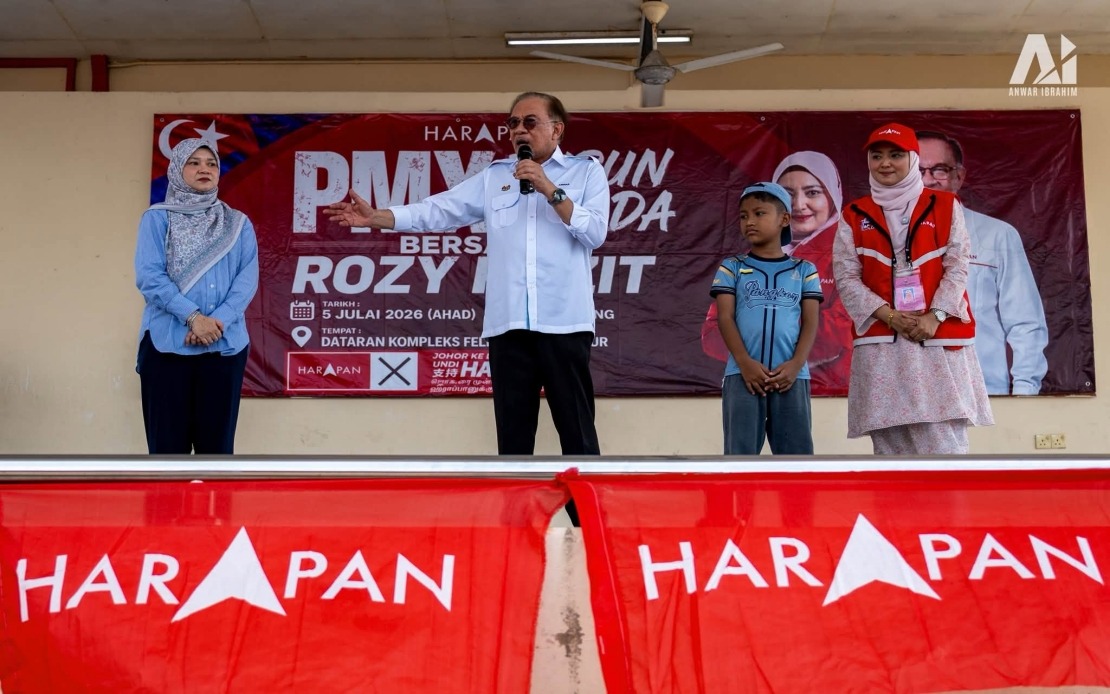
Prime Minister Datuk Seri Anwar Ibrahim has reflected on a brief but deeply affecting encounter with Muhammad Afif Ikhwan, a nine-year-old boy whose determination to meet the nation's leader inspired an extraordinary journey by his grandmother through the remote stretches of an oil palm plantation. The incident, which occurred during an official programme at Felda Palong Timur in Segamat, left such an impression on Anwar that he arranged for an official to track down the child and present him with a bicycle as a token of his appreciation for the gesture.
The story of how the encounter came to pass reveals the depth of aspiration that moved Afif's family to undertake what would ordinarily seem like an insurmountable obstacle. Rosimah Mohammad, Afif's 58-year-old grandmother from Kampung Pudu in Segamat, made the decision to ride a motorcycle along the dirt tracks cutting through the sprawling plantation solely to afford her grandson the rare privilege of standing before the Prime Minister in person. This act of devotion by a rural grandmother underscores the symbolic weight that such presidential and prime ministerial engagements carry for many Malaysians living far from the corridors of power.
Anwar described the moment itself with evident emotion, recalling how the boy's small hand reached through the assembled crowd to grasp his own in greeting. Rather than allowing the moment to pass unremarked, the Prime Minister invited Afif onto the stage during the Felda Palong Timur programme, transforming what could have been a fleeting interaction into a memory that both parties would carry forward. The decision to do so reflects a leadership approach that values direct human connection, even amid the pressing demands of national governance.
In a Facebook post reflecting on the encounter, Anwar emphasised that what had initially appeared to be nothing more than a child's modest wish had proven substantial enough to move his grandmother to undertake a challenging journey. He acknowledged the remarkable nature of Rosimah's decision to navigate the plantation's network of access roads on a motorcycle, a choice that demonstrates how aspirational even small opportunities for connection can be in communities where such encounters are exceptional rather than routine.
The Prime Minister drew broader significance from the interaction, using it as a springboard to discuss the balance required of political leaders navigating the demands of office. While acknowledging the considerable challenges facing the nation and the administrative burden of national stewardship, Anwar argued that political figures must never permit the pressures of governance to erode their fundamental humanity or their willingness to engage compassionately with citizens from all walks of life. This reflection suggests a deliberate effort to position his leadership style as one grounded in empathy alongside pragmatism.
Anwar articulated his hope that the experience would become a cherished and formative memory for young Afif, one that might inspire the boy to persevere with his education and eventually become a productive contributor to his family, his community, and the nation at large. By connecting the encounter to broader life outcomes, the Prime Minister framed the interaction as meaningful not merely in its emotional resonance but in its potential to influence the trajectory of a child's development and aspirations.
The story also illuminates the lived reality of rural Malaysia, where access to national figures and the mechanisms of power remain geographically and socially distant for many. For residents of small kampungs within plantation zones, the opportunity to come into physical proximity with the Prime Minister represents a significant event, sufficient to justify considerable personal effort. The willingness of Afif's grandmother to undertake such a journey speaks to the enduring reverence accorded to the office of Prime Minister in Malaysian society, particularly in rural areas where symbolic national leadership remains potent.
The follow-up gesture of presenting Afif with a bicycle demonstrates how political leaderships can translate momentary encounters into tangible expressions of care that extend beyond the initial meeting. The gift itself carries practical significance for a rural child whose access to mobility and independent movement may be limited by geographic circumstance, while simultaneously serving as a concrete memento of his meeting with the nation's leader.
The incident resonates with ongoing discussions about accessibility, rural-urban divide, and the role of political figures in reinforcing national cohesion. In a country where perceptions of government often reflect broader experiences of equity and fairness, stories of prime ministerial accessibility and responsiveness carry weight beyond their individual narratives. Anwar's public reflection on the encounter suggests a strategic emphasis on projecting an image of leadership that remains grounded in human-scale interactions despite the monumentality of national office.

