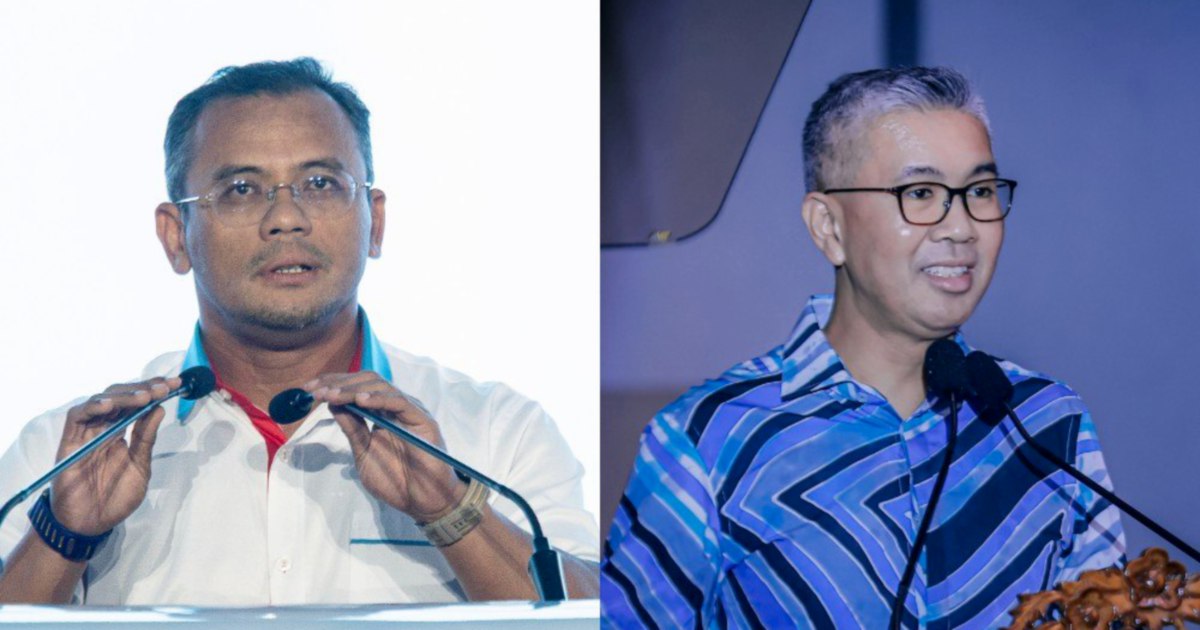
PKR president Datuk Seri Anwar Ibrahim has reshuffled key positions within the party, appointing Selangor Menteri Besar Amirudin Shari as election director while designating Tengku Zafrul Azmi as coordinator of the Prime Minister's Office, marking a significant strategic reorganisation ahead of anticipated electoral contests.
The announcements reflect Anwar's efforts to consolidate party machinery and strengthen coordination between PKR's political operations and government administration. Amirudin's elevation to the election director role positions the Selangor leader, who has garnered significant grassroots support and demonstrated electoral appeal in a crucial state, at the forefront of party campaign strategy. His appointment signals confidence in his organisational capabilities and political acumen as the party prepares for what could be a testing electoral period.
Tengku Zafrul's appointment as PMO coordinator represents an effort to bridge PKR's party operations with the federal government's machinery. The designation underscores the government's intention to ensure seamless communication and coordination between political party interests and administrative functions, a structural arrangement common in Malaysian politics but one that carries weight given the delicate coalition dynamics that have characterised Malaysian governance in recent years.
In a related move, Anwar granted full mandate to vice-president Datuk Seri Saifuddin Nasution Ismail to assume the duties of deputy president, effectively consolidating decision-making authority within the senior leadership. This concentration of responsibility within trusted lieutenants reflects Anwar's approach to internal party governance, where select individuals are granted expanded portfolios to streamline operations and reduce bureaucratic friction.
The timing of these appointments is significant within Malaysia's political calendar. With speculation mounting about the timing of the next general election—currently due by mid-2025—PKR appears to be positioning itself institutionally and operationally for an electoral campaign. The party, as the largest component in the Pakatan Harapan coalition, bears substantial responsibility for the coalition's electoral performance, making these leadership adjustments particularly consequential for the broader political landscape.
Amirudin's role carries particular importance given Selangor's status as Malaysia's most populous state and a traditional electoral battleground. The state has historically determined broader national political trends, and appointing its sitting menteri besar to orchestrate PKR's election strategy suggests the party recognises the centrality of Selangor performance to overall electoral success. Amirudin's profile as a relatively younger administrator who has managed complex state-level governance adds credibility to his elevation.
The appointments also reflect potential shifts in how PKR manages the interface between party politics and government responsibility. By assigning Tengku Zafrul to coordinate PMO affairs, the party appears to be ensuring that government administration and political strategy remain aligned—a critical consideration in a coalition government where competing interests and perspectives can sometimes create friction between different political parties in the ruling alliance.
These structural changes arrive amid broader discussions within Malaysian political circles about governance effectiveness and coalition stability. The Anwar-led administration has navigated numerous challenges since taking office, including managing diverse coalition partners with varying policy priorities and responding to economic and governance pressures. These appointments suggest an effort to strengthen internal PKR cohesion and efficiency as the party confronts both external electoral challenges and internal organisational demands.
The emphasis on electoral readiness through Amirudin's appointment also addresses potential vulnerabilities PKR may face. Opposition Perikatan Nasional has capitalised on anti-establishment sentiment in recent by-elections and state contests, putting pressure on the ruling coalition. Appointing a high-profile, electorally successful figure like Amirudin to direct campaign strategy indicates PKR's determination to counter opposition inroads and defend its political base.
For Malaysian observers, these moves underscore the fluid nature of contemporary Malaysian politics, where party leadership positions and government roles frequently intertwine. The clarity with which Anwar has defined these appointments—rather than allowing ambiguity about roles and responsibilities—suggests an attempt to establish transparent chains of command within PKR, potentially avoiding the internal power struggles that have periodically disrupted the party in the past.
The broader implication for Southeast Asia's longest-serving democracy is that PKR remains in active preparation mode for electoral competition. These appointments reflect confidence in the ruling coalition's capacity to retain power while simultaneously acknowledging that such retention requires active political management and strategic positioning. As Malaysia moves through 2024 and approaches the election window, such internal party reorganisations will likely continue as coalition members prepare their respective machineries for what most observers anticipate will be a closely contested national election.

