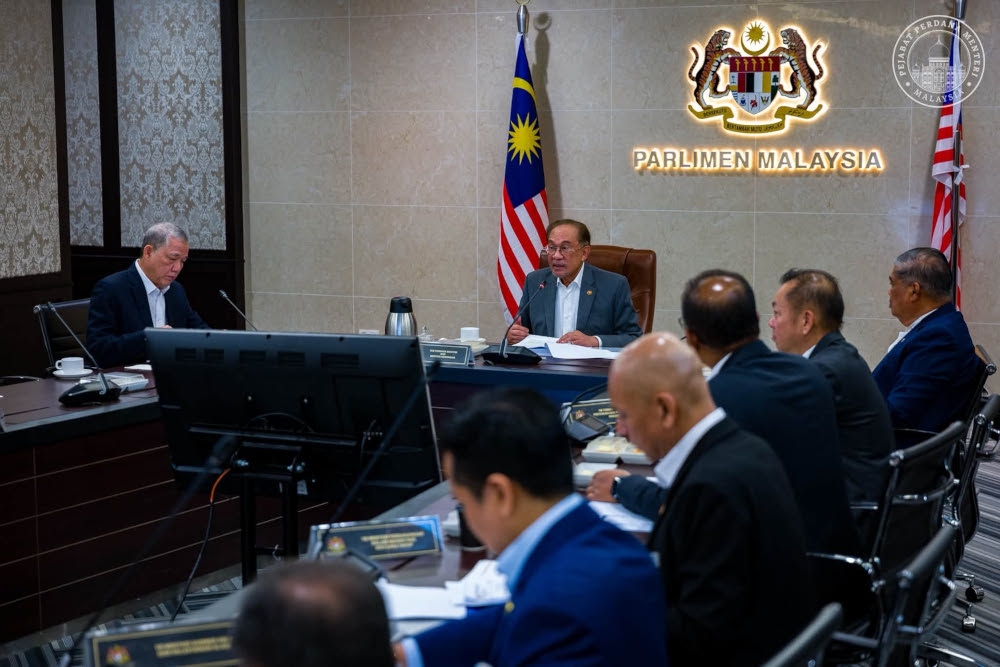
Prime Minister Datuk Seri Anwar Ibrahim has directed the Ministry of Agriculture and Food Security to take urgent action in protecting Malaysia's food supply chain as meteorologists warn of a strengthening super El Niño phenomenon expected to disrupt agricultural output across Southeast Asia. The directive, issued following assessment of climate forecasts and their potential impact on domestic farming, signals government concern over the food security implications of the anticipated weather disruption over coming months.
El Niño events, which occur when warm water in the Pacific Ocean disrupts normal weather patterns, typically bring drought conditions and reduced rainfall to Southeast Asian agricultural regions. A super El Niño—characterized by exceptionally strong warming—threatens even more pronounced effects on crop yields, livestock productivity, and overall food production. For Malaysia, where agriculture remains economically significant despite the country's developed status, such disruptions carry measurable consequences for domestic food prices, rural incomes, and consumer affordability.
The Prime Minister's intervention reflects growing recognition across government that climate variability poses genuine risks to Malaysia's agricultural sector. Despite the country's relatively diversified economy, domestic food production supplies critical portions of the national diet, particularly for staple crops like rice, vegetables, and fruits. The ministry has been tasked with developing contingency plans to maintain production levels and stabilize supply chains during the El Niño period.
Malaysia's rice industry faces particular vulnerability during El Niño episodes. The country relies on both domestic cultivation and imports to meet rice consumption needs, with domestic production concentrated in the peninsula's northern states. Reduced rainfall during El Niño years constrains irrigation availability, directly threatening paddy yields. Officials have been directed to review irrigation infrastructure, assess water storage capacity in major agricultural regions, and coordinate with state governments on water allocation priorities that balance agricultural needs with urban consumption demands.
Beyond rice production, the directive encompasses broader agricultural sectors including vegetable cultivation, fruit farming, and livestock operations. Drought conditions stress water-dependent crops and increase feed costs for livestock farmers. The ministry has been instructed to work with agricultural extension services and farmer associations to promote drought-resistant crop varieties, implement water conservation techniques, and encourage crop diversification strategies that might mitigate weather-related losses. Such measures require coordination with smallholder farmers who constitute significant portions of Malaysia's agricultural workforce.
The government has also emphasized the importance of strategic food reserves and supply chain resilience. Relevant agencies have been directed to review current stockpiling levels of essential food commodities and ensure adequate buffer stocks can be maintained through the anticipated El Niño period. This involves coordination between the Ministry of Agriculture and Food Security, port authorities, and private sector logistics operators to ensure uninterrupted supply routes and adequate storage facilities.
Regional implications add another dimension to Malaysia's concerns. El Niño impacts neighbouring agricultural producers across Indonesia, Thailand, and Vietnam—all major suppliers of food products to Malaysian markets through both formal trade channels and informal cross-border commerce. Disruptions to regional agricultural output could pressure Malaysia's food import costs and complicate sourcing strategies. The Prime Minister's directive implicitly acknowledges that Malaysia's food security depends not only on domestic agricultural resilience but also on broader regional stability and cross-border supply chain coordination.
Climate forecasters have provided varying timelines for the super El Niño's peak intensity, with some projections indicating maximum impacts during the latter half of 2023 and into 2024. This timeline has shaped the urgency of government directives, allowing planning and preparation but requiring rapid implementation of contingency measures. Agricultural ministries across Southeast Asia have issued similar advisories, indicating shared regional vulnerability and the transnational nature of climate-related food security challenges.
The directive also carries implications for government expenditure and subsidy policies. El Niño-induced crop failures or yield reductions often prompt governments to increase agricultural subsidies, import more food commodities, or implement price controls to prevent consumer hardship. Malaysia's fiscal position and commitment to targeted subsidy approaches may face pressure if agricultural disruptions prove severe, potentially requiring budget reallocations or policy adjustments to balance food affordability with fiscal sustainability objectives.
Industry observers note that while government coordination and strategic planning matter significantly, individual farmer adaptation and investment capacity ultimately determine sectoral resilience. Smallholder farmers in particular often lack resources for irrigation improvements, new seed varieties, or crop diversification investments. The ministry's implementation framework must therefore incorporate support mechanisms that enable farmers at all scales to adopt recommended practices and technologies without incurring unsustainable costs.
The Prime Minister's directive represents a proactive approach to an anticipated but uncertain challenge. While El Niño forecasts carry inherent uncertainties regarding timing and intensity, the potential consequences for food security justify precautionary government action. Success in maintaining Malaysia's food security during the super El Niño period will depend on effective coordination between government agencies, responsive engagement with agricultural stakeholders, and sustained implementation of mitigation measures across the supply chain from farm to consumer.

