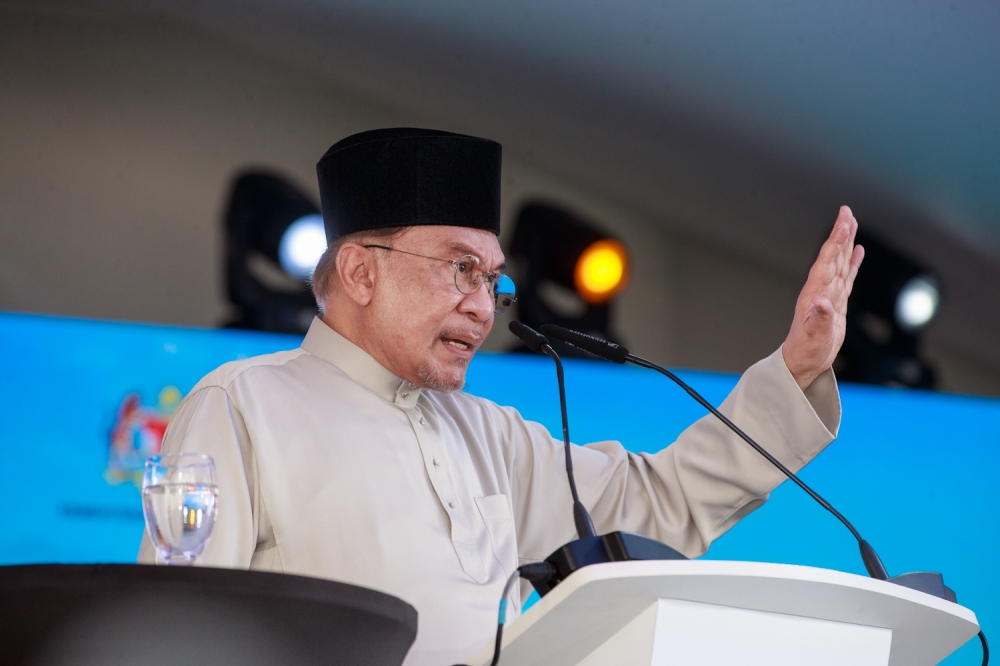
Prime Minister Datuk Seri Anwar Ibrahim has directed the Chief Secretary to the Government to conduct a comprehensive review of the civil service promotion framework, responding to longstanding grievances among officers who have experienced extended delays in career progression. The directive addresses a systemic problem affecting workforce morale and retention across Malaysia's public administration, with some personnel awaiting promotions for nearly a decade despite meeting eligibility criteria.
The promotion backlog represents a significant human resource management challenge that has accumulated over years of budget constraints and organisational restructuring. Officers competing for limited advancement opportunities have expressed frustration at the protracted timelines, which effectively freeze their career development and financial progression at critical junctures in their professional lives. This bottleneck has particular implications for mid-level civil servants whose compensation remains stagnant while their private sector counterparts advance more rapidly, creating recruitment and retention pressures.
The Prime Minister's intervention signals acknowledgment that the current system lacks efficiency and responsiveness to legitimate career expectations. By commissioning a formal review rather than implementing ad-hoc solutions, the administration recognises that promotion delays reflect deeper structural inefficiencies in how the civil service manages talent development and succession planning. This approach aligns with broader government modernisation initiatives aimed at enhancing public sector competitiveness and service quality.
Historically, civil service advancement has operated within rigid hierarchical frameworks with limited flexibility to accommodate individual merit and performance. Promotion cycles often depend on budget availability, attrition rates at higher grades, and centralised approval processes that can introduce delays extending beyond reasonable timeframes. The eight-year waiting period mentioned indicates that current mechanisms fail to differentiate between high and average performers, disadvantaging capable officers and undermining performance-based advancement principles.
For Malaysian civil servants, delays in promotion carry cascading consequences beyond career satisfaction. Compensation increments frequently link to grade advancement, meaning officers remain at lower salary scales far longer than industry standards suggest appropriate. This financial stagnation affects household planning, retirement security, and professional morale. Furthermore, protracted advancement delays may prompt talented civil servants to seek opportunities abroad or in the private sector, exacerbating brain drain in critical government functions.
The review process will likely examine multiple dimensions of the promotion system, including the frequency and scale of promotion opportunities, evaluation criteria for advancement, time-in-grade requirements, and mechanisms for identifying high-potential officers deserving accelerated progression. International best practices from comparable ASEAN civil services may provide benchmarks for reform, particularly nations that have successfully streamlined advancement while maintaining meritocratic standards.
Regional perspective matters here. Singapore's civil service, often cited as Southeast Asia's model, employs robust performance management systems enabling faster progression for capable officers while maintaining equity. Thailand and Indonesia have similarly undertaken civil service reforms addressing promotion bottlenecks. Malaysia's reform efforts will likely draw comparative lessons from these experiences whilst adapting approaches to local administrative culture and budgetary constraints.
The Chief Secretary's office faces substantial technical challenges in redesigning promotion pathways. Any reform must balance expanding advancement opportunities with preserving merit-based selection, ensure equitable treatment across government departments with varying promotion frequencies, and align career progression with actual service needs rather than arbitrary grade distributions. Additionally, reforms must account for officers already in the promotion pipeline, creating potential transitional complications.
Stakeholder engagement will prove critical to reform success. Civil service unions, department heads, and human resources professionals possess essential insights into implementation feasibility. Officers themselves, particularly those affected by current delays, must perceive reforms as genuine improvements rather than cosmetic adjustments. Transparent communication about timeline expectations and selection criteria could significantly improve confidence in whatever system emerges.
The promotion review intersects with broader public sector efficiency concerns. Sluggish advancement dampens motivation and commitment precisely when government services require enhanced performance to address Malaysia's development challenges. Modern digital platforms could streamline application processing and reduce bottleneck points, whilst standardised evaluation frameworks might accelerate decision-making cycles currently prolonged by administrative complexity.
Financially, accelerated promotions carry budgetary implications requiring careful consideration. Faster advancement increases government salary expenditure, demanding offsetting efficiencies elsewhere or budget reallocation. The administration must weigh immediate fiscal costs against productivity gains from improved morale and reduced turnover, calculating whether modest promotion acceleration actually saves resources long-term by minimising recruitment and training expenses for replacement staff.
Politically, the intervention demonstrates responsiveness to civil service concerns, a constituency often overlooked in public policy discourse. As the government pursues implementation of broader reform agendas requiring dedicated public sector execution, maintaining workforce satisfaction becomes strategically significant. Officers who feel valued and career progression remains achievable contribute more effectively to programme delivery than those perceiving institutional stagnation.
The coming months will reveal how substantially the Chief Secretary's review translates into structural change. Meaningful reform requires moving beyond incremental adjustments toward systemic redesign, establishing clear progression pathways, and creating mechanisms ensuring officers no longer endure eight-year waits for reasonable career advancement. Success will signal genuine commitment to modernising Malaysia's civil service capacity for contemporary governance demands.

