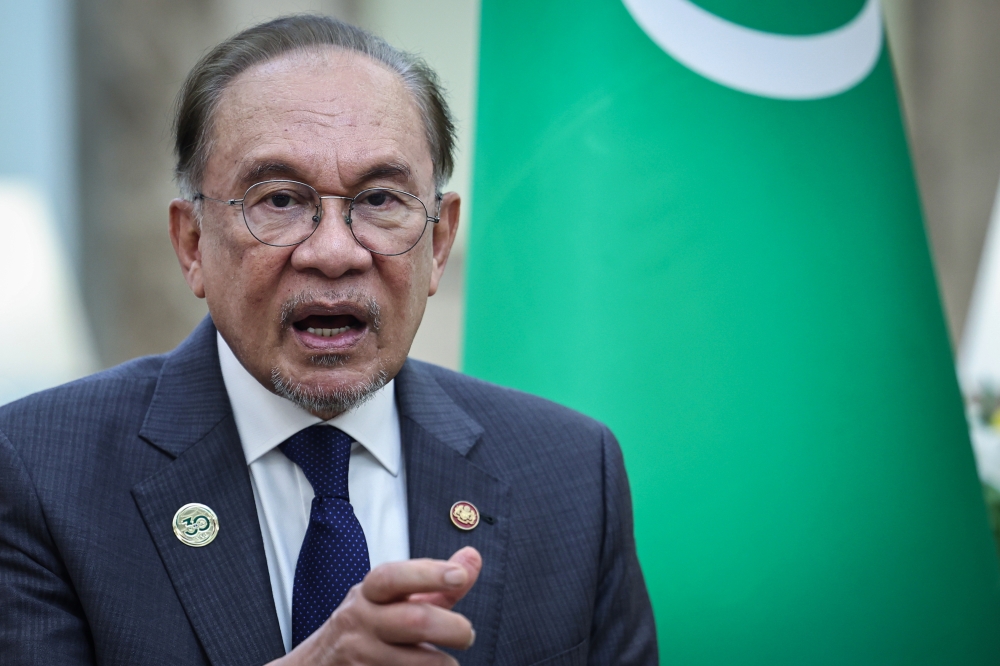
Prime Minister Datuk Seri Anwar Ibrahim has offered his sympathies following the death of John L. Esposito, the distinguished American academic whose career centred on fostering dialogue between Islamic civilisation and the Western world. The premier's statement underscores the respect Malaysia's leadership holds for scholars who have dedicated themselves to combating religious prejudice and promoting interfaith understanding in an increasingly polarised global environment.
Esposito, who spent decades at American universities as a leading voice in Islamic studies, became known internationally for his nuanced approach to understanding Muslim societies and their relationship with the West. His work transcended academic boundaries, informing policymakers and public discourse across multiple continents. For Malaysia, a nation that positions itself as a bridge between Eastern and Western civilisations, such intellectual contributions hold particular significance in shaping international perceptions of Islam and Muslims.
Through his prolific writing and scholarly research, Esposito challenged stereotypes and oversimplifications that had become entrenched in Western narratives about Islam following geopolitical conflicts. His academic rigour combined with accessible writing made complex theological and political concepts comprehensible to general audiences, elevating the quality of public debate on matters that affect Muslim-majority nations and diaspora communities globally. This democratisation of Islamic scholarship represented a departure from ivory-tower academia disconnected from real-world consequences.
Anwar's characterisation of Esposito as a "true friend to the Muslim world" reflects recognition that genuine solidarity transcends religious boundaries and national borders. In an era when misunderstandings between civilisations fuel diplomatic tensions and domestic polarisation, scholars willing to invest intellectual capital in cross-cultural understanding perform invaluable service. Esposito's influence extended beyond academia into policy circles, where his insights shaped how governments and international organisations approached Islamic governance, religious freedom, and minority rights.
The loss carries weight for Southeast Asia specifically, where Malaysia has sought to position itself as a model of pluralistic governance and interfaith coexistence. Esposito's work documented and validated Malaysia's multicultural approach, providing international academic credibility to the nation's constitutional framework protecting religious diversity. His scholarship helped counter perceptions that Islam and democratic governance are incompatible, arguments that remain strategically important for Malaysia's regional leadership aspirations.
Esposito's career also demonstrated the power of sustained intellectual engagement over decades. Rather than pursuing sensationalist narratives that generate immediate attention, he invested in building understanding through patient scholarship, institutional relationships, and dialogue. This methodical approach to bridging civilisational gaps offers lessons for contemporary policymakers grappling with religious tensions, social fragmentation, and polarised discourse on both sides of Muslim-Western interactions.
Beyond his published work, Esposito contributed through institutional leadership and mentorship, shaping generations of scholars and analysts who continue his legacy. His Georgetown University centre became a hub for serious Islamic scholarship, attracting researchers from Muslim-majority nations and fostering conversations that elevated academic discourse regionally. Malaysian scholars who engaged with his work and institutions benefited from access to research networks and intellectual frameworks unavailable domestically.
The timing of Esposito's passing coincides with a period when dialogue between civilisations has become increasingly urgent. Rising populism, sectarian conflicts across the Muslim world, and competing geopolitical narratives threaten the progress made by previous generations of bridge-builders. His departure leaves a gap in authoritative voices capable of articulating sophisticated understandings of Islam's diversity and compatibility with modern democratic values.
For Malaysia's government, honouring Esposito represents more than personal respect for an individual scholar. It affirms the nation's commitment to the principles he championed: religious pluralism, evidence-based understanding of Islamic societies, and the belief that difference need not breed hostility. In the region where Malaysia projects soft power through cultural and religious diplomacy, maintaining engagement with international scholars who validated its approach remains strategically important.
Esposito's legacy will likely endure through the institutions he built, the scholars he mentored, and the intellectual frameworks he established for understanding Islam in global context. For Malaysian policymakers and academics, his life's work serves as both inspiration and challenge to continue investing in genuine intercultural understanding rather than mere tolerance. As the nation navigates increasingly complex religious and international dynamics, voices like Esposito's absence will be keenly felt in forums dedicated to Muslim-Western engagement and pluralistic governance models.

