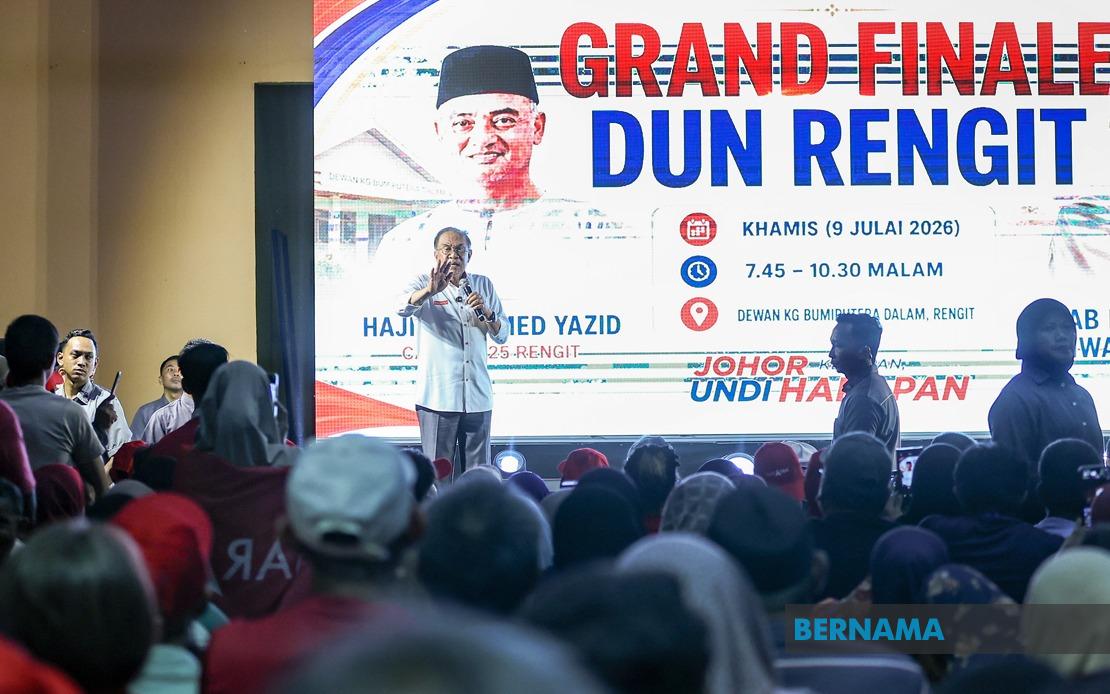
Prime Minister Datuk Seri Anwar Ibrahim has made a direct commitment to tackle the persistent infrastructure deficiencies plaguing the Rengit constituency, singling out inadequate healthcare facilities and unreliable water supply as immediate priorities for resolution. Speaking at a Pakatan Harapan campaign gathering in Batu Pahat, Anwar framed the restoration of basic services as a matter of state pride, emphasising that Johor's reputation as a developed state demands infrastructure that meets contemporary standards. His remarks underscore the tangible frustration that residents have endured, with healthcare and water supply emerging as defining issues in this electoral cycle.
The Prime Minister articulated a philosophical position on the purpose of public infrastructure, observing that medical clinics should be functional environments capable of treating patients rather than facilities themselves requiring repair and attention. This pointed comment captured the absurdity of the current situation whilst signalling a readiness to confront what appears to be systematic neglect. Anwar positioned access to healthcare and clean water as non-negotiable rights rather than conditional services, reflecting international development standards and domestic expectations for a state classified as developed.
The campaign event, formally titled the Pakatan Harapan 'Serumpun Kasih Sejiwa Harmoni Grand Finale' programme, represented part of a larger electoral push across Johor, with Anwar attending three distinct campaign functions in the state on the evening of his Rengit appearance. The concentration of prime ministerial presence in Johor highlights the strategic importance of the 16th state election scheduled for Saturday and the coalition's determination to maintain electoral momentum. Rengit, as a specific focus of Anwar's attention, suggests the coalition views the constituency as either competitive or particularly significant to the overall state result.
Joining Anwar at the event were Sri Gading MP Aminolhuda Hassan, who also serves as Johor's Amanah chairman, and the Pakatan Harapan candidate contesting the Rengit seat, Yazid Abu Bakar. The presence of these figures reflects the integrated nature of federal-state campaign coordination, with senior parliamentarians lending credibility and visibility to state-level candidates. Such alignment between federal leadership and ground-level campaign machinery is designed to convey coherence and organisational strength to voters evaluating which coalition can most effectively represent their interests.
Beyond the specific infrastructure commitments, Anwar articulated a broader governance philosophy centred on essential services provision. He explicitly identified water supply, housing, education, and healthcare facilities as domains requiring sustained governmental focus and resource allocation, establishing a hierarchy of priorities that speaks to fundamental human needs. This framing contests any suggestion that state governments should deprioritise basic infrastructure in favour of flashy development projects, instead anchoring the campaign message in tangible improvements to daily life.
A significant element of Anwar's remarks addressed governmental integrity and the conduct of public officials, a theme that appears with increasing frequency in Malaysian electoral campaigns. He cautioned government representatives and community leaders against abusing their positions for personal enrichment and called for the discharge of responsibilities with ethical rigour. This moral dimension to governance represents an attempt to distinguish Pakatan Harapan's proposed administration from alternatives, positioning the coalition as committed to principled leadership.
The Prime Minister's campaign messaging emphasised a strategic advantage that coalition alignment offers: the ability to execute development initiatives with greater efficiency when state and federal governments operate in concert. This argument appeals to pragmatic voters concerned with results rather than abstract principles, suggesting that electing representatives aligned with the Federal Government would remove bureaucratic friction and accelerate project implementation. The logic assumes that cooperation between state and federal administrations translates to tangible benefits for constituents.
Packatan Harapan is contesting all 56 seats across the Johor state assembly, deploying a slate of 56 candidates distributed across its component parties: 20 from PKR, 19 from Amanah, and 17 from DAP. This comprehensive candidacy approach signals confidence and ambition, though it also reflects the coalition's determination to contest every available seat rather than ceding any constituency to opposition parties. The distribution of candidacies among coalition partners suggests internal negotiation and power-sharing arrangements within the broader opposition structure.
The broader electoral context reveals a significantly contested election, with a total of 172 candidates registering nominations across the 56 state assembly seats. This candidate density indicates competitive constituencies and suggests that victory margins may be narrow in several areas, placing premium value on marginal improvements in voter turnout and persuasion. For Rengit specifically, Anwar's campaign appearance and infrastructure commitments signal that the coalition views the seat as either vulnerable to opposition challenge or as an opportunity to strengthen its majority.
The decision to highlight healthcare and water infrastructure during the campaign reflects genuine constituent concerns derived from community feedback and electoral research. These are not abstract policy areas but immediate, daily-life issues that directly affect quality of life and public satisfaction with government performance. In Malaysian state elections, where voters often make decisions based on local service delivery rather than national politics, addressing these specific grievances carries particular weight.
For southeastern Johor and the broader region, the outcome of this election will help determine whether resources flow toward addressing infrastructure backlogs or whether maintenance of existing systems continues to suffer from insufficient prioritisation. Rengit's experience is not isolated; many constituencies across Malaysia struggle with similar water supply and healthcare facility challenges, making the commitments articulated in this campaign potentially significant for setting precedents regarding how future administrations address such systemic deficiencies.
The campaign event exemplifies how contemporary Malaysian electoral contests increasingly centre on granular, constituency-specific issues rather than overarching national narratives. By visiting Rengit and directly addressing local infrastructure problems, Anwar employs a tactical approach that demonstrates attentiveness to voter concerns whilst simultaneously building a record of commitment that can be referenced in post-election accountability discussions. Whether these pledges translate into concrete action will significantly influence voter confidence in both the coalition and the broader project of governmental reform.

