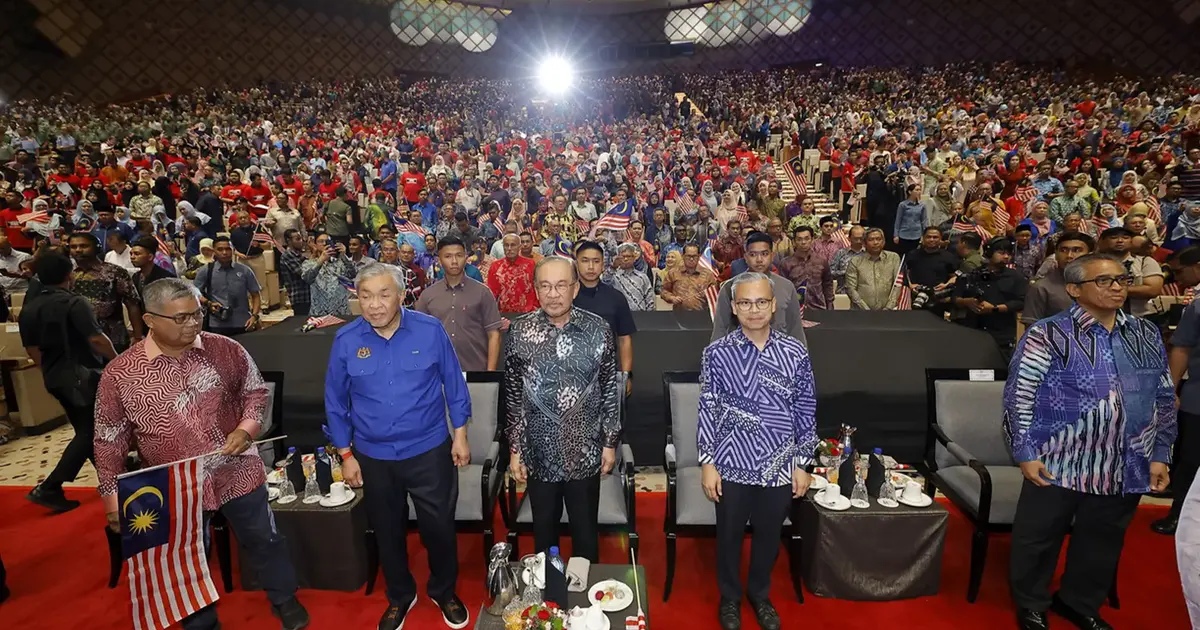
Prime Minister Anwar Ibrahim has announced that substantial sums recovered from seizures will be returned to the Malaysian people, underscoring a central pledge of his administration to ensure the nation's accumulated wealth directly benefits ordinary citizens rather than remaining locked within government coffers.
The commitment reflects Anwar's broader ideological stance on wealth redistribution and accountable governance. Since assuming office, the Prime Minister has positioned his government as a departure from previous administrations, emphasizing transparency and ensuring that public resources are managed for the collective good. This announcement on seized funds serves as a tangible demonstration of that philosophy in action.
The scale of funds involved is significant enough to warrant national attention. Malaysia has accumulated substantial assets through law enforcement operations targeting financial crimes, corruption, and illicit activities over several years. The exact quantum of these seized assets has long been a subject of public interest, with civil society organisations and opposition lawmakers frequently calling for clarity on how such money is deployed and distributed.
The timing of this announcement carries political weight within Malaysia's current governance landscape. Anwar's government has faced scrutiny regarding its handling of public finances and the pace of anti-corruption efforts. By promising to return seized funds, the administration signals its commitment to concrete action rather than mere rhetorical positioning on accountability and transparency.
From a practical standpoint, the return of such funds raises important questions about implementation mechanisms. Malaysian policymakers will need to determine whether these resources flow directly to affected parties—such as fraud victims or businesses damaged by illicit activities—or whether the money will be channelled into broader social programmes benefiting the wider population. The methodology chosen will significantly impact how effectively these returned assets address economic inequality and restore public confidence.
The announcement also resonates within Southeast Asia's broader context of governance and anti-corruption efforts. Regional observers often benchmark Malaysian institutions against those of neighbouring countries regarding transparency and asset recovery. A genuine commitment to returning seized funds could strengthen Malaysia's standing among international anti-corruption watchdogs and reinforce its credentials as a nation serious about combating financial crimes and their proceeds.
Historically, Malaysia has struggled with the perception that seized assets disappear into bureaucratic systems without clear accounting or public benefit. Previous governments faced accusations of opacity regarding the fate of recovered funds, particularly those connected to high-profile corruption cases. Anwar's pledge therefore addresses a legitimate public grievance and represents an opportunity to break with patterns that eroded trust in state institutions.
The principle underlying this initiative—that national wealth should serve the populace—fundamentally challenges conventional approaches to state asset management. Rather than treating seized funds as additional government revenue to be absorbed into general budgets, the proposed return mechanism acknowledges a moral obligation to citizens who ultimately bear the cost of corruption and financial crime through reduced public services and compromised institutions.
Implementing such a policy requires careful coordination between multiple agencies including law enforcement, financial regulators, and treasury officials. Malaysia's institutional framework will be tested in translating this commitment into workable procedures that balance efficiency with rigorous accountability. The success or failure of these implementation efforts will largely determine whether this announcement translates into meaningful change or remains aspirational rhetoric.
The announcement also carries implications for economic stimulus and social welfare considerations. Injecting billions into the economy through direct returns to citizens or community-focused programmes could theoretically support domestic consumption and address pressing social needs, from education to healthcare infrastructure. However, such macroeconomic benefits depend entirely on how and when these funds are actually distributed.
For Malaysian businesses and investors, clarity on seized asset policies provides welcome predictability regarding the legal and financial environment. Companies operating within Malaysia's borders naturally want assurance that government asset recovery processes function fairly and transparently. An administration committed to returning funds to their rightful owners—rather than permanently retaining them—signals stronger rule of law protections.
Anwar's commitment also reflects evolving global standards on asset recovery and anti-corruption. International bodies increasingly expect governments to demonstrate not only their ability to seize illicit proceeds but also their commitment to returning recovered assets to victims or the public. Malaysia's adherence to such standards enhances its international standing and facilitates cooperation with foreign counterparts in pursuing cross-border financial crimes.
The success of this initiative will ultimately be measured by execution rather than announcement. Malaysian citizens and civil society organisations will closely monitor whether seized billions actually reach their intended recipients and whether the government establishes transparent mechanisms for tracking these distributions. This announcement represents an important first step, but sustained commitment and measurable progress will determine whether it fundamentally reshapes public trust in Malaysia's institutions and governance practices.

