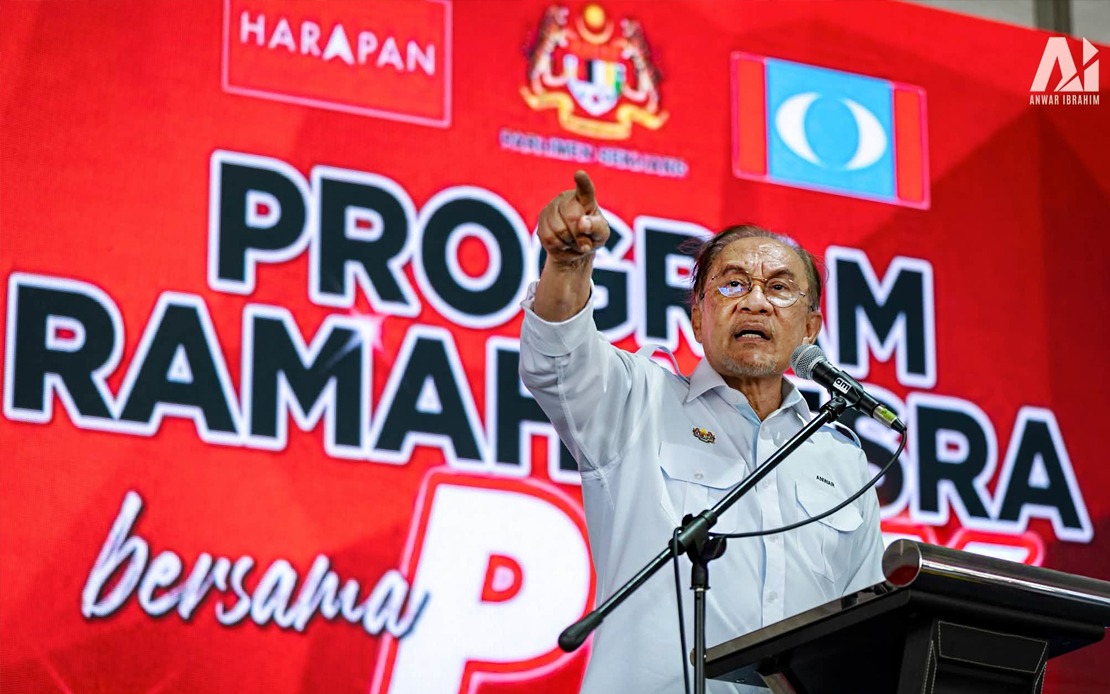
Prime Minister Datuk Seri Anwar Ibrahim has moved to address the financial squeeze facing Malaysia's durian farming sector, announcing that he will personally take up the matter with Chinese Premier Li Qiang during his scheduled visit to China next month. The commitment, made during a constituency meet-the-people session in Tangkak, represents a direct political intervention into an agricultural crisis triggered by a convergence of harvest seasons across Peninsular Malaysia that has depressed prices and threatened farm revenues.
The durian price collapse reflects a timing problem that many Malaysian farmers have grappled with for years: when multiple growing regions reach peak production simultaneously, market saturation pushes wholesale and retail prices downward, eroding profit margins for growers already operating on thin margins. This year's situation has been particularly acute, with the simultaneous ripening of fruits across different states creating a glut that domestic consumption alone cannot absorb. The Prime Minister's decision to elevate this issue to bilateral trade discussions signals recognition that solutions require market access expansion beyond Malaysia's traditional customer base.
China represents the strategic answer to Malaysia's durian glut. The country's burgeoning middle class and high purchasing power have created an insatiable appetite for premium tropical fruits, with durian commanding premium prices in Chinese supermarkets and specialty stores. However, as Anwar acknowledged during his remarks, China maintains stringent import standards and regulatory frameworks that create barriers even for established suppliers. The negotiation will not be straightforward—Chinese authorities conduct rigorous quality inspections, pest screening, and certification procedures designed to protect domestic agricultural interests while safeguarding consumer safety.
Anwar's characterisation of Li Qiang as a good friend and his willingness to "try to negotiate" suggests an understanding that diplomatic relationships can facilitate commercial arrangements. This represents a nuanced approach to agricultural diplomacy, recognising that direct government-to-government engagement can sometimes unlock regulatory flexibility or expedited approval processes that would otherwise require lengthy bureaucratic procedures. By framing the issue as a bilateral partnership opportunity rather than merely a Malaysian request, the Prime Minister has positioned expanded durian market access as mutually beneficial—strengthening Malaysia-China ties while helping Chinese consumers access their preferred fruit.
The timing of this intervention also carries political significance for the ruling coalition. The Gambir state constituency and wider Johor region have substantial agricultural populations, and visible government action on farmer concerns enhances Pakatan Harapan's electoral positioning. The presence of Deputy Natural Resources and Environmental Sustainability Minister Syed Ibrahim Syed Noh and the PH candidate for Gambir at the event underscored this political dimension, while the broader context of recent state elections in Johor demonstrates agriculture's continued relevance in Malaysian electoral calculations.
Beyond the immediate durian crisis, Anwar articulated a broader policy vision of leveraging Malaysia-China relations to create structural trade advantages during periods of agricultural oversupply. This reflects a recognition that Malaysian farming faces chronic vulnerability to supply shocks and seasonal fluctuations. By positioning the government as an active negotiator capable of opening premium markets during challenging periods, the administration signals commitment to protecting agricultural constituencies from market volatility—a message particularly important in rural areas where farming remains integral to community livelihoods and local economies.
On a parallel track, Anwar used the Tangkak appearance to emphasise another government intervention: fuel price management. He stated emphatically that Malaysia maintains the world's lowest retail fuel prices through government action, shielding consumers from geopolitical pressures affecting global oil markets. Current retail prices from July 1 to 8 stand at RM3.37 per litre for RON95 and RM3.97 per litre for diesel, but these represent only a fraction of true production costs—the BUDI MADANI initiative provides subsidised rates of RM1.99 per litre for RON95 and RM2.10 per litre for diesel.
The Prime Minister's discussion of fuel price controls reveals the government's dual commitment to protecting vulnerable populations from economic headwinds while managing inflationary pressures. Anwar's assertion that no country has achieved comparable fuel price reductions reflects awareness of Malaysia's unusual position: global oil price volatility, particularly from Middle Eastern geopolitical tensions involving Iran and the United States, has created upward pressure on crude costs. Yet the Malaysian government has actively resisted passing these increases to consumers, absorbing the differential between international benchmark prices and domestic retail prices.
This subsidy approach carries substantial fiscal implications. While the government absorbs price differences, the cost ultimately reflects budgetary priorities and resource allocation decisions. Anwar's emphatic rejection of economically "rational" price increases—where he insisted "I do not agree with price increases, and we reduce them"—frames fuel price management as a political choice grounded in social concern rather than market mechanics. This positioning appeals to working-class and middle-income Malaysians for whom fuel costs constitute significant household expenditures, particularly those in rural and semi-urban areas who depend on private vehicles for livelihood and daily activities.
The convergence of these two policy announcements—durian market expansion and fuel price protection—illustrates the government's multi-front approach to supporting economically vulnerable constituencies. Farmers and rural communities, represented by the durian issue, require both market access and input cost management, both of which the government claims to be addressing. The political coherence of this messaging suggests a deliberate strategy to position Pakatan Harapan as a coalition defending ordinary Malaysians against globalised economic pressures and market volatility.
Looking forward, the actual outcomes of Anwar's China visit will determine whether these commitments translate into tangible benefits for Malaysian durian farmers. Regulatory changes, tariff adjustments, or quota expansions could significantly impact farmer incomes. However, the very act of positioning durian support at the highest diplomatic level signals that agricultural concerns have executive attention—a message that resonates powerfully in farming communities where government responsiveness to sector-specific challenges has historically been inconsistent. Whether negotiations with Li Qiang produce meaningful results, the commitment itself represents recognition that Malaysian agriculture requires active, high-level political engagement to compete in regional and global markets.

