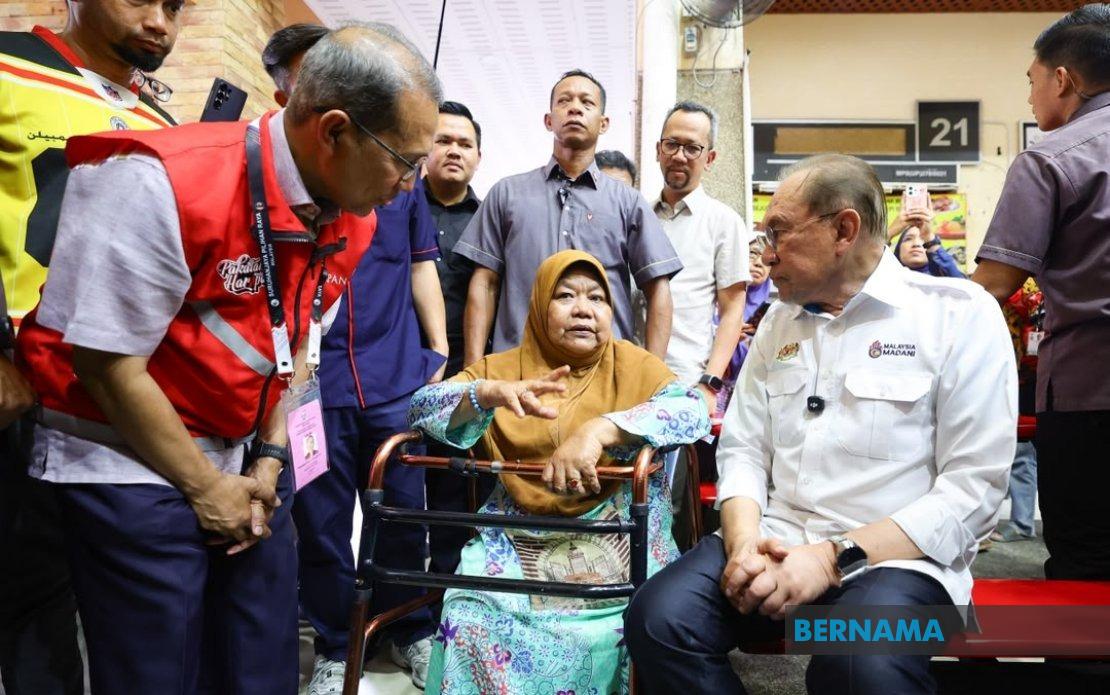
Prime Minister Datuk Seri Anwar Ibrahim has pointed to infrastructure projects underway in Negeri Sembilan as tangible evidence that the Pakatan Harapan-led state government delivers on its commitment to manage public resources with transparency and prioritise community welfare. Speaking at a public engagement in Seremban on July 22, Anwar highlighted how reciprocal river widening and deepening initiatives across the state demonstrate the administration's capacity to balance development needs with responsible resource stewardship.
The Ampangan area project exemplifies this approach, Anwar explained. Beyond its primary purpose of mitigating flooding hazards that have historically plagued the region, the initiative incorporates a resource-recycling mechanism whereby sand extracted during the widening process is reinvested into maintaining and upgrading the surrounding river infrastructure. This closed-loop model, he argued, ensures that materials extracted from public works benefit residents directly rather than being sold off or wasted. The structure reflects a departure from conventional development practices that sometimes prioritise short-term gains over long-term community value.
At the Santai Petang Bersama Warga Ampangan event, attended by PH's Ampangan state seat candidate Muhammad Nazri Kassim, Anwar underscored that principled, integrity-driven governance must remain the cornerstone of development strategy at both state and national levels. He stressed that every infrastructure project must be conceived and executed with the people's interests foremost, a principle he illustrated through his own involvement in negotiating a Port Dickson hotel development that incorporated provisions for the local fishing community, including educational support and housing improvements.
The remarks come as Anwar campaigns across Negeri Sembilan ahead of the 16th state election, signalling that PH's electoral messaging will emphasise practical demonstrations of accountable administration rather than abstract policy promises. For Malaysian voters increasingly concerned about governance quality and the equitable distribution of development benefits, such examples carry particular weight. The framing also positions PH as offering a governance philosophy distinct from earlier administrations, one where community interests are embedded within project design from inception.
Anwar's emphasis on transparent management and resource circulation also carries regional significance. Across Southeast Asia, questions about infrastructure equity and whether public projects genuinely benefit ordinary citizens remain contentious. By highlighting mechanisms like the sand-recycling scheme, PH seeks to demonstrate that development and accountability need not be contradictory. The approach suggests that with careful design, infrastructure can simultaneously address immediate challenges such as flooding while generating secondary benefits that improve quality of life for affected communities.
The reciprocal project model also reflects broader recognition within Malaysian governance circles that traditional top-down development often generates community resentment when residents bear the disruption costs while benefits accrue elsewhere. By ensuring that materials extracted during river works fund ongoing maintenance and improvements, the scheme creates visible, continuous benefits that residents can directly observe, potentially building political goodwill and trust in government capacity.
Anwar's invocation of his own experience in brokering the Port Dickson development serves a dual purpose in his campaign strategy. It presents him as a leader with practical track record in negotiating development arrangements that balance business interests with community welfare, while also establishing an expectation that PH candidates and officials should likewise prioritise such balanced outcomes. This framing implicitly challenges rivals to demonstrate comparable commitment to integrating social considerations within economic initiatives.
The PH chairman's appeal to voters emphasises choosing leaders based on personal integrity and trustworthiness rather than ethnic or religious identity, a message aimed at maintaining the multiethnic coalition that has underpinned PH's electoral performance. By highlighting examples of good governance executed across Malaysia's diverse communities, Anwar seeks to reinforce the narrative that competent, honest administration transcends demographic boundaries and ultimately benefits all Malaysians regardless of background.
With the Election Commission setting August 1 as polling day for the Negeri Sembilan state election, early voting scheduled for July 28, and PH contesting all 36 seats with 16 candidates from PKR, 11 from DAP and nine from Amanah, the campaign has entered its final intensive phase. The focus on concrete development outcomes and transparent resource management reflects PH's strategy to consolidate support by demonstrating that political promises have translated into observable, tangible improvements in residents' lives. For a state that has experienced significant flooding challenges in recent years, evidence that government can address such issues while ensuring equitable distribution of development benefits carries substantial persuasive power among voters assessing which administration can most effectively serve their interests.

