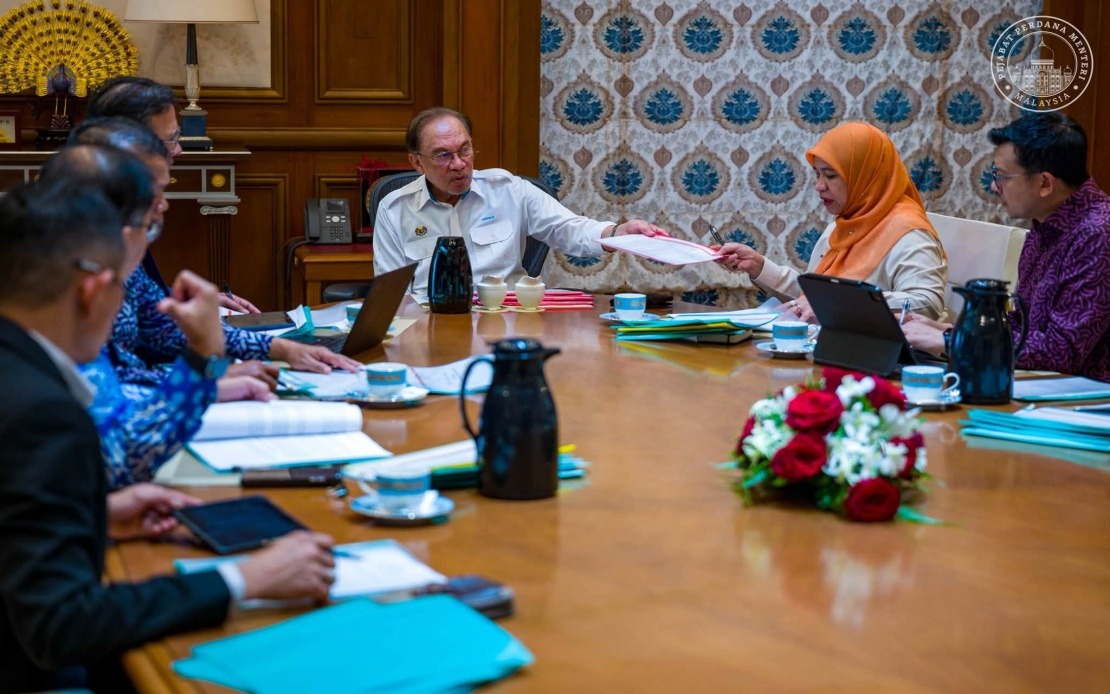
Prime Minister Datuk Seri Anwar Ibrahim has intensified pressure on the Federal Land Development Authority to move swiftly in addressing chronic challenges confronting FELDA settlers, signalling that the government will no longer tolerate indefinite postponement of these festering disputes. In remarks posted on social media, Anwar emphasised that second-generation housing and land ownership questions demand immediate, purposeful intervention tailored to settler welfare, reflecting a broader government commitment under the MADANI banner to revitalise the organisation's core mission.
The second-generation housing predicament represents one of FELDA's most intractable legacy issues. As original settlers aged and their children sought to establish independent lives, the scheme's rigid framework created gridlock: younger beneficiaries struggled to secure housing plots or formalise land tenure within FELDA schemes, leaving many in limbo between rural and urban aspirations. This generational bottleneck has festered for years, creating resentment among families who believed they held implicit rights to FELDA support yet found bureaucratic barriers insurmountable. The lack of clarity over inheritance rights and plot allocation procedures has compounded the problem, leaving land transactions suspended and family wealth unable to transfer smoothly across generations.
Land ownership ambiguities pose equally thorny complications. Original FELDA settlers received usufruct rights rather than outright ownership of their plots, an arrangement suited to mid-20th-century development philosophy but increasingly unsuitable for modern asset management. Without clear title deeds, settlers cannot leverage their land for credit, cannot sell freely, and face uncertainty about their children's entitlements. This structural constraint has transformed FELDA properties into illiquid assets despite rising rural land values, effectively trapping wealth within the scheme whilst preventing beneficiaries from accessing capital for business expansion, education, or healthcare.
Anwar's intervention signals that the MADANI Government regards FELDA's institutional dysfunction as politically and socially urgent. FELDA encompasses roughly 130,000 settler families, concentrated disproportionately in Peninsular Malaysia's core regions. These communities have traditionally formed a significant rural voting bloc, and their grievances have accumulated considerable political salience over successive administrations. By publicly committing to resolution, Anwar positions his government as responsive to grassroots settler concerns whilst implicitly criticising predecessor regimes for bureaucratic neglect.
The prime minister's call for methodical problem analysis followed by targeted action plans suggests a more structured approach than past ad-hoc interventions. FELDA has attempted various remedial schemes, but coordination between federal, state, and local authorities, coupled with outdated legal frameworks governing settler rights, has hindered comprehensive reform. Anwar's insistence on careful examination coupled with clear implementation roadmaps points toward potential legislative or administrative overhaul rather than incremental tinkering.
For second-generation settlers particularly, the stakes are existential. Many are now themselves middle-aged, having spent decades in legal and financial limbo. Professional opportunities in urban centres remain difficult to pursue whilst holding equivocal land rights in rural FELDA schemes. Women settlers face compounded challenges: inheritance practices and land registration procedures often inadvertently disadvantage female beneficiaries, creating gendered impediments to economic autonomy that mirror broader Malaysian land law inadequacies.
Resolution pathways likely involve legislative amendment to clarify land ownership rights, potentially shifting from usufruct to leasehold or freehold tenure models. The government might also establish dedicated resolution bodies to adjudicate inheritance disputes and expedite second-generation plot allocation. Any overhaul must balance settler aspirations with FELDA's institutional sustainability—converting all holdings to freehold tenure could trigger fiscal pressures on an already financially strained authority, though securitised credit schemes against plots might mobilise settler equity without depleting FELDA coffers.
The broader Southeast Asian context underscores FELDA's significance. Land reform and smallholder agricultural development remain central to regional poverty alleviation and rural stability. FELDA's model—state-directed settlement on developed land with structured support—influenced land schemes across the region. Its current dysfunction sends concerning signals about the viability of statist agricultural models, even as competing visions of land management emphasise market mechanisms or community stewardship. Malaysia's approach will likely influence policy debates elsewhere in ASEAN.
Anwar's emphasis on settler interests rather than bureaucratic convenience also reflects evolving governance philosophy within the MADANI framework, which positions citizen welfare and participatory accountability at its ideological core. By explicitly prioritising settler needs over administrative expedience, Anwar signals intolerance for institutional sclerosis—a message with implications across Malaysian public administration. FELDA officials will likely interpret the directive as one demanding measurable progress rather than procedural soundness.
Implementation timelines remain uncertain. FELDA bureaucracy, state land offices, and potentially Parliament all require coordination for substantive reform. However, Anwar's public commitment creates accountability; failure to deliver tangible improvements within reasonable timeframes would invite criticism of government effectiveness. For FELDA settlers, particularly younger generations who have waited patiently for systemic clarity, this intervention represents the most serious governmental attention their concerns have received in years, offering cautious hope that institutional renewal is finally possible.

