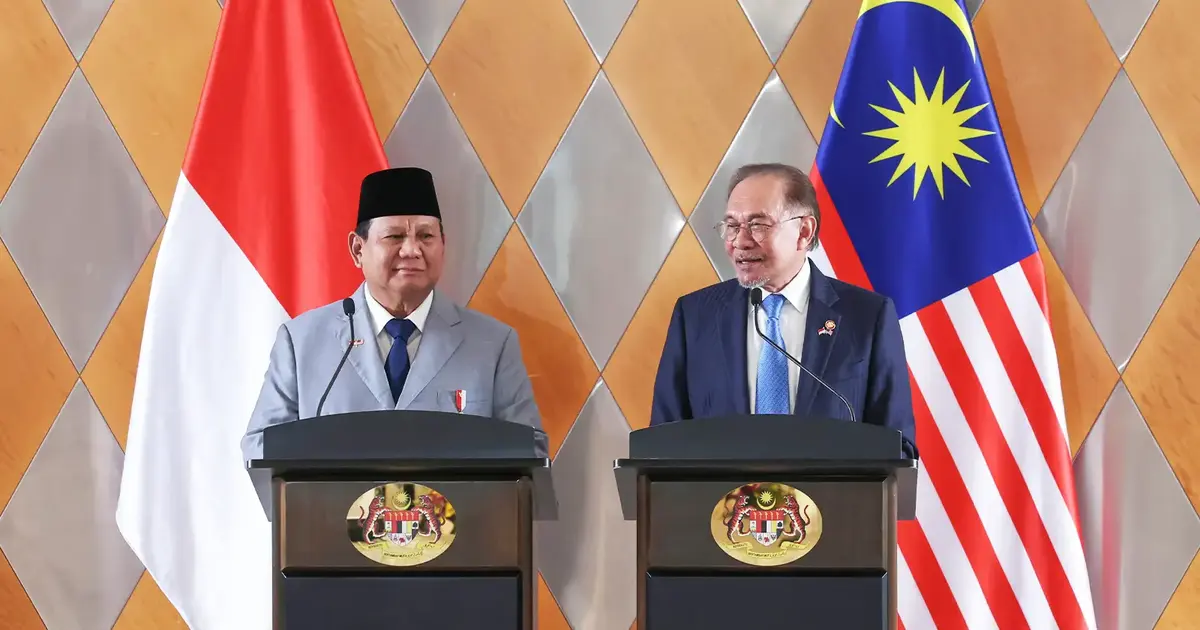
Prime Minister Anwar Ibrahim has formally communicated with Indonesian President Prabowo Subianto about the escalating concerns surrounding Felda's substantial investment in Eagle High, signalling heightened Malaysian government involvement in resolving a complex cross-border business dispute. The correspondence underscores the gravity with which Kuala Lumpur views the potential financial exposure facing the Federal Land Development Authority, which has become entangled in what analysts describe as a precarious commercial arrangement with uncertain outcomes.
According to Anwar's assessment, the stakes for Felda are extraordinarily high. The Prime Minister has warned that if current conditions persist and the situation deteriorates further, the land development authority stands to lose more than RM2 billion—a sum that represents a significant portion of Felda's asset base. In the most optimistic recovery scenario, Anwar indicated that Felda would recoup merely RM200 million from its original investment, translating to a potential loss exceeding RM1.8 billion. Such a outcome would represent a catastrophic write-down for an institution responsible for managing land and livelihood schemes affecting thousands of Malaysian smallholders and their families.
The Eagle High venture has emerged as a contentious issue within Malaysian policy circles, with concerns mounting about the transparency and due diligence processes that preceded Felda's commitment of such substantial capital. The investment appears to have been structured in a manner that has left Felda vulnerable to market volatility, management decisions, and other external factors beyond the organisation's direct control. These structural weaknesses have prompted the Prime Minister to escalate the matter diplomatically, recognising that resolution may require coordination at the highest governmental levels between Malaysia and Indonesia.
Felda's involvement in Eagle High reflects broader challenges facing government-linked entities attempting to diversify their revenue streams and expand beyond traditional mandates. The scheme, which involves significant Indonesian connections or operations, has highlighted the complexities inherent in cross-border investment ventures where governance standards, regulatory oversight, and contractual protections may differ materially from domestic Malaysian arrangements. Such ventures carry inherent risks that require sophisticated risk management frameworks and clear exit strategies—protections that may not have been adequately implemented in this instance.
The financial implications extend beyond Felda's immediate balance sheet. As a government institution managing statutory responsibilities toward smallholder communities, Felda's capital losses translate directly into reduced capacity to fund rural development programs, land distribution schemes, and support mechanisms that beneficiaries have come to expect. The cascading effects of a RM2 billion loss would ripple through rural Malaysian communities, potentially constraining agricultural modernisation initiatives and livelihood enhancement programs that depend on Felda's operational resources and investment capacity.
Anwar's decision to engage Prabowo directly suggests that Malaysian officials believe Indonesian government intervention or oversight may be essential to achieving a satisfactory resolution. This diplomatic approach recognises that Eagle High likely operates within Indonesian regulatory jurisdiction, making cooperation from Jakarta essential if Malaysia hopes to protect Felda's interests or recover losses. The correspondence represents a calculated effort to elevate the issue beyond commercial dispute mechanisms to the level of governmental relations, potentially unlocking channels and leverage unavailable through purely commercial negotiations.
The Prime Minister's intervention also signals broader concerns about institutional governance and investment decision-making within Malaysian government-linked entities. Parliament and the Malaysian public will inevitably scrutinise how Felda came to commit such substantial resources to an investment that now appears fraught with risk and exposed to potential major losses. Questions regarding board oversight, management accountability, and the adequacy of due diligence processes are likely to intensify, particularly if recovery efforts prove unsuccessful or inadequate.
For Malaysia's relationship with Indonesia, Anwar's approach reflects the delicate balance required when raising commercial grievances with a neighbouring power. By framing the issue in terms of mutual interest in resolving a shared problem, rather than assigning blame, the Prime Minister has adopted a diplomatic posture designed to facilitate cooperation rather than provoke defensiveness. This measured engagement suggests confidence that Indonesian authorities will recognise the legitimacy of Malaysian concerns and the importance of finding a mutually acceptable pathway forward.
The Eagle High situation also underscores the importance of strengthening internal governance mechanisms within Malaysian government agencies to prevent similar situations arising in the future. Institutional investors managing public resources must implement rigorous frameworks for assessing investment risks, monitoring performance, and establishing clear trigger points for escalation or exit. The potential RM2 billion loss from Eagle High provides a cautionary lesson about the dangers of insufficient due diligence and inadequate risk management in investment decisions involving government capital and public trust.

