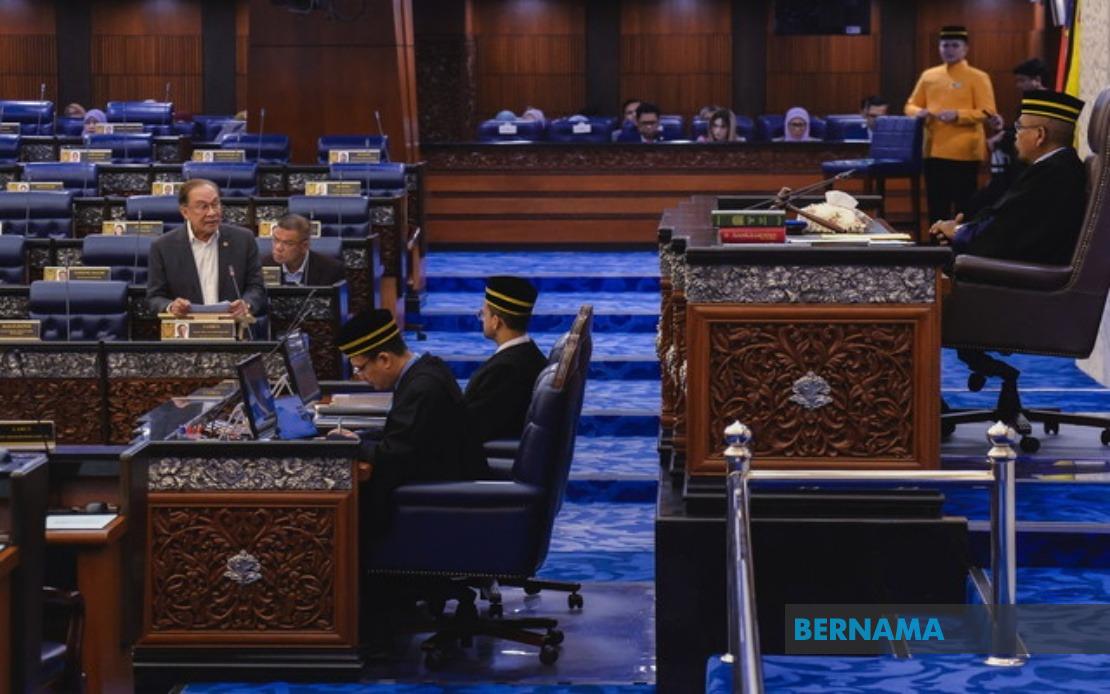
Prime Minister Datuk Seri Anwar Ibrahim has made clear that the electoral rules governing project and policy announcements remain strictly enforced, particularly as Malaysia prepares for upcoming state elections in Johor, Melaka, and Negeri Sembilan. Speaking during Minister's Question Time in Parliament on June 30, Anwar emphasised that once nomination day is declared, the moratorium on announcing new government initiatives becomes immediately binding across all levels of administration.
The legal framework underpinning this restriction stems from Section 24B of the Election Offences Act 1954, which aims to create a level playing field for competing candidates and prevent the ruling government from leveraging state resources to gain electoral advantage. Anwar's restatement of this position signals the government's commitment to upholding electoral integrity even as it navigates the political sensitivities surrounding multiple simultaneous state polls. The Prime Minister made these remarks in response to a parliamentary query from Datuk Seri Dr Shahidan Kassim, the PN-Arau representative, who sought clarification on whether the prohibition would remain operative and how authorities would ensure compliance during the forthcoming elections.
The restriction applies comprehensively across the government apparatus, encompassing announcements made by city councils, state administrations, and federal ministries alike. Anwar stressed that the machinery of state cannot be mobilised to publicise new projects once the election period formally begins, regardless of which tier of government would ordinarily be responsible for such announcements. This comprehensive approach prevents any circumvention through subsidiary government bodies, ensuring that the spirit of electoral fairness cannot be undermined by administrative structures.
However, the Prime Minister provided an important clarification that distinguishes between genuinely new initiatives and previously authorised commitments. Projects that received approval or budget allocation in prior fiscal periods remain permissible for announcement, as these do not constitute fresh electoral promises intended to sway voters. This distinction acknowledges the practical reality that governments routinely execute multi-year programmes and cannot simply halt all communication about approved developments, whilst maintaining the principle that voters are not influenced by eleventh-hour project pledges designed specifically for electoral benefit.
The question posed by Dr Shahidan reflects broader concerns within the opposition and among watchdog groups regarding how effectively such regulations are enforced during competitive electoral periods. Malaysia has experienced previous elections where accusations of regulatory violations emerged, particularly regarding the timing and scope of government announcements. The fact that such questions continue to arise in Parliament suggests that stakeholders across the political spectrum view clarity and consistent enforcement as essential to maintaining public confidence in electoral processes.
These safeguards gain heightened relevance in Malaysia's current political climate, where coalition dynamics have shifted considerably following recent electoral developments. The upcoming Johor, Melaka, and Negeri Sembilan elections represent significant opportunities for different political blocs to consolidate support in key regions. The combination of these three contests occurring within a similar timeframe amplifies the importance of ensuring neither the incumbent federal government nor state administrations exploit administrative resources for partisan gain.
For Malaysian voters, understanding these rules carries practical significance, as it helps them evaluate campaign messages critically. Announcements made before nomination day may reflect genuine policy commitments, whilst those made after nomination day could be viewed with greater scepticism as potentially tactical initiatives. The distinction also matters for regional and local administration, as government officers must remain acutely aware of the boundaries between legitimate governance communications and impermissible campaign activities.
From a Southeast Asian perspective, Malaysia's attention to electoral regulations reflects standards increasingly expected across the region. Neighbouring democracies and international observers monitor how effectively nations enforce campaign finance and conduct rules, viewing these mechanisms as indicators of institutional health. Anwar's unambiguous restatement sends a signal both domestically and internationally that Malaysian electoral processes operate under clearly defined constraints that apply uniformly to state actors.
The enforcement mechanism for these restrictions involves multiple agencies, including the Election Commission and law enforcement authorities who investigate alleged breaches. The practical challenge lies in distinguishing between administrative necessity and electoral opportunism, particularly when government functions must continue during campaign periods. Anwar's clarification that legitimately approved projects may be announced helps address this tension, providing guidance to public servants who might otherwise become paralysed by regulatory uncertainty.
For political parties contesting these elections, the rules create an ostensibly level starting point, though the extent to which smaller parties and opposition coalitions experience equitable treatment remains a subject of ongoing scrutiny. The announcement restrictions apply to government machinery rather than to ruling party activities conducted outside official channels, meaning parties must navigate complex distinctions between party operations and government functions during the campaign period.
Looking ahead to the Johor, Melaka, and Negeri Sembilan contests, these electoral safeguards will be tested repeatedly as competing interests seek to maximise campaign visibility and voter reach. Anwar's parliamentary intervention establishes clear expectations, reducing plausible claims of ignorance should violations subsequently occur. The effectiveness of this restatement will ultimately depend on how diligently enforcement agencies monitor government communications and how swiftly they respond to alleged breaches.

