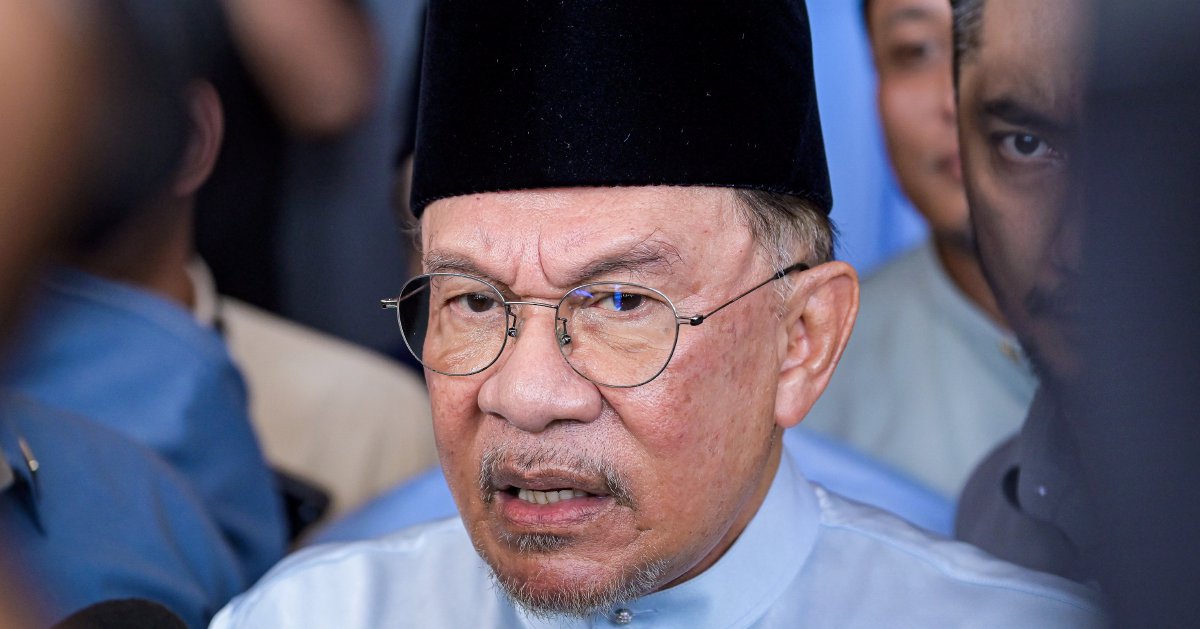
Prime Minister Datuk Seri Anwar Ibrahim has moved to quash reports suggesting that caretaker Johor Menteri Besar Datuk Onn Hafiz Ghazi faced restrictions on attending an official function at Felda settlements, describing such claims as unfounded. Speaking in Dengkil, the Prime Minister flatly rejected allegations of any directive that would have prevented the Johor leader from accessing the event, signalling an attempt to defuse mounting speculation about friction between federal and state-level leadership within the ruling coalition.
The denial carries significance given the heightened scrutiny surrounding political movements within Johor, Malaysia's economically vital southern state. Felda settlements, encompassing tens of thousands of smallholding farmers across the peninsula, represent a strategically important constituency in any election cycle and remain a focal point for government engagement and resource allocation. Official events within these communities typically attract high-profile participation, making questions about attendance particularly consequential in the context of coalition politics.
The incident, whatever its precise origins, touches upon underlying questions about coordination between different tiers of government as Malaysia heads toward fresh electoral contests. Onn Hafiz, as caretaker Menteri Besar, holds significant influence over Johor's administrative machinery and serves as a key political figure in the state. His relationship with federal leadership consequently matters for both practical governance and the broader stability of the ruling coalition, which continues to manage competing interests from multiple parties and leaders with varying power bases.
Anwar's swift public response underscores the administration's sensitivity to perceptions of internal discord, particularly among rural constituencies where Felda farmers wield considerable collective influence. Any suggestion of deliberate exclusion might be interpreted as factional tension or the consolidation of particular interests within the government structure—interpretations that could potentially affect voter confidence or coalition cohesion. By immediately and firmly denying the claims, the Prime Minister has attempted to prevent such narratives from gaining traction in the political discourse.
The broader context of Johor politics reveals a state navigating complex dynamics after recent electoral shifts. The relationship between federal and state power structures requires careful management, especially when different personalities and organisational hierarchies must cooperate on public-facing initiatives. Felda events, given their visibility and symbolic importance to rural Malaysia, become natural flashpoints where any perceived misalignment becomes instantly politicised and subject to interpretation.
Such incidents, whether they have any substantive foundation or arise from miscommunication or scheduling issues, illustrate the communication challenges inherent in managing a geographically distributed, multi-party coalition government. Information flows between federal and state machinery must remain seamless to prevent misunderstandings that could be weaponised by political opponents or interpreted as signs of weakness within the ruling alliance. The speed with which Anwar addressed this matter suggests awareness of how rapidly even unconfirmed reports can reshape political narratives.
Felda's institutional significance extends beyond its direct economic role. The organisation maintains deep historical roots in Malaysian governance and development policy, serving multiple generations of smallholder families who have contributed substantially to the nation's agricultural output and economic foundation. Consequently, events involving Felda communities carry resonance that extends well beyond routine administrative gatherings, attracting both media attention and political interpretation at multiple levels.
The incident also reflects broader dynamics within Malaysian politics regarding how information circulates and how public statements from political figures shape understanding of government functioning. In an environment where social media amplifies allegations and counter-allegations with minimal friction, official denials—particularly from the Prime Minister—serve as critical mechanisms for establishing authoritative narratives. Anwar's personal intervention in addressing these claims signals their perceived importance to the government's image and coalition stability.
Looking forward, such incidents underscore the importance of transparent communication channels between federal and state administrations, particularly when planning high-profile public events. Whether the original claims stemmed from genuine miscommunication, scheduling complications, or deliberate obfuscation remains secondary to the political reality that such allegations, once aired publicly, require official response regardless of their factual basis. The Prime Minister's firm rebuttal establishes a clear position while simultaneously attempting to close what might otherwise become a prolonged source of political friction and speculation within Johor's political circles and beyond.

