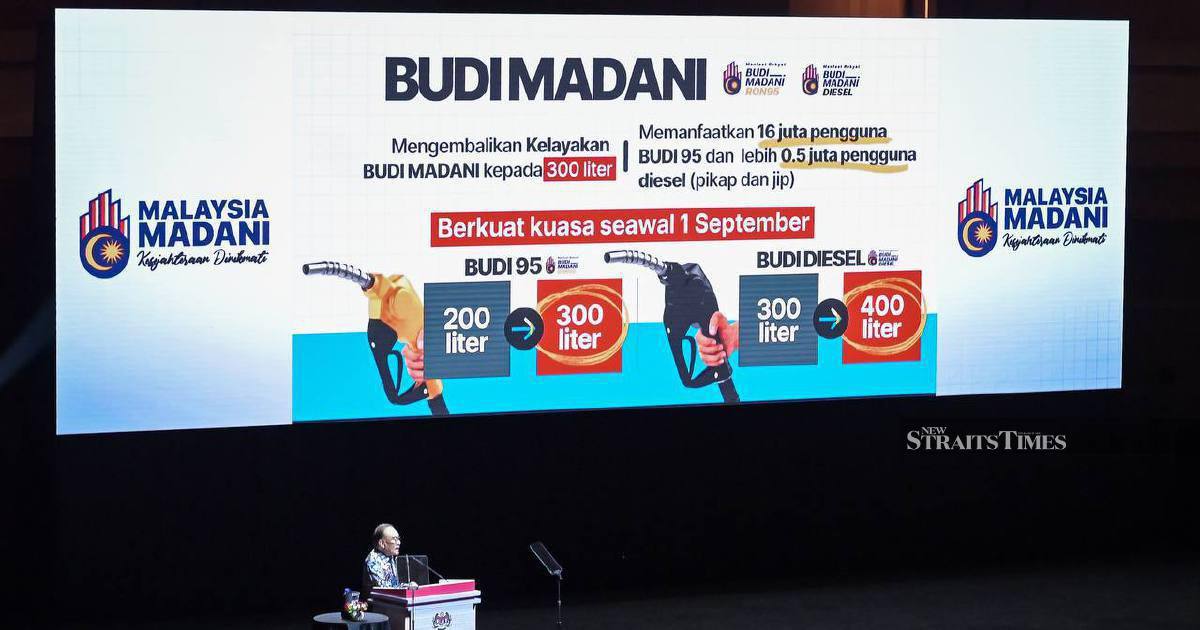
Prime Minister Datuk Seri Anwar Ibrahim has set out a six-pronged strategy designed to alleviate the financial burden facing ordinary Malaysians while simultaneously strengthening the business environment and bolstering public services. Announced on the eve of the nation's birthday celebrations, these measures signal the government's continued focus on managing household expenses and economic pressures that remain a central concern for citizens across the country.
The announcement arrives at a critical juncture for Malaysia's economic management, with inflation and household cost pressures continuing to weigh on consumer spending and business confidence. By introducing targeted relief measures now, the government is attempting to demonstrate its responsiveness to public concerns before the October tabling of the 2027 Budget—a document that will outline the administration's medium-term fiscal strategy and economic priorities. This timing allows policymakers to gather feedback and adjust their broader budget approach based on the reception and effectiveness of these immediate interventions.
The multi-faceted approach reflects recognition that cost-of-living challenges require comprehensive solutions rather than single-issue fixes. Households across Malaysia continue to grapple with rising expenses in essential areas including food, utilities, housing and transportation. By addressing business support alongside consumer relief, the government is attempting to create a virtuous cycle where stronger business operations translate into stable employment, competitive pricing and economic growth that ultimately benefits working families and retirees living on fixed incomes.
Such comprehensive policy announcements typically address gaps identified through consultation with relevant stakeholders including consumer groups, business associations, labour unions and state governments. The breadth of the announced measures—spanning consumer protection, business incentives and public service improvements—suggests the government has sought to balance competing demands across different segments of society while maintaining fiscal discipline in an environment where public finances remain under scrutiny from international rating agencies and domestic taxpayers.
The timing of this announcement during National Day festivities carries symbolic weight. By linking economic relief measures to celebrations of national unity and progress, the government frames its policies as part of a broader commitment to shared prosperity and national development. This connection between patriotic messaging and economic management is particularly important in a diverse nation where regional and sectional interests sometimes compete for policy attention and government resources.
For Malaysian businesses, particularly small and medium enterprises that have struggled with rising input costs, supply chain disruptions and financing challenges since the pandemic, additional support measures could provide crucial breathing room. When businesses can operate more efficiently and maintain healthier profit margins, they become more likely to invest in workforce expansion, skills development and innovation—activities that generate broader economic benefits beyond the firms themselves.
The emphasis on strengthening public services deserves particular attention for its potential downstream effects. Efficient, well-resourced public services—whether in healthcare, education, transportation or administration—reduce the hidden costs that households and businesses incur when services underperform. A parent forced to seek private medical care due to public hospital waiting times, or a business struggling with bureaucratic delays, effectively faces hidden taxation that the government's cost-of-living measures cannot address. By investing in service quality, the government acknowledges that comprehensive relief extends beyond direct subsidies or cash transfers.
Regional observers will watch closely how Malaysia's approach compares with relief measures implemented by neighbouring countries facing similar inflationary pressures. Singapore, Thailand and Indonesia have all pursued various combinations of subsidies, targeted transfers, tax adjustments and infrastructure investments to manage cost-of-living concerns. Malaysia's six-point strategy will provide data points for assessing which approaches prove most effective and sustainable in the Southeast Asian context.
The announcement also reflects broader conversations about the appropriate role of government in managing economic pressures. While some analysts advocate for more direct cash transfers or universal subsidies, others emphasise targeted support to vulnerable populations and structural reforms that address underlying cost drivers. The specific composition of Malaysia's six measures will reveal which philosophical approach the government has prioritised, offering insights into its economic management philosophy heading into the comprehensive 2027 Budget exercise.
As Malaysia continues its trajectory toward developed-nation status, managing the transition remains delicate. Middle-income households—neither poor enough to qualify for means-tested assistance nor wealthy enough to absorb price increases easily—face particular pressure. Policies must balance supporting vulnerable groups with ensuring that economic growth remains sustainable and that productive investment continues. The government's willingness to announce interim measures before the major budget review suggests confidence that these steps represent genuine value rather than temporary political gestures.
The path forward will depend significantly on how effectively these six measures address the actual cost-of-living experiences of Malaysian families and businesses. Survey data, inflation tracking and business sentiment indicators will provide evidence of whether the announced interventions translate into meaningful relief. That evidence will, in turn, shape the parameters of the October 2027 Budget and inform whether the government pursues intensified versions of these measures or pivots toward different policy approaches.
For ordinary Malaysians watching their household budgets stretch increasingly thin, these announced measures represent the government's recognition that something must be done. The real test comes in implementation—whether the announced policies reach intended beneficiaries efficiently, whether they deliver measurable relief without creating unintended distortions, and whether they contribute to the broader economic environment in which Malaysian families and businesses can prosper.

