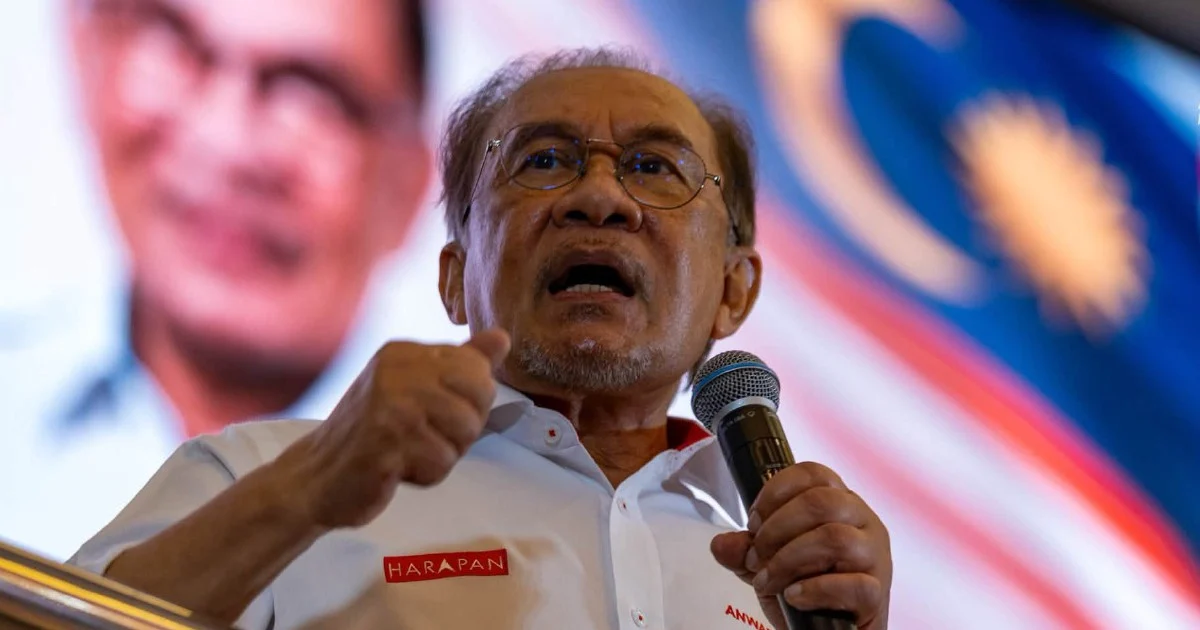
Prime Minister Datuk Seri Anwar Ibrahim has firmly ruled out seeking Singapore's cooperation to facilitate voting for Malaysian workers employed in Singapore during the forthcoming Johor state election scheduled for July 11. The clarification comes as discussions surrounding voter participation and logistics intensify ahead of the pivotal electoral contest in the southern Malaysian state.
Anwar's decision reflects the practical and political complexities inherent in cross-border electoral arrangements. While tens of thousands of Malaysians work daily in Singapore, particularly in sectors such as oil and gas refining, finance, and logistics, establishing a formal voting mechanism would require unprecedented bilateral coordination between the two neighbouring nations. The logistics alone would present substantial challenges, from verifying voter registration status across international borders to maintaining electoral security and integrity.
The Johor election carries particular significance within Malaysia's political landscape. As the country's second-largest state by population and a historic stronghold of UMNO, Johor's electoral outcome carries implications for the broader federal government and inter-coalition dynamics. The July 11 polling date represents a critical moment for assessing public sentiment regarding the current administration's performance and policy direction, making voter participation rates particularly important to all contesting parties.
Malaysians working in Singapore represent a substantial migrant workforce, with estimates suggesting over 300,000 citizens commute or reside across the Causeway. This population includes professionals, skilled workers, and everyday labourers who contribute significantly to their respective employers whilst maintaining strong ties to their home constituencies. For many, returning to vote in state or federal elections necessitates either taking leave from work or relying on absentee voting mechanisms available within Malaysia's existing electoral framework.
The government's reliance on existing voting procedures rather than seeking external arrangements suggests confidence in Malaysia's established electoral infrastructure. Postal voting and early voting provisions already exist within the Malaysian system, allowing working Malaysians in various locations to cast their ballots without necessarily returning to their constituencies on polling day. These mechanisms, whilst imperfect, provide alternatives for the cross-border workforce without requiring international cooperation.
Singapore's position as an independent sovereign nation introduces political dimensions that transcend mere logistical considerations. Allowing Singaporean territory to become a voting venue for Malaysian elections would set a precedent with broader implications for bilateral relations. Such an arrangement might complicate Singapore's strict political neutrality and could invite questions about reciprocal arrangements should Singapore hold elections. The island nation's government has historically maintained clear boundaries regarding its sovereignty and internal affairs, making such cooperation unlikely.
Anwar's statement also reflects domestic political sensitivities. Opposition figures might critique any arrangement perceived as outsourcing Malaysian electoral processes, whilst questions could arise about the government's prioritization of voter convenience against administrative independence. By declining to pursue this option, the government avoids potential controversy whilst maintaining that voter participation remains achievable through existing channels.
The timing of this announcement matters within the broader context of Malaysian electoral politics. Recent state elections have witnessed competitive participation rates, with various administrations implementing measures to boost turnout. However, most enhancement strategies operate entirely within Malaysia's borders, focusing on expanding early voting locations, extending polling hours, or improving information accessibility rather than seeking international cooperation.
For Malaysian workers in Singapore, the practical reality means voting in Johor requires either taking leave, utilising postal voting if eligible, or casting their ballots through early voting sessions before travel commitments intensify. Whilst some may find this inconvenient, it remains consistent with Malaysia's approach to managing voter participation across geographically dispersed populations.
The Johor election itself will test the government's electoral performance in a state where BN and UMNO retain deep organisational roots and historical legitimacy. Victory would strengthen the coalition's parliamentary position and provide a mandate for continued governance, whereas unexpected results could signal voter dissatisfaction or changing political dynamics. The outcome will likely influence calculations regarding future federal elections and the sustainability of current coalition arrangements.
Anwar's clarification, whilst brief, closes speculation about creative solutions to cross-border voting participation. It affirms that Malaysia intends to manage its electoral processes independently, relying on domestic mechanisms rather than seeking international assistance. This approach underscores the government's commitment to electoral sovereignty whilst acknowledging that existing provisions should suffice to enable participation from Malaysia's cross-border workforce.

