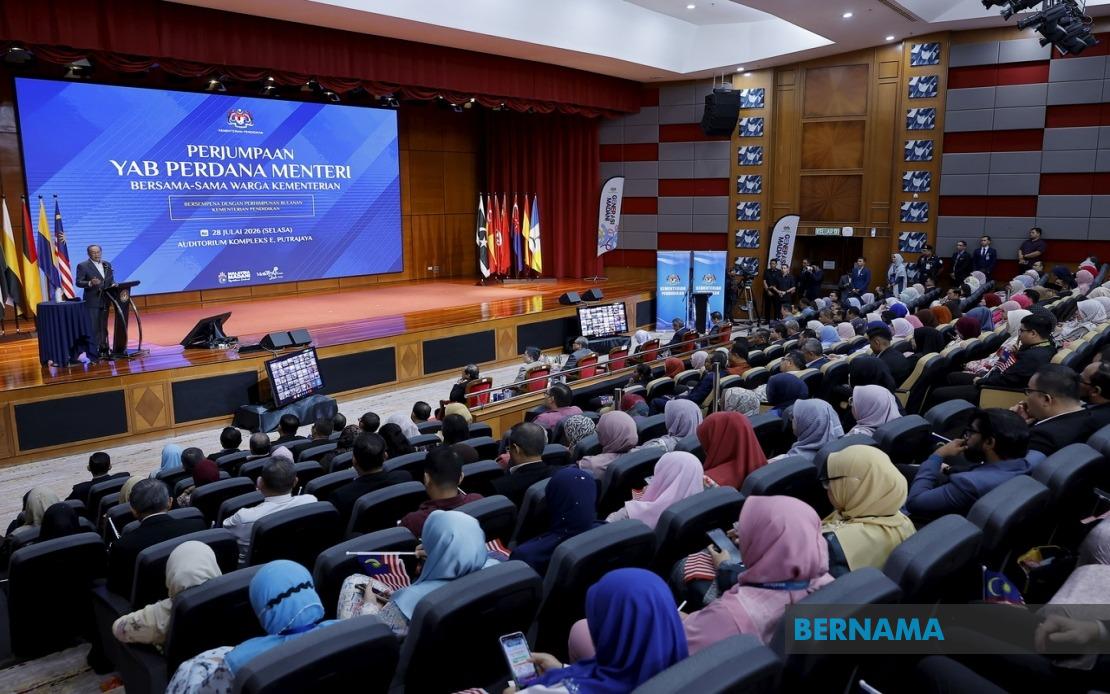
Prime Minister Datuk Seri Anwar Ibrahim has issued a fresh directive to Malaysia's educational institutions, cautioning them against suppressing reports of bullying and mistreatment in order to shield their public standing. Speaking during an engagement with Ministry of Education officials in Putrajaya on July 28, Anwar stressed that institutional image must never become a justification for sweeping misconduct under the carpet. His intervention signals growing concern within government circles about a troubling pattern where schools prioritise their reputational standing over the welfare and safety of their students.
The Prime Minister's remarks reflect a deeper understanding of how institutional culture enables harm. When schools treat bullying disclosures as damaging publicity rather than legitimate safeguarding concerns, they inadvertently create environments where perpetrators operate with impunity. Anwar argued that what may appear initially as minor incidents of bullying or aggression often germinate into far more severe injustices when left unaddressed. This progression from small acts of cruelty to systemic abuse represents a trajectory that educational leaders have a responsibility to interrupt at the earliest possible stage.
Anwar's framing of the issue emphasises that disclosure itself should never be conflated with institutional failure. A single bullying incident occurring within a school's walls does not constitute an indictment of the entire establishment. Rather, how school leadership responds to such incidents determines whether the institution is functioning as a genuine safeguarding body or merely performing the appearance of one. By divorcing the act of reporting from the narrative of failure, Anwar is attempting to recalibrate how principals and headmasters perceive their accountability obligations.
The timing of these remarks comes amid broader societal conversations about student welfare in Malaysia. Educational institutions remain sites where significant power imbalances exist between authority figures and learners, and where peer hierarchies can crystallise into bullying structures. When schools actively suppress incident reporting, they undermine the development of a safety-conscious institutional culture. Students learn implicitly that their mistreatment is less important than the school's brand management—a message with lasting psychological consequences.
Anwar's emphasis on early intervention reflects evidence-based approaches to harm prevention that have gained traction internationally. Research consistently demonstrates that bullying left unchecked frequently escalates in severity and frequency. Early intervention protocols—which necessarily depend on transparent reporting mechanisms—can interrupt cycles of abuse before they entrench themselves in school dynamics. Schools that foster cultures of openness about incidents are ultimately investing in long-term institutional health, not compromising it.
The role of school leadership proves pivotal in this context. Principals and headmasters occupy gatekeeping positions where they control whether bullying reports trigger protective action or institutional erasure. Anwar's message directly challenges leadership to reframe transparency as an expression of institutional strength rather than weakness. Schools that promptly investigate and address bullying demonstrate confidence in their values and their ability to maintain ethical standards—qualities that ultimately enhance, rather than diminish, their reputation among parents and the broader community.
Beyond the immediate school context, Anwar's intervention has implications for how Malaysia approaches accountability in public institutions more broadly. If educational settings normalise the suppression of misconduct to protect institutional image, this sets a troubling precedent for other sectors. The message being reinforced is that transparency and institutional reputation can coexist, and that attempts to reconcile them through cover-ups represent a false choice that ultimately serves no one.
For Malaysian parents and students, these remarks provide important reassurance that the highest political level is attentive to safeguarding concerns. Yet implementation remains the critical challenge. Translating the Prime Minister's position into concrete policy changes—such as mandatory reporting protocols, whistleblower protections for staff members who report incidents, and accountability mechanisms for school leaders who suppress cases—will determine whether this intervention produces genuine cultural shift or remains aspirational rhetoric.
The Malaysian education system serves millions of students annually, making the prevalence of bullying a matter of significant public health and social concern. Schools that successfully create reporting cultures, where students and staff feel safe disclosing incidents without fear of retaliation or institutional backlash, establish foundations for healthier learning environments. Anwar's intervention provides political cover for education officials seeking to implement such reforms against resistance from institutions accustomed to managing their reputations through silence.

