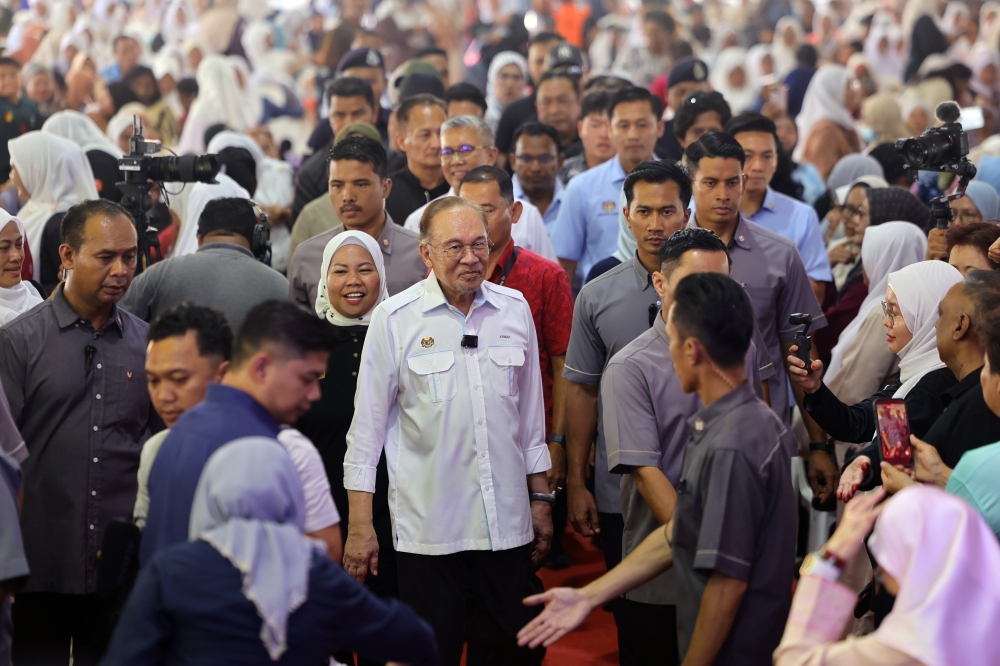
Prime Minister Datuk Seri Anwar Ibrahim has raised significant concerns about a 13-month bonus payment issued by Tabung Haji, viewing the transaction as a material breach of the institution's fiduciary obligations and a departure from prudent financial stewardship. The matter emerged from findings within the Royal Commission of Inquiry report into the pilgrimage fund, which has been scrutinizing the management practices and financial decisions of the organization responsible for facilitating hajj operations for Malaysian Muslims.
The inquiry appears to have focused particular attention on how institutional funds were distributed during a period when questions about governance and accountability at Tabung Haji were mounting. Anwar's characterization of the bonus arrangement as a breach of trust suggests the payment raised red flags regarding whether the organisation adequately prioritised the interests of depositors and contributors whose savings had been entrusted to its care. The nature of bonus payouts at financial institutions invariably reflects broader questions about capital allocation, executive compensation practices, and whether management decisions serve stakeholder interests or diverge from them.
Tabung Haji functions as more than a conventional financial services provider in Malaysia's ecosystem. The organization manages substantial sums contributed by Muslims preparing for the hajj pilgrimage, making it a repository of significant public trust. When governance questions arise at such institutions, they carry implications beyond ordinary corporate affairs, touching on matters of religious duty and community confidence. The structure of Tabung Haji's operations means that any misallocation or questionable expenditure directly affects the savings capacity and pilgrimage plans of ordinary Malaysian households.
The Royal Commission of Inquiry represents an institutional mechanism for examining governance failures and financial irregularities that may have occurred over an extended period. Such commissions typically investigate patterns of decision-making, authorization procedures, and whether officials acted within their mandate and fiduciary responsibilities. The emergence of the 13-month bonus issue suggests investigators identified specific decisions that warranted closer examination regarding their justification and propriety.
Anwar's public intervention reflects the government's commitment to transparency and accountability in state-linked institutions. His willingness to question specific transactions detailed in the inquiry demonstrates that even institutions with deep historical roots and community importance are subject to scrutiny when governance concerns surface. This signals to other government-linked entities that executive decisions will face examination if they appear to prioritize internal distributions over stakeholder protection.
The broader context matters considerably for understanding why this particular bonus payment drew official concern. Financial institutions operating with public or semi-public mandates face different expectations than purely commercial entities. Tabung Haji's primary function involves safeguarding deposits for hajj purposes, not maximizing returns to executives or shareholders. A 13-month bonus payment could therefore represent a divergence from that core mission, particularly if organizational resources were directed toward employee compensation when they might have served depositor interests more directly.
For Malaysian Muslims who contribute to Tabung Haji, such findings carry practical significance. Questions about how funds are managed directly affect the value of accumulated savings, the returns depositors receive, and ultimately their ability to undertake the hajj pilgrimage. If institutional resources were allocated toward internal bonuses rather than being preserved or invested for depositor benefit, contributors have legitimate grounds for concern about whether their trust was honored.
The inquiry's examination of Tabung Haji's practices occurs within a wider regional and global context where governance failures at financial institutions have prompted regulatory reform and enhanced oversight mechanisms. Southeast Asian economies have increasingly emphasized stronger governance frameworks for organizations handling public or community funds, recognizing that institutional failures can undermine confidence in the entire financial system. Malaysia's focus on Tabung Haji therefore aligns with regional trends toward more rigorous institutional accountability.
Anwar's public comments also carry political weight in signaling the government's commitment to addressing legacy issues from previous administrations. Tabung Haji has faced scrutiny in recent years regarding investment losses, governance challenges, and management effectiveness. By highlighting concerns about specific financial decisions, the Prime Minister demonstrates that administrative lapses or questionable practices will face investigation and public acknowledgment, rather than being overlooked or minimized.
The implications of the inquiry extend beyond Tabung Haji itself. Other government-linked companies and semi-public institutions will likely interpret these scrutiny efforts as signals that leadership transitions and reform initiatives prioritize accountability. Whether this translates into systemic governance improvements across the institutional landscape depends on follow-up actions, regulatory adjustments, and consequences for those responsible for questionable decisions.
The 13-month bonus question exemplifies how governance failures can take multiple forms—not just through large-scale fraud or misappropriation, but through seemingly incremental decisions that cumulatively represent departures from fiduciary principles. Anwar's focus on this specific transaction suggests the inquiry team examined how organizations rationalized and authorized significant expenditures, uncovering patterns of decision-making that merit public examination and potential remedial action.

