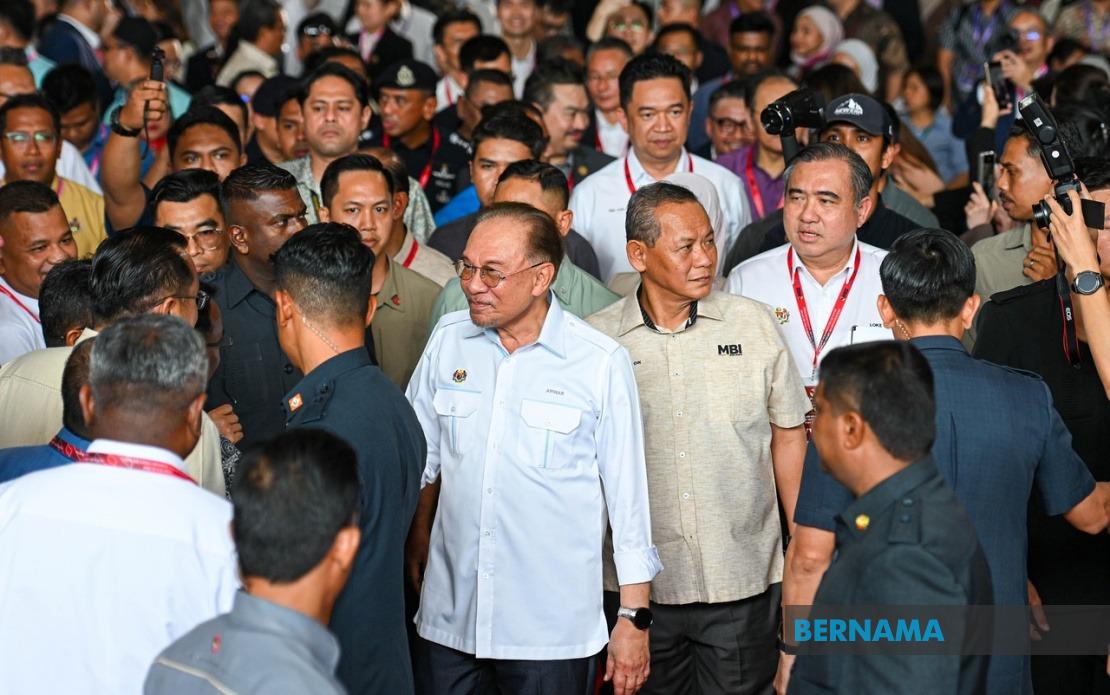
Prime Minister Datuk Seri Anwar Ibrahim has made a direct appeal to Melaka DAP to reconsider and postpone its decision to exit the state government administration, citing the need to maintain momentum on development and welfare initiatives. Speaking in Port Dickson on July 14 after inaugurating the AI-powered Midport Smart Container Terminal, Anwar expressed hope that negotiations would yield a workable resolution that keeps the coalition intact until the next state election.
The timing of Anwar's intervention underscores the delicate balancing act required to manage a multi-party ruling coalition. The Pakatan Harapan chairman revealed he had already engaged with DAP secretary-general Anthony Loke and Melaka Chief Minister Datuk Seri Ab Rauf Yusoh to explore compromise positions. His public call for postponement signals both the seriousness of the rift and the administration's preference for dialogue over confrontation, even when fundamental disagreements emerge between coalition partners.
Melaka DAP announced its immediate withdrawal from state government today following the passage of constitutional amendments to the State Legislative Assembly that would permit the appointment of nominated assemblymen. The party's decision, articulated by chairman Khoo Poay Tiong, rests on principled opposition to what the party characterizes as an anti-democratic measure that circumvents electoral accountability. This constitutional modification has crystallized longstanding tensions within the governing coalition regarding the proper limits of executive power.
Anwar's response reveals a pragmatic approach to coalition management. Rather than dismissing DAP's concerns or attempting to override the party's decision through procedural means, he framed the dispute as one of several disagreements that naturally arise in multi-party administrations. He acknowledged that coalition partners frequently hold divergent views on specific issues, yet emphasized that such differences need not undermine the broader governance agenda or compromise the government's primary obligation to improve citizens' living standards.
The underlying tension reflects a broader pattern in Malaysian politics where component parties within federal or state coalitions periodically clash over policy direction or constitutional matters, yet must weigh the costs of withdrawal against the benefits of continued participation in government. For DAP, the nominated assemblyman provision represents a departure from democratic principles that the party has historically championed, making unqualified acquiescence politically untenable with its base. For Anwar and the coalition leadership, however, the departure of a component party risks destabilizing the state administration and potentially triggering a political crisis that could benefit opposition forces.
The constitutional amendment itself addresses the composition of the Melaka State Legislative Assembly, introducing a mechanism for non-elected representation through appointed positions. DAP's characterization of this as fundamentally undemocratic reflects the party's consistent emphasis on electoral legitimacy and popular mandate as the foundation of legislative authority. The controversy highlights ongoing debate within Malaysian politics about the appropriate balance between appointed and elected representation in state legislatures.
Anwar's appeal to postpone rather than withdraw reflects calculations about political sustainability. A fully functioning state government requires adequate parliamentary support to pass budgets, approve legislation, and implement policy. The loss of DAP's assembled seats could theoretically reduce the coalition's legislative majority, creating governing difficulties and potentially opening avenues for opposition attempts to destabilize the administration. By requesting dialogue and delay, Anwar appears to be seeking time for creative compromise or for political circumstances to shift.
The dispute also carries broader implications for the stability of Malaysia's coalition politics at both state and federal levels. If component parties routinely withdraw from government over specific policy disagreements, coalition longevity becomes precarious and administrative continuity suffers. Anwar's intervention suggests an effort to establish norms where parties remain engaged despite disagreements, reserving withdrawal only for circumstances involving fundamental betrayal of core commitments.
For Melaka specifically, the withdrawal of a significant coalition partner raises questions about the state government's policy direction and legislative capacity moving forward. The administration must reconcile the reality of DAP's departure with the necessity of continuing essential state services and development projects. Anwar's reference to the importance of uninterrupted governance until the next election implies an expectation that elections will provide voters an opportunity to render judgment on the coalition's performance during this period of internal tension.
The situation reflects a broader challenge facing coalitions in Malaysia's democratic system. While multi-party arrangements can provide ideological diversity and broader representation, they also require sustained negotiation and compromise among parties with sometimes conflicting principles or interests. Anwar's effort to maintain coalition unity through dialogue rather than capitulation on the constitutional issue suggests a matured approach to coalition management, though success will depend on whether DAP finds his appeals sufficient justification for remaining within an administration that has adopted policies the party views as contrary to its foundational commitments.

