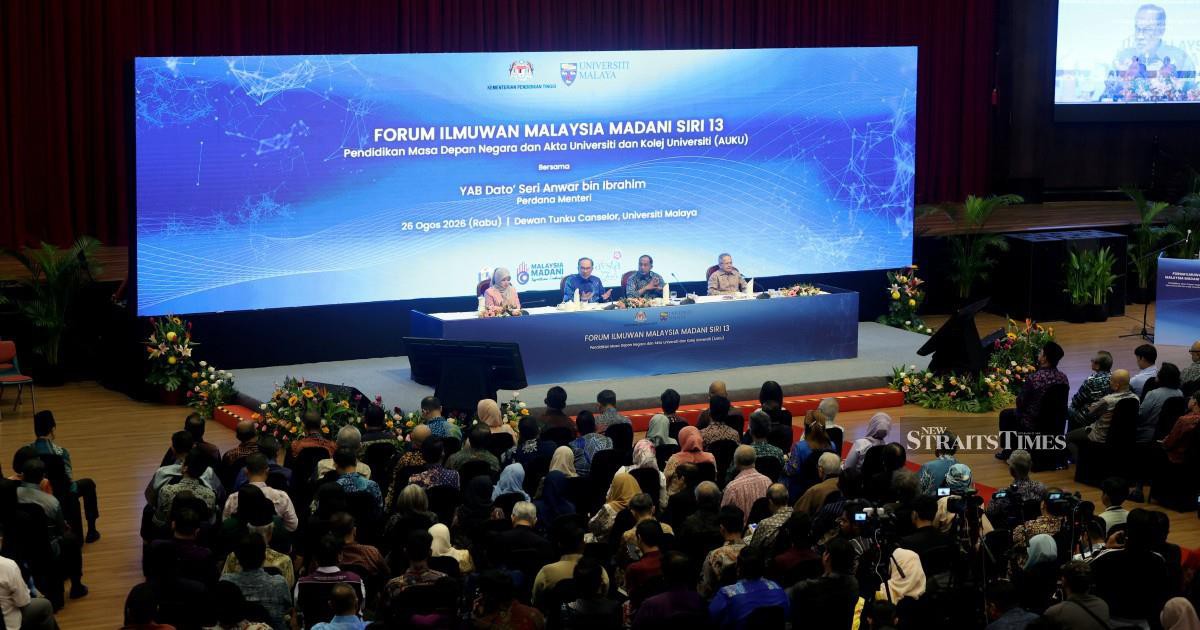
Prime Minister Datuk Seri Anwar Ibrahim has appealed to Malaysia's university students and higher education stakeholders for patience as his administration works toward repealing the Universities and University Colleges Act (AUKU), a colonial-era legislation that has long restricted academic freedoms and student activism on campus. The premier's remarks underscore the government's commitment to overhauling university governance while managing the complex political and administrative processes required for such substantial legislative reform.
The AUKU, enacted during the British colonial period and retained since independence, remains one of the most contentious pieces of legislation affecting Malaysian universities. The act prohibits students from engaging in political activities, holding public meetings without permission, and participating in unions—restrictions that have drawn consistent criticism from civil society, student unions, and international observers who view these provisions as incompatible with democratic principles and freedom of expression. Student groups and academic advocacy organizations have repeatedly called for the law's complete abolition, framing it as an impediment to their development as active citizens in a democratic society.
Anwar's acknowledgment of the need for AUKU's repeal reflects a broader policy direction that distinguishes his administration from its predecessors. The government has signalled openness to liberalizing university regulations, recognizing that restrictions on campus political participation may limit students' understanding of civic engagement and democratic processes. However, the Prime Minister's request for "time and space" suggests that the government is navigating complex considerations that extend beyond simple legislative action. These may include coordinating among various government agencies, consulting university administrators who operate within current legal frameworks, and potentially addressing concerns from certain constituencies regarding campus stability and institutional order.
The comprehensive improvement measures Anwar referenced remain largely undetailed, but they likely encompass not only the repeal of restrictive provisions within AUKU but also reforms to university governance structures, academic autonomy protections, and student representation mechanisms. Malaysian universities have struggled with brain drain and declining international rankings in recent years, challenges that many educators and analysts attribute partly to restrictive regulations that discourage critical thinking and scholarly debate. A more permissive regulatory environment could theoretically enhance Malaysia's standing in global higher education hierarchies by fostering greater intellectual freedom and attracting both domestic and international talent.
The political dimension of AUKU reform cannot be overlooked. Previous attempts to liberalize university regulations have faced resistance from various quarters, including certain conservative groups and administrators concerned about maintaining institutional discipline. Anwar's approach of building consensus among stakeholders before moving forward may be strategic—taking time to secure buy-in from university management, faculty associations, and parent groups could smooth the legislative path and reduce potential backlash once formal reform measures are introduced. This consultative approach, while potentially frustrating to impatient student activists, may ultimately yield more durable and comprehensive reforms.
For Malaysian universities specifically, AUKU reform carries significant implications for institutional competitiveness and student experience. Universities across Southeast Asia have begun attracting international students partly through the promise of more open academic environments. Countries like Thailand and Indonesia, despite their own governance challenges, have seen regional students choose their institutions partly due to less restrictive campus regulations. Malaysian universities' inability to offer similar freedoms has become a competitive disadvantage in the regional higher education marketplace, affecting both enrollment and the calibre of academic talent they can recruit.
The student constituency pushing for AUKU repeal represents a diverse coalition with varying priorities. While some emphasize political freedoms and the right to organize, others focus on academic matters such as course content, teaching methods, and representation in university decision-making. Some students are primarily concerned with social justice issues and environmental activism, causes that current restrictions effectively curtail on campus. Anwar's appeal to this broad coalition requires delivering reforms that meaningfully address these varied concerns rather than merely tinkering with existing provisions.
Regionally, Malaysia's approach to university regulation influences how Southeast Asian governments approach similar questions. The country has long positioned itself as a higher education hub for the region, and restrictive campus regulations work against this aspirational positioning. Singapore's more liberalized approach to university governance, despite that city-state's own political constraints, has enabled its institutions to maintain top-tier global rankings. The implicit competition for regional intellectual influence and educational prestige thus provides additional incentive for Malaysian policymakers to move toward AUKU reform.
Anwar's framing of reform as requiring comprehensive planning and stakeholder consultation reflects mature governance in principle, yet timing remains crucial. Malaysia's student population, having witnessed decades of promises regarding AUKU reform with limited concrete results, may view further delays with scepticism. The government faces pressure to articulate clear timelines and specific reform objectives rather than indefinite requests for patience. Demonstrating concrete progress—such as establishing reform commissions, announcing specific legislative proposals, or piloting liberalized policies in certain institutions—could build credibility with frustrated student constituencies.
The broader context of educational reform in Malaysia includes concerns about curriculum relevance, employability outcomes, and the relationship between universities and the private sector. AUKU repeal, while symbolically and substantively important, represents only one component of necessary higher education transformation. A holistic reform package addressing pedagogical methods, research funding, industry partnerships, and international collaboration would position Malaysian universities for greater competitiveness and relevance in an increasingly globalized knowledge economy.
Moving forward, the test of Anwar's commitment lies not merely in acknowledging the need for AUKU reform but in translating that acknowledgment into legislative action within a reasonable timeframe. The government must balance consultative processes with the legitimate urgency of students and educators who have waited decades for substantive change. Clarity regarding the reform process, realistic timelines, and the substance of planned changes will be essential for maintaining stakeholder confidence and converting the Prime Minister's appeal for patience into productive collective action toward meaningful university reform.

