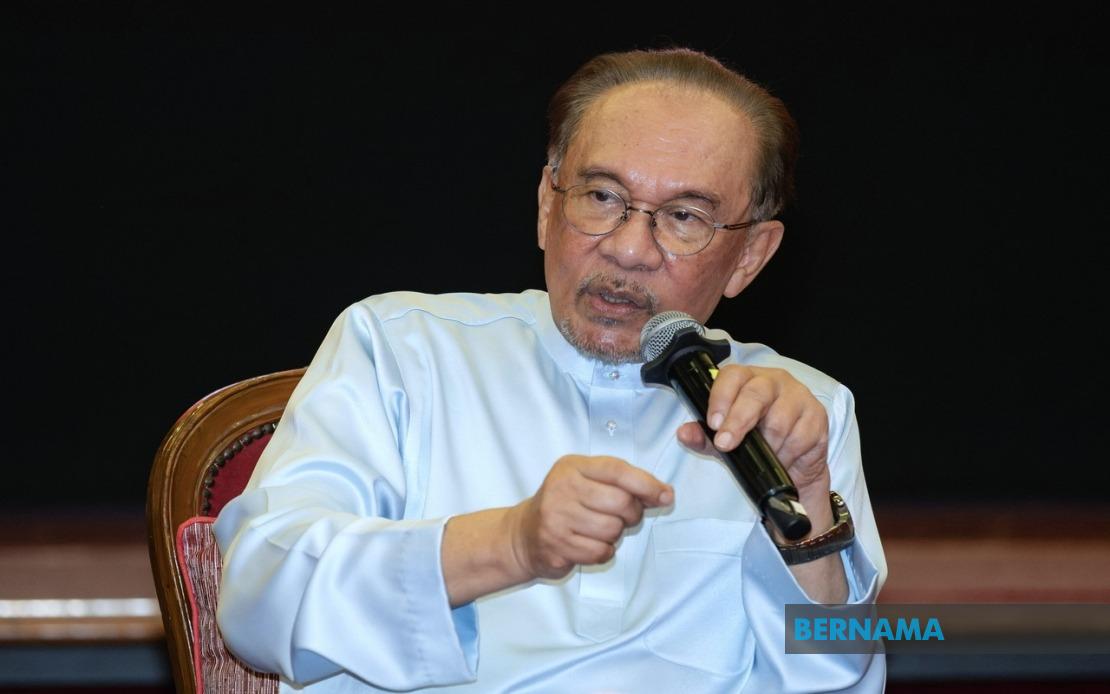
Prime Minister Datuk Seri Anwar Ibrahim has escalated efforts to salvage Malaysia's Federal Land Development Authority's troubled Indonesian venture by directly appealing to Indonesian President Prabowo Subianto for assistance. The move underscores the gravity of financial exposure at stake, with Felda potentially losing up to RM2.5 billion from an investment in PT Eagle High Plantations Tbk (EHP), a situation rooted in decisions taken by the authority's previous leadership.
Anwar disclosed the initiative during a gathering with Felda's senior management and field officers at Hotel Tenera in Bangi, joined by Felda chairman Tan Sri Ahmad Badri Mohd Zahir and director-general Datuk Dr Suzana Idayu Wati Osman. The correspondence to Jakarta signals that Malaysian authorities are pursuing diplomatic channels to address an investment that has become mired in Indonesian court proceedings. According to available reports, the bulk of Felda's committed capital remains unrecovered as EHP continues its legal battle within Indonesia's judicial system.
The investment catastrophe represents one of the most significant financial challenges confronting Felda in recent years, with the potential recovery rate of merely RM200 million representing just eight percent of the original outlay. This dramatic shortfall underscores the consequences of investment decisions made without adequate oversight mechanisms. Anwar's intervention at the highest diplomatic level suggests that conventional recovery channels have proven insufficient, necessitating direct engagement with Jakarta's leadership to navigate the complexities of cross-border dispute resolution.
During his remarks, Anwar sought to contextualise the crisis for Felda's operational management, many of whom bear no responsibility for the flawed investment but must confront its cascading consequences. He articulated his concern that field managers in states like Pahang and Johor would face the fallout from institutional failures orchestrated at higher levels. This messaging reflected an attempt to strengthen morale and prevent disengagement among frontline staff who might otherwise feel demoralized by circumstances beyond their influence.
Anwar emphasised that transparency regarding the scale of financial exposure was essential for all management tiers to comprehend the organisation's predicament and the scope of recovery work required. Rather than minimising the challenge or allowing narratives that downplay governance failures to take hold, he stressed that personnel must grasp the full extent of the problem. His directive to director-general Suzana Idayu Wati Osman to ensure this understanding filtered through the organisation indicated a deliberate strategy to build institutional awareness and collective commitment to remedial action.
The Prime Minister drew a distinction between investigative, enforcement, and judicial processes on one hand and broader institutional recovery imperatives on the other. This separation was crucial, as it prevented blaming individual managers for systemic governance weaknesses while simultaneously maintaining pressure for comprehensive institutional reform. The framing suggested that accountability mechanisms would address past decision-making while present and future management would concentrate on stabilising Felda's operations and rebuilding public confidence in the institution.
Beyond the EHP crisis, Anwar committed the government to accelerating welfare initiatives that directly benefit Felda settlers and staff, including housing repairs and maintenance projects. Rather than deferring these improvements to the next fiscal cycle, the government signalled its intention to expedite implementation within the current budget framework. This commitment served a dual purpose: demonstrating tangible government support for Felda communities while projecting confidence in the organisation's fundamental viability despite current financial strain.
The Prime Minister's remarks regarding governance, integrity, and accountability reflected a broader government agenda focused on institutional renewal rather than partisan blame allocation. By framing these emphases as protective measures for public trust and national pride, Anwar positioned reform as a patriotic imperative transcending factional considerations. This approach aimed to generate buy-in from Felda's management cadre by casting institutional rehabilitation as a collective endeavour serving Malaysia's long-term interests.
The EHP situation carries implications extending beyond Felda's balance sheet. The investment illustrates vulnerabilities in cross-border financial oversight and highlights the challenges Malaysian entities face when disputes arise within foreign legal jurisdictions. The appeal to Prabowo indicates that Malaysia's government views diplomatic engagement as a necessary complement to legal proceedings, recognising that Indonesia's new leadership might offer opportunities for negotiated resolution that Indonesian courts alone cannot provide.
Felda's trajectory over the coming months will substantially depend on the effectiveness of Anwar's diplomatic outreach and the pace of progress in Indonesian courts. The recovery of even a portion of the RM2.5 billion exposure would materially alleviate pressure on the organisation's finances and reduce the burden on Malaysia's public funds. Conversely, failure to arrest further deterioration could necessitate additional government support, intensifying scrutiny of institutional governance.
The episode also reflects broader questions about institutional accountability within Malaysia's public sector and the mechanisms through which failed investment decisions are addressed. By publicly acknowledging the scale of losses and pursuing high-level intervention, Anwar signalled that serious lapses would not be concealed or quietly absorbed. This transparency, while exposing institutional vulnerability, may paradoxically strengthen Felda's long-term credibility by demonstrating that oversight mechanisms can identify and address problems, albeit belatedly.
Looking forward, Felda's recovery narrative will hinge on several interconnected factors: the responsiveness of Indonesian authorities to Malaysian diplomatic overtures, the trajectory of ongoing court proceedings, and Felda's capacity to stabilise remaining operations while managing the reputational damage from the investment fiasco. Anwar's engagement suggests that government leadership recognises the stakes involved and is prepared to deploy diplomatic resources commensurate with the financial exposure. Whether such efforts can meaningfully improve recovery outcomes will substantially influence public perception of the government's ability to protect national financial interests in cross-border contexts.

