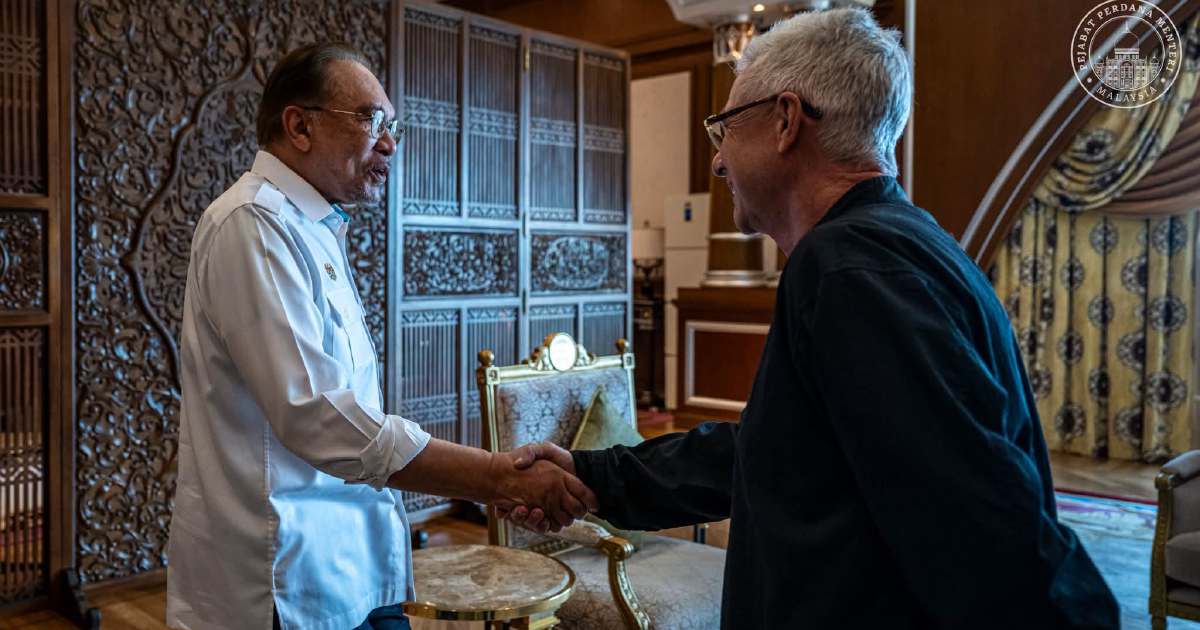
Prime Minister Datuk Seri Anwar Ibrahim has convened with Michael Roche, executive director of the Singapore Grand Prix, to discuss operational strategies and proven methodologies for hosting world-class Formula 1 events. The meeting took place as Malaysia prepares for its own significant motorsport showcase—the Formula 1 Gulf Air Bahrain Grand Prix scheduled at the Sepang International Circuit (SIC) this October—signalling the government's intent to maximise the event's success through regional knowledge-sharing.
The encounter underscores the diplomatic and practical value of Malaysia's relationship with Singapore, a neighbouring city-state that has successfully operated the Marina Bay street circuit race for nearly two decades. Singapore's Grand Prix stands as one of Asia's marquee F1 events, attracting global audiences and generating substantial economic returns through hospitality, tourism, and international media exposure. By engaging directly with Roche, Anwar is signalling Malaysia's commitment to learning from proven expertise rather than approaching the October race in isolation.
Sepang International Circuit has a storied history in Formula 1, having hosted the Malaysian Grand Prix continuously from 1999 until 2017, when it was displaced from the official calendar. The return of F1 to Malaysia—albeit under a different banner with Gulf Air as the title sponsor and nominally associated with Bahrain's event—represents a significant moment for the country's motorsport industry and its broader aspirations to be positioned as a major regional events hub.
The shift in branding is notable and reflects the contemporary economics of F1 governance, where naming rights and sponsorship arrangements have become fluid. Gulf Air's involvement as title sponsor marks the first time Malaysia's race will carry this particular branding identity, blending regional airline promotion with motorsport prestige. This structural arrangement is increasingly common in F1, where circuits compete fiercely for calendar slots by accommodating promotional requirements of international sponsors and competing jurisdictions.
The October timing places Malaysia's event in the F1 season's latter stages, typically a period of heightened competitive interest as title races intensify. Roche's insights into managing the complexities of hosting a night race—Singapore runs under floodlights, creating unique logistical and technical challenges—would be particularly valuable for Malaysian organisers. The operational demands of such events extend far beyond the racing itself, encompassing security, transportation infrastructure, accommodation coordination, and crowd management across multiple days.
Economically, the race represents an opportunity to inject tourism spending into Malaysia during what might otherwise be a moderate period for visitor arrivals. Singapore's Grand Prix annually brings high-value international guests, many spending multiple nights and accessing premium hospitality packages. Malaysia, with competitive hotel and dining costs relative to Singapore, could position itself as an attractive alternative accommodation and dining base for visitors attending the Sepang event.
For the Prime Minister's office, the engagement with Roche also carries symbolic weight. It demonstrates a government proactively engaged in attracting and supporting large-scale international events—a departure from previous years when Malaysia's calendar stagnated. This positioning aligns with broader economic diversification strategies aimed at reducing dependence on traditional sectors and establishing Malaysia as a destination for high-margin service industries and event tourism.
The motorsport sector itself remains significant to Malaysia's industrial base and national identity. Beyond hosting events, the country has manufacturing capabilities in automotive and motorsport-related components, and F1's return to the calendar could invigorate domestic interest in motorsport as a career pathway and investment sector. Young Malaysian engineers and technicians gain international exposure through such events, and the visibility of homegrown talent competing in F1 teams continues to inspire domestic participation.
Regional implications merit consideration as well. Southeast Asia's position as a motorsport hotspot has grown steadily, with races in Thailand, Vietnam, and the Philippines complementing established circuits in Singapore and Malaysia. However, F1 calendar slots remain scarce and contested. Malaysia's return to the calendar—even under modified branding—demonstrates that the region remains strategically important to Formula 1's global footprint, particularly given Asia's expanding automotive markets and growing wealth in urban centres capable of supporting premium motorsport events.
Logistical challenges specific to Malaysia will require careful attention. Sepang's infrastructure requires assessment regarding contemporary F1 standards, which have evolved significantly since 2017. Ground transport, accommodation capacity, and emergency response systems all demand scrutiny. Singapore's experience hosting the only night race on the F1 calendar provides a relevant case study, as does its management of the dense urban crowds the Marina Bay event attracts annually.
The meeting between Anwar and Roche represents pragmatic governance at work—seeking external expertise to avoid costly missteps and capitalise on proven operational models. This collaborative approach contrasts with insular planning and suggests Malaysian stakeholders recognise that world-class events require world-class management systems. As October approaches, the focus will shift from strategic alignment to execution, with international observers assessing whether Malaysia can deliver a race worthy of F1's standards and its own high expectations.
The return of Formula 1 to Malaysia after a seven-year absence carries substantial weight for the nation's sporting credentials and international profile. With guidance from Singapore's proven expertise and commitment from the highest levels of government, Malaysia now faces the tangible work of translating ambition into a flawlessly executed global spectacle.

