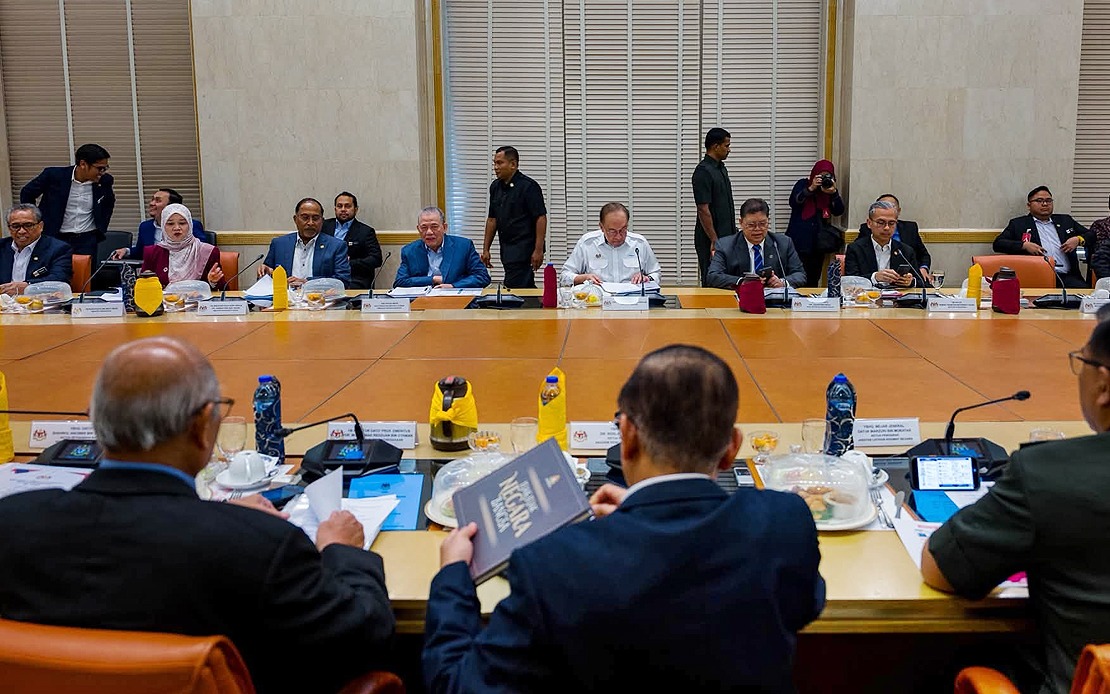
Prime Minister Datuk Seri Anwar Ibrahim has underscored the critical importance of systematically nurturing nationhood values as a cornerstone of sustainable nation-building, stressing that such efforts form the bedrock upon which Malaysians develop strong personal identity and ethical foundations. Speaking following a governance meeting he presided over, Anwar articulated a vision where citizens anchored in principled national consciousness become ambassadors of Malaysia's aspirations both domestically and internationally, thereby enhancing the country's reputation and cohesion.
The Prime Minister framed the cultivation of these values not as an abstract exercise but as a practical necessity for fostering genuine patriotism across Malaysian society. He conveyed that without deliberate and sustained commitment to instilling national consciousness, the bonds connecting diverse communities to shared Malaysian identity risk weakening, particularly among younger generations navigating an increasingly globalized world where competing allegiances and values constantly vie for attention.
Central to Anwar's agenda is the National Service Training Programme, or PLKN, which he highlighted as demonstrating promising momentum with encouraging feedback flowing from both participants and their families. The programme, which brings together young Malaysians from varied backgrounds for structured civic and military training, represents a tangible mechanism through which abstract nationhood values can be translated into lived experience and personal development among the youth demographic most critical to Malaysia's future trajectory.
Anwar indicated his intention to maintain legislative and administrative support for PLKN's expansion, viewing the initiative as uniquely positioned to cultivate discipline, resilience, and collective identity among participants. The programme's dual focus on instilling civic consciousness while building personal character reflects a sophisticated understanding that national cohesion emerges not merely from top-down directives but from shared transformative experiences that forge genuine bonds between citizens across ethnic, religious, and socioeconomic divides.
The governance discussion also encompassed the role of the Nationhood Fellows initiative, a platform designed to convene distinguished public figures, retired statesmen, and respected voices from diverse sectors to collectively deliberate on strategies for reinforcing Malaysia's nation-building imperatives. By institutionalizing intellectual exchange among prominent individuals spanning multiple backgrounds and ideological perspectives, this mechanism seeks to generate substantive policy recommendations grounded in broad consensus rather than partisan positioning.
For Malaysian readers and regional observers, Anwar's emphasis on nationhood values carries particular resonance given contemporary challenges facing multiethnic democracies across Southeast Asia. Malaysia, with its delicate balance of Malay-Muslim, Chinese, Indian, and indigenous communities, faces persistent questions about social cohesion amid rising communal tensions, migration pressures, and the erosive effects of social media algorithms that often amplify divisive rhetoric over unifying narratives.
The Prime Minister's articulation reflects a strategic pivot toward what might be termed "civic nationalism" — an approach emphasizing shared constitutional values, mutual respect for diversity, and common commitment to national development rather than ethnic or religious definitions of belonging. This framework potentially offers Malaysia a pathway to strengthen social unity while respecting pluralistic composition, though its success ultimately hinges on consistent implementation and genuine buy-in from political, religious, and community leadership across all demographic groups.
The timing of these remarks proves significant given Malaysia's positioning in a region experiencing rapid economic transformation, geopolitical realignment, and unprecedented information flow. Nations that cultivate strong internal cohesion and shared sense of purpose typically demonstrate greater resilience in navigating external disruptions and competing influences, whether economic, technological, or strategic. Conversely, societies fractured along identity lines become vulnerable to external actors seeking to exploit internal divisions for geopolitical advantage.
Anwar's emphasis on continuous reinforcement of nationhood values acknowledges that such consciousness requires active maintenance rather than passive assumption. Unlike inherited traditions that once transmitted across generations through stable family and community structures, contemporary Malaysia requires deliberate institutional mechanisms — educational curricula, national service experiences, media messaging, and interethnic dialogue forums — to sustain national consciousness among cohorts growing up in fragmentary media ecosystems and increasingly globalized environments.
The PLKN programme specifically addresses this challenge by creating immersive shared experiences that transcend geographic and demographic boundaries, enabling young Malaysians to develop personal relationships with peers from radically different backgrounds while collectively contributing to national goals. Research on social cohesion consistently demonstrates that direct interpersonal contact across group lines, particularly in cooperative contexts with shared objectives, produces measurable reductions in prejudice and increased mutual understanding.
Looking forward, the effectiveness of Anwar's nation-building agenda will depend substantially on translating these articulated principles into sustained resource allocation, curriculum development, and political commitment across multiple government levels. The Nationhood Fellows initiative likewise requires sufficient autonomy and institutional support to generate authentic intellectual contributions rather than merely legitimizing predetermined policy positions through the appearance of broad consensus.

